


Key Takeaways:
- Patients need a doctor’s care to determine if they should take Valium vs. Ativan
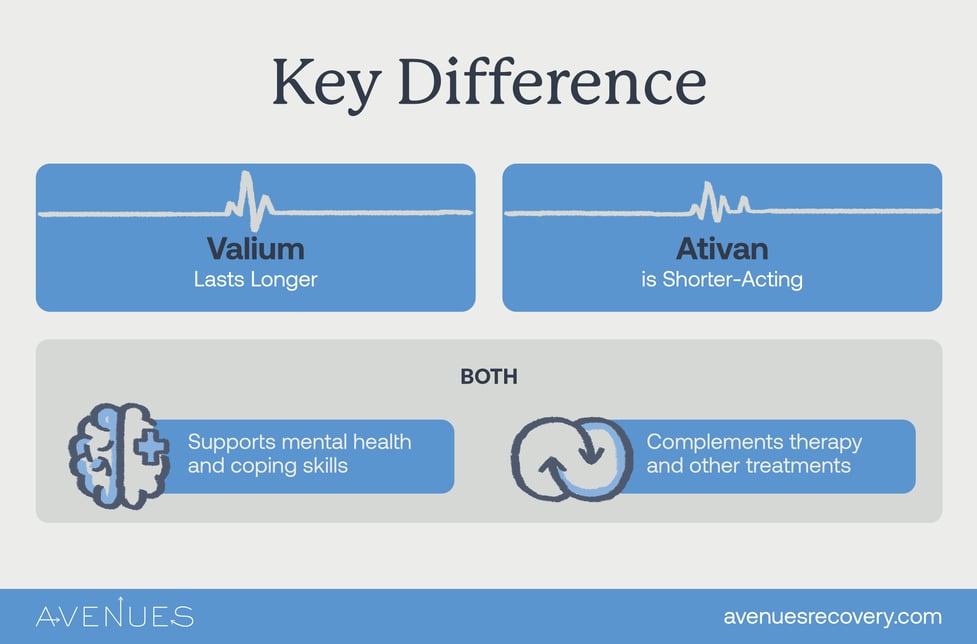
- Valium stays in the system for longer, keeping its effects over time.
- Ativan clears from the body more quickly, so its effects wear off sooner.
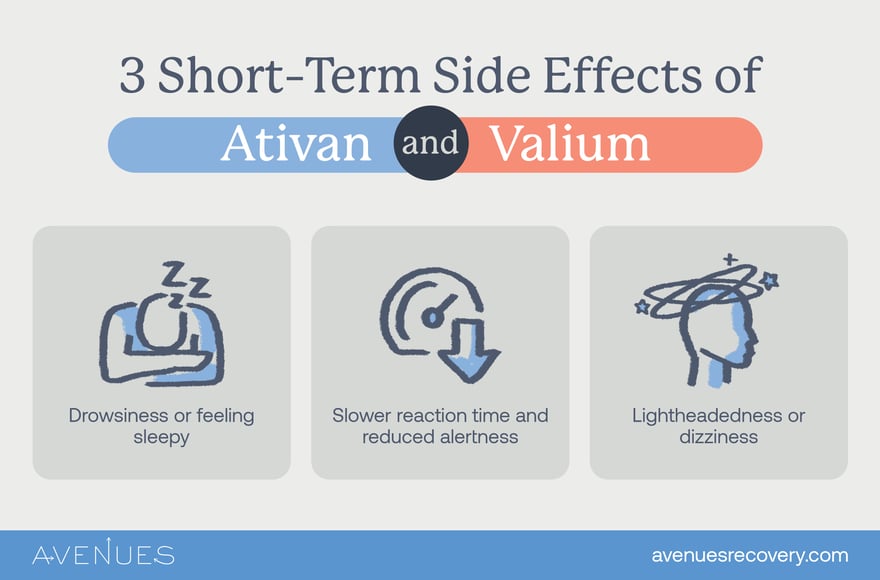
- Possible short-term side effects of Valium and Ativan include: drowsiness, slower reaction time, and dizziness
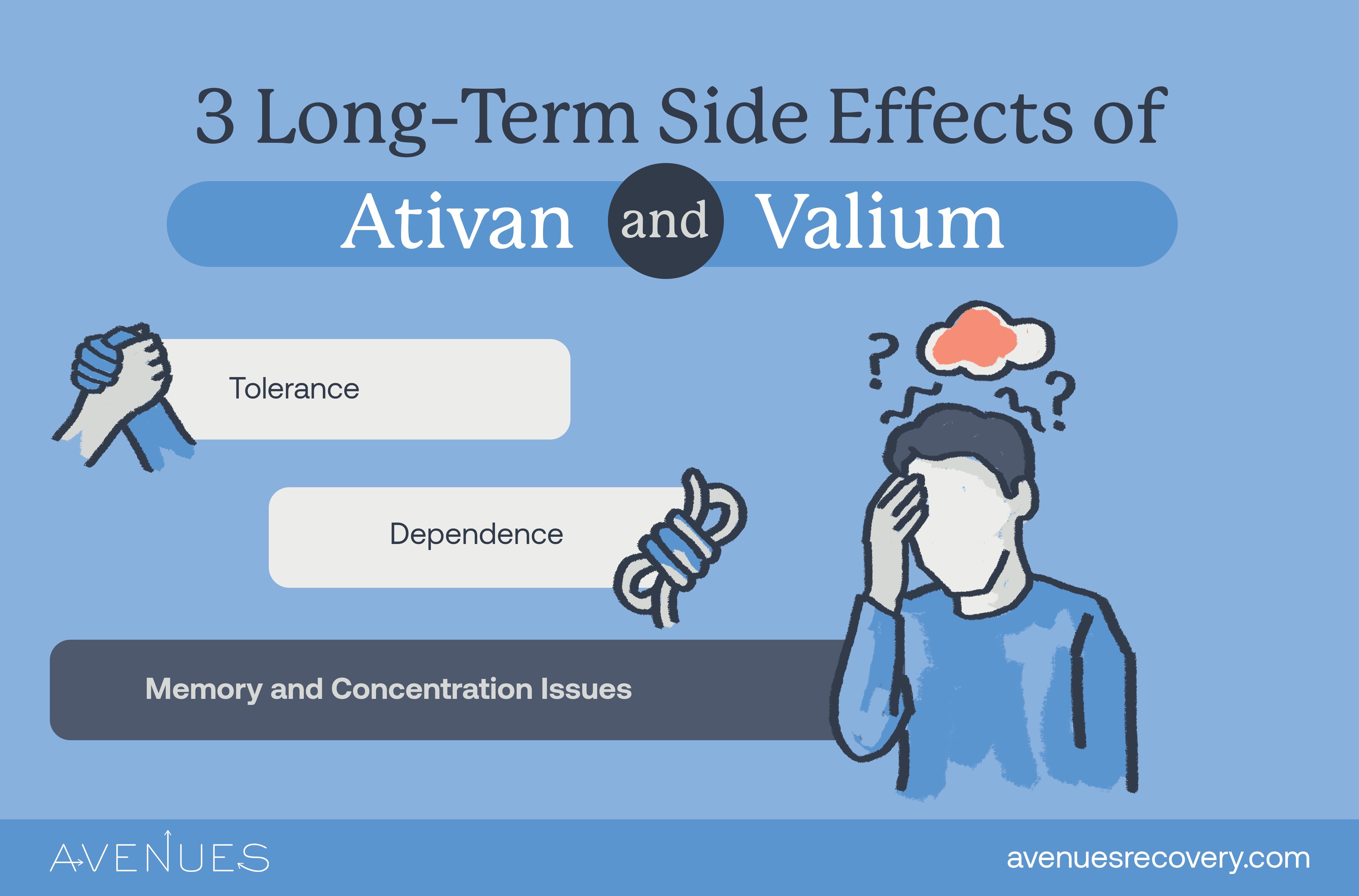
- Possible long-term side effects of Valium and Ativan include: tolerance, dependence, memory issues, slower thinking, emotional blunting.
Valium vs. Ativan: Understanding the Key Differences
When it comes to managing anxiety, insomnia, or certain withdrawal symptoms, two names often come up: Valium (diazepam) and Ativan (lorazepam). Both belong to the benzos family and are prescribed for their calming, sedative effects - but they differ in how quickly they act, how long they last, and how they affect the body. Understanding these differences is crucial, especially given the potential for dependence and misuse associated with these medications.
Also, you may ask, Is Diazepam valium? The answer is: Yes, diazepam is the generic name for the drug Valium. Valium is simply the brand name that the medication is sold under. Both contain the same active ingredient and work the same way in the body.
If you or a loved one struggles with Valium or Ativan addiction, reach out to Avenues today to start your journey toward recovery.
What Are Valium and Ativan?
Valium (diazepam) and Ativan (lorazepam) both belong to the benzodiazepine family and are used to calm the nervous system. They help to reduce anxiety, relax muscles, and can be used in certain medical situations such as seizures. They both work by slowing activity in the brain, creating a calming effect. The main difference between them is how long they last: Valium stays in the body longer and provides a slower, extended effect, while Ativan works more quickly but wears off sooner. Both should only be taken under a doctor’s guidance, because they can be habit-forming if used regularly or in high amounts.
Ativan vs. Valium Similarities and Differences
The chart below breaks down the similarities and differences between Ativan and Valium:
|
Category |
Valium |
Ativan |
Similarities |
Differences |
|
Drug Class |
Benzo |
Benzo |
Both belong to the same drug class and act on the Central Nervous System |
Same class, but Ativan is preferred when liver function is a concern because it relies less on liver metabolism. |
|
Mechanism of Action |
Enhances GABA activity to produce a calming effect |
Enhance GABA activity to produce calming effect |
Both increase GABA neurotransmission, reducing anxiety and inducing relaxation |
Same mechanism, but Valium spreads more widely through tissues: Ativan stays more contained in the bloodstream |
|
Onset of Action |
Fast (within 15 - 60 minutes) |
Intermediate (within 15-30 minutes) |
Both act relatively quickly to reduce anxiety or agitation |
Valium may act slightly faster, but in practice both are considered quick-acting |
|
Duration of Action |
Long acting (up to 24-48 hours or longer) |
Short to intermediate-acting (6-8 hours) |
Both durations depend on dosage and individual metabolism |
Valium lasts significantly longer and can build up in the body over repeated doses |
|
Half-Life |
20-100 hours |
10-20 hours |
Both remain active in the body for several hours |
Valium stays in the system longer; Ativan clears more quickly |
|
Common Uses |
Anxiety disorders, muscle spasms, seizures, alcohol withdrawal, sedation |
Anxiety disorders, panic attacks, insomnia, pre-surgical sedation |
Both are used to treat anxiety and for sedation before procedures |
Valium is used for muscle spasms and alcohol withdrawal: Ativan is often used for acute anxiety and medical sedation. |
|
Risk of Dependence |
High, especially with long-term use |
High, especially with long-term use |
Both carry a strong risk of dependence and withdrawal symptoms |
Both carry risk of dependence |
|
Withdrawal Symptoms |
Can be prolonged due to long half-life |
May appear sooner due to shorter half-life |
Both can cause anxiety, insomnia, and tremors during withdrawal |
Withdrawal from Valium is slower;Withdrawal from Ativan is abrupt |
|
Formulations Available |
Tablets, oral solution, injection, rectal gel |
Tablets, oral solution, injection |
Both are available in oral and injectable forms |
Only valium has a rectal gel used in seizure emergencies |
|
FDA Schedule |
Schedule IV (controlled substance) |
Schedule IV (controlled substance) |
Both are federally controlled due to abuse potential. |
Both are controlled to prevent misuse |
Diazepam (Valium) vs. Ativan for Anxiety
Diazepam (Valium) and Ativan are both used to treat anxiety, but they act a little differently in the body. Ativan (lorazepam) is often preferred for short-term anxiety relief because it works steadily and predictably. It is also less affected by liver function, so doctors view it as easier to control. Valium (diazepam) works longer and spreads through the body more widely, which can make its calming effect last longer. But that also means it can accumulate in the body if taken repeatedly, which raises the risk of unwanted side effects like confusion or exhaustion.
Doctors often choose Ativan when they want a reliable, shorter treatment window, and Valium when muscle tension or very long-lasting calming effects are needed. Both can be effective for anxiety, but they must be used carefully because they can lead to dependence if taken too often or for too long. A doctor will decide which medication is more appropriate based on a person’s specific situation and medical history.
Diazepam vs. Lorazepam for Sleep
For sleep, both medications can make someone feel more relaxed, but they are used a bit differently. Ativan is generally better when a short, steady calming effect is needed to help settle the mind before sleep. Valium, on the other hand, lasts much longer in the body, which can lead to grogginess the next day. Because of its extended effects, Valium is usually not the first choice when the main goal is simply to fall asleep. In most cases, if a doctor prescribes medication specifically for sleep, they will often choose Ativan to avoid lingering drowsiness the next morning.

Short-Term Side Effects of Ativan and Valium:
- Drowsiness or feeling sleepy
- Slower reaction time and reduced alertness
- Lightheadedness or dizziness
- Blurred vision
- Slurred speech
- Impaired coordination or balance
- Feeling weak or “heavy” in the body
- Temporary difficulty thinking clearly or focusing
Long-Term Valium and Lorazepam (Ativan) Side Effects
Both Ativan (lorazepam) and Valium (diazepam) belong to the benzodiazepine family. When used for a long time - especially daily - there are several potential risks:
- Tolerance: Over time, the body becomes used to the medication, so the original dose may no longer work as well. This can lead to taking higher doses to get the same effect.
- Dependence: The body may come to rely on the medication to feel calm or sleep. Stopping it suddenly after long-term use can cause withdrawal symptoms, which may be uncomfortable or, in some cases, medically serious.
- Memory and Concentration Issues: Long-term use can make it harder to focus, retain new information, or recall details.
- Slowed Thinking and Reaction Time: These medications act on the central nervous system. Over time, this may result in slower processing and reduced alertness.
- Emotional Blunting: Some people feel less able to experience normal emotional range or responsiveness.
- Increased Risk of Falls (especially in older adults): Because they relax muscles and slow reflexes, balance may be affected.
- Sleep Quality Changes: Valium and Ativan may help with falling asleep in the moment, but long-term use can disrupt natural sleep cycles, leading to less restorative sleep.
Risk of Misuse, Tolerance and Addiction Potential
Both Ativan and Valium carry abuse potential because they can create a sense of calm and relief that people may become dependent on. Over time, the body can develop tolerance, meaning the original dose no longer produces the same effect and higher doses are needed to achieve it. This can gradually lead to dependence, where stopping the medication causes uncomfortable – or even painful - withdrawal symptoms. In some cases, this pattern can lead to addiction, when a person continues taking the medication despite negative consequences.
Because of this, long-term Valim and Ativan use is generally approached cautiously, and any dosage changes should be guided by a medical professional.
Withdrawal Considerations: Ativan vs. Diazepam Valium Detox
Withdrawal from these medications needs to be done carefully, and the approach may differ between Ativan and Valium. Ativan leaves the body more quickly, which can cause withdrawal symptoms to appear sooner and feel more intense if the dose is reduced too rapidly. Valium, on the other hand, stays in the system longer, so symptoms may develop more gradually. For this reason, Valium is sometimes used in structured detox plans to provide a smoother taper. Regardless of the approach, the process should be gradual and supervised by a qualified medical professional to help reduce discomfort and avoid complications.
Alternative to Ativan and Valium (non-benzos options)
Here are some non-benzos alternatives:
- SSRIs and SNRIs (e.g., sertraline, escitalopram, venlafaxine) – primarily for long-term anxiety management.
- Buspirone – A medication specifically for anxiety that is non-sedating and has a low risk of dependence.
- Hydroxyzine – An antihistamine that can reduce anxiety or help with short-term sleep.
- Melatonin or prescription sleep aids (e.g., trazodone, doxepin) – for sleep issues without the addictive risk of benzodiazepines.
- Therapies and lifestyle approaches – cognitive behavioral therapy (CBT), mindfulness, exercise, and good sleep hygiene can be highly effective.
When to Seek Professional Help:
It’s important to seek professional help if you notice signs of dependence, such as needing higher doses to achieve the same effect, experiencing withdrawal symptoms when stopping, or feeling unable to manage anxiety or sleep without the medication. Other red flags would be memory or concentration difficulties, emotional blunting, or any impact on daily functioning.
Our medical professionals at Avenues Recovery can provide expert guidance on safe tapering, monitoring for potential complications, and exploring alternative treatments. If you or a loved one suffers from benzos addiction, reach out to us at Avenues Recovery so we can guide you on your path to recovery!