

Key Takeaways:
- Switching to Zyn may reduce smoke risks but continues nicotine addiction and dependence cycle ongoing.
- Zyn pouches deliver nicotine discreetly, often increasing frequency of use and making addiction less visible.
- FDA-approved therapies support quitting with reduction, while Zyn is not approved and may prolong use.
Payal Kakaria, MSN, RN, CARN, Director of Medical Development, earned her BS in nursing from the College of Mount Saint Vincent and her master’s degree in Nursing Education from Monmouth University. With nearly 20 years of experience in addiction treatment, Payal specializes in advancing medical systems, developing protocols, and supporting nursing teams to ensure high-quality, evidence-based care. She is passionate about mentoring providers and helping others grow, with a deep commitment to supporting individuals on their path to lasting recovery.
Zyn to Quit Vaping or Smoking
You might be here because your son, daughter, or partner is trying to stop vaping, and you want to help them. Someone mentioned nicotine pouches like Zyn, and you want to learn more.
It can sound like a safer step - no smoke, no vapor, no device. That feels like progress. Many people switch from vaping to pouches because they want something simpler and less visible, especially if they are trying to cut down.
But it’s important to understand what this change really means. Zyn still delivers nicotine, which is the addictive substance in cigarettes and vapes. So when people talk about “zyn vs. vape,” they’re often comparing how nicotine enters the body, not whether the addiction is gone.
If you’re trying to figure out how to use Zyn to quit smoking or vaping, the honest answer is that it may reduce some risks, but it doesn’t equal quitting. If you want clear guidance on what to do next for your loved one, reach out to Avenues to speak to someone who will walk you through it step by step.
What Zyn Nicotine Pouches Are, and How They Work
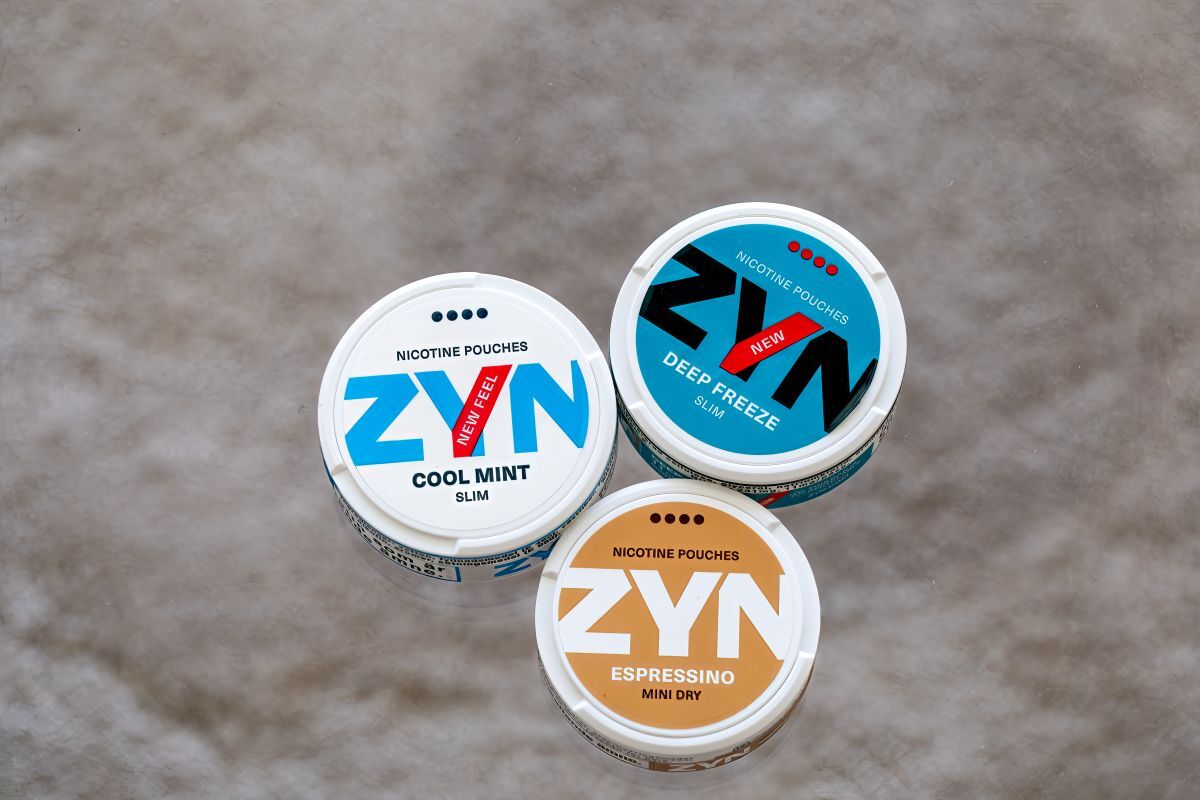
Zyn nicotine pouches are small white pouches placed between the gum and upper lip. They don’t contain tobacco, but they do contain nicotine, along with flavorings and fillers. Once the pouch is in place, nicotine is absorbed through the lining of the mouth and enters the bloodstream, creating a mild stimulant effect. There’s no smoke, no vapor, and no need to step outside, which is part of what makes these pouches appealing.
If you’re noticing your son, husband, or someone you love using these pouches, it can feel confusing. It may look cleaner or safer than smoking, but it’s still delivering an addictive substance into the body. Understanding how it works is often the first step in figuring out what this means for their health and what kind of help they may need.
Why People Switch From Smoking or Vaping to Zyn
Many people turn to Zyn because they want to move away from cigarettes or vaping. They may be trying to avoid the smell, the social stigma, or the visible harm of cigarette smoke. Some believe it’s a “healthier” step, or at least a step in the right direction. Others switch because it’s easier to use discreetly throughout the day.
From your side, this can feel like a small relief mixed with new uncertainty. You might wonder, is this progress or just a different version of the same problem? It’s important to know that while switching to Zyn can reduce certain exposures, it doesn’t necessarily mean your loved one is moving towards being substance-free.
Is Switching to Zyn the Same as Quitting Nicotine?
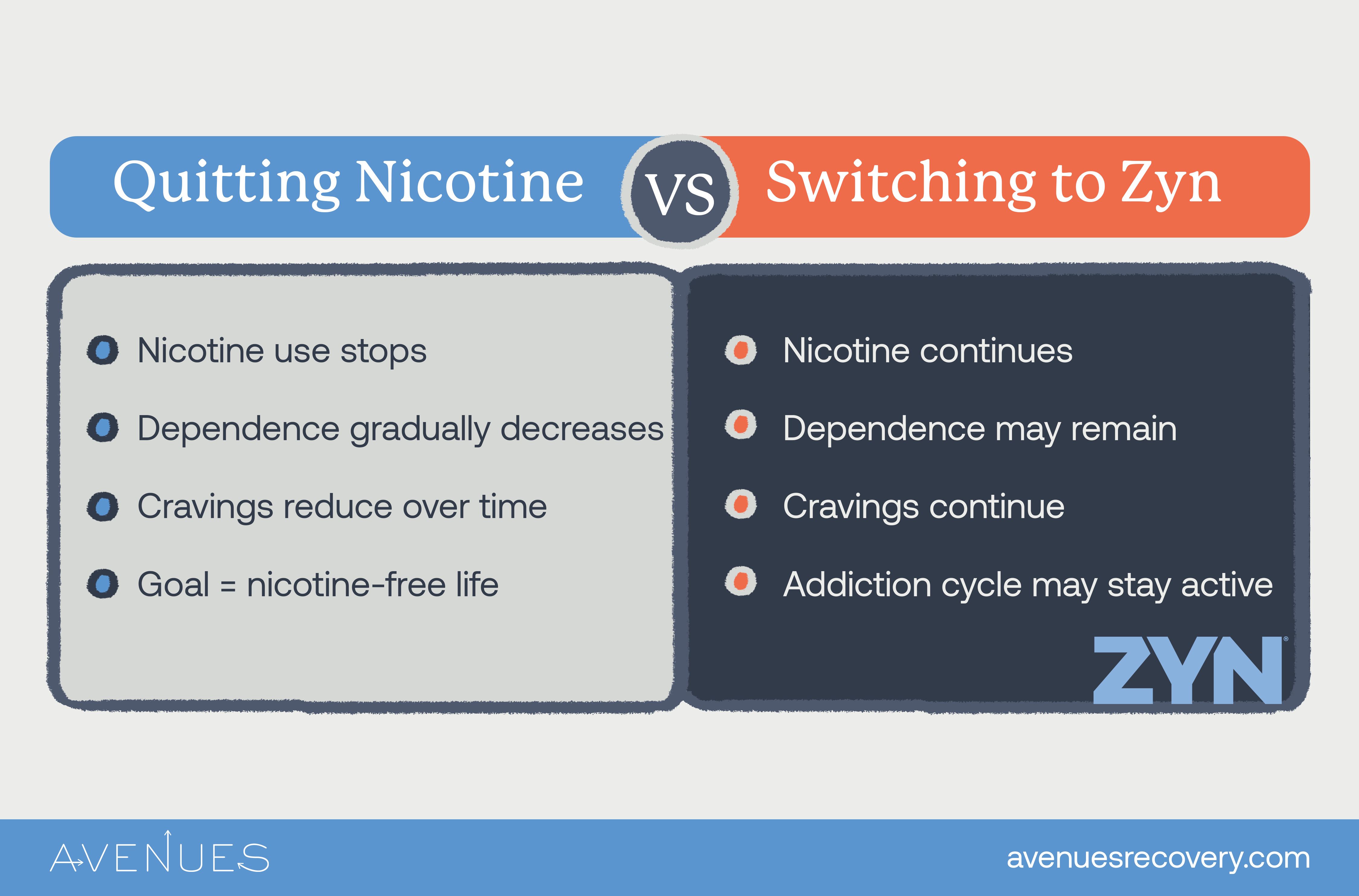
Switching to Zyn is not the same as quitting nicotine. The body is still receiving nicotine regularly, and the brain continues to depend on it. The habit may look different, but the underlying cycle of craving and relief often stays in place.
That distinction makes a difference, especially if you’ve been hoping this change means your loved one is finally shaking off their smoking habit. It can be discouraging to realize that the addiction is still there - even if it’s less visible. Knowing this helps you to make clearer decisions about what kind of support is actually needed.
Zyn Addiction
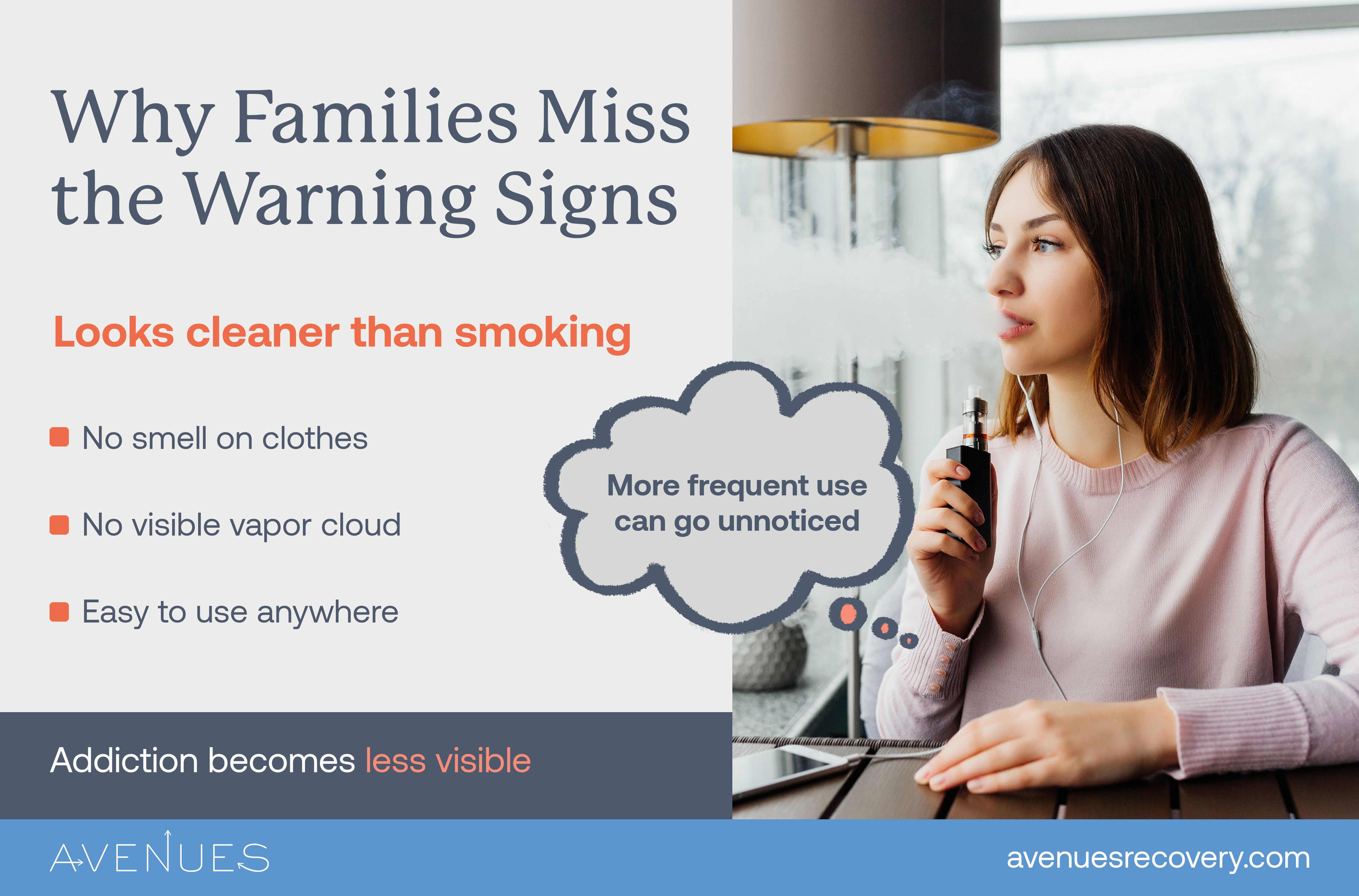
Nicotine is highly addictive, regardless of how it’s delivered. With products like Zyn, people can sometimes use even more frequently than before - because it’s so easy to keep a pouch in place during daily activities. This can quietly deepen dependence over time.
If you’ve been here before, this pattern may feel familiar. Promises to cut back, followed by gradual return to regular use. It’s not about lack of willpower. Nicotine changes how the brain responds to stress and reward, which is why support often needs to go beyond just trying to stop.
Zyn vs Vape
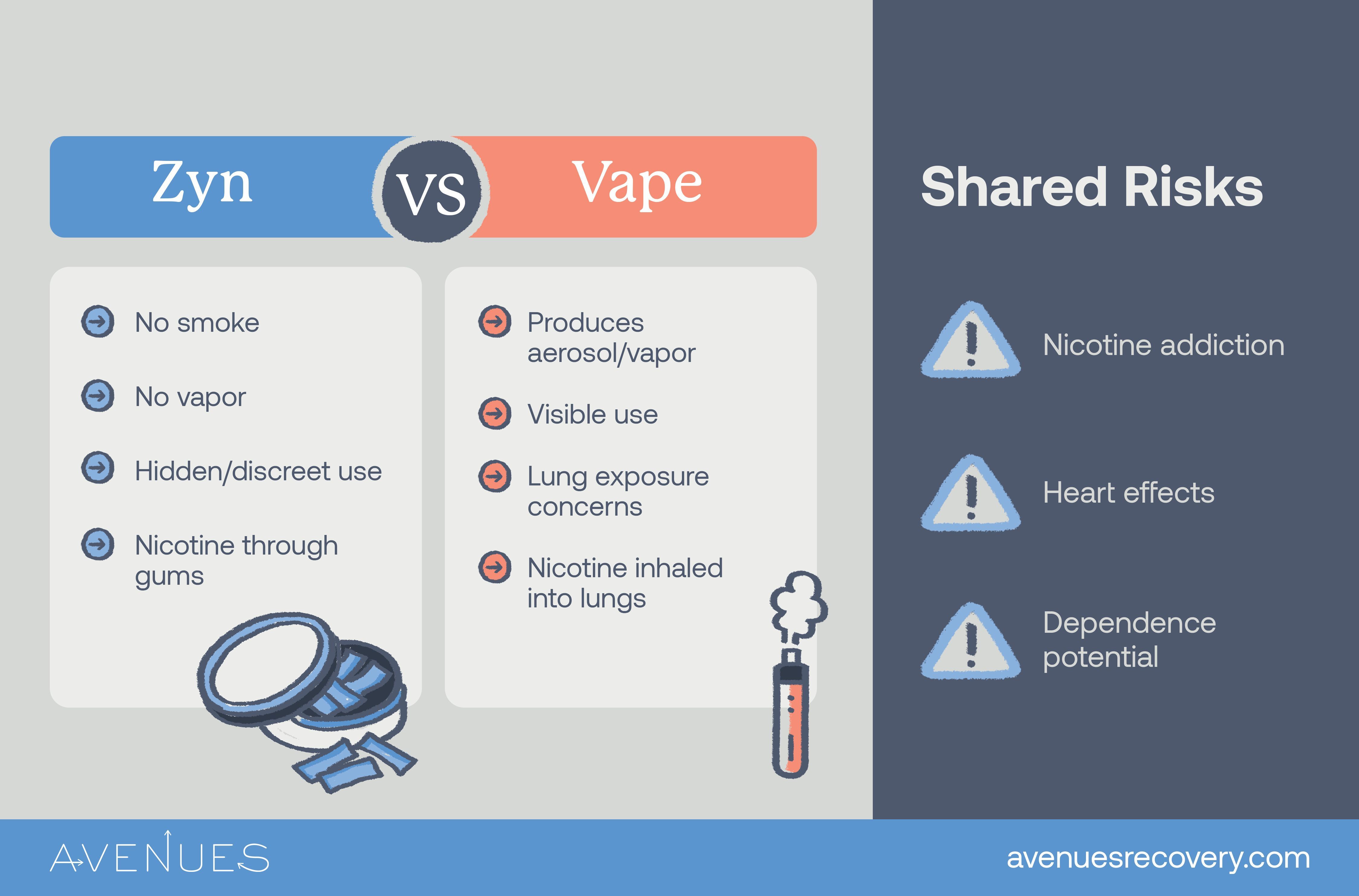
Compared to vaping, Zyn removes exposure to heated chemicals and lung irritation from inhaled vapor. That can reduce certain risks, particularly those related to breathing and lung health. For some, that’s a meaningful shift.
But it’s not risk-free. Nicotine still affects the heart, blood vessels, and brain. And because there’s no visible cloud or smell, it can be harder for you to even know how much your loved one is using. The absence of smoke doesn’t mean the absence of harm.
Can Nicotine Pouches Help You Quit Smoking?
You may wonder how to use Zyn to quit smoking. Nicotine pouches are often seen as a safer step than smoking, and in some ways they are. They don’t involve smoke or many of the harmful chemicals found in cigarettes. But they still deliver nicotine, and that means the cycle of dependence can continue. You might notice your loved one reaching for a pouch more often than they ever stepped outside for a cigarette, using it throughout the day, or even in places where smoking wasn’t allowed. What looks like progress can quietly become a different kind of constant use.
For some people, pouches can be a temporary bridge away from cigarettes. But for others, they make it harder to fully stop because the habit becomes more frequent and less visible. If your loved one is still feeling restless without it, still needing it to get through the day, that’s a sign the addiction hasn’t really loosened its grip. It’s okay to question whether this is truly helping or just changing the form of the problem.

Zyn vs FDA-Approved Nicotine Replacement Therapy (patch, gum, lozenge)
Products like the nicotine patch, nicotine gum, and nicotine lozenges are designed specifically to help people taper off nicotine. They deliver controlled, gradually decreasing doses and are part of structured quit plans.
Zyn, on the other hand, is not designed as a step-down tool. People often continue using it long-term without reducing their intake. If your goal is to help your loved one become fully nicotine-free, this difference is important and can guide your next steps.
Is Zyn FDA-Approved for Smoking Cessation?
Zyn is not approved by the U.S. Food and Drug Administration as a smoking cessation product. That means it hasn’t gone through the same evaluation process to prove that it helps people quit nicotine safely and effectively.
For you, trying to make the “right” decision, this can feel unsettling. You want something real, something trustworthy. Knowing what is and isn’t approved can help you avoid options that may sound helpful but don’t actually lead to lasting change.
Risks and Unknowns of Long-Term Nicotine Pouch Use
Because nicotine pouches are relatively new, the long-term effects are still being studied. We know nicotine can impact heart health, increase blood pressure, and affect brain chemistry, especially with ongoing use.
The unknowns are often the hardest part. You may be lying awake wondering what this will mean years from now. That uncertainty is real, and it’s one reason many families choose to address nicotine use sooner rather than waiting for clearer answers.
Who Zyn May Help Short-Term vs Who It May Not Help
For some people, switching to Zyn can be a short-term step away from smoking, especially if it’s part of a structured plan to reduce nicotine over time. It may lower certain immediate risks while they work toward quitting.
But for others, especially those with a pattern of dependence, it can become a substitute that keeps the cycle going. If your loved one has struggled to stop before, or if you’re seeing increasing use, it may not be the solution you’re hoping for.
How to Quit Nicotine
The most reliable approaches to quitting nicotine combine medication, behavioral support, and a clear plan. This can include nicotine replacement therapies, prescription medications, and counseling that helps address triggers and habits.
You don’t have to figure this out alone. A structured program can walk you through what the first days look like, how withdrawal is managed, and how your loved one is supported through cravings. Having that clarity can ease some of the fear of “what happens next.”
When to Get Help
If you’re seeing repeated attempts to quit which don’t last, increasing use, or signs that nicotine is affecting daily life, it may be time to reach out for help. You’re not overreacting. You’re responding to a pattern that often needs more than willpower to break.
When you call a treatment center, they should explain everything clearly. What intake looks like, how detox is handled, what the first 24–72 hours involve, and how they keep your loved one safe.
If you’re ready for real answers and a clear path forward, reach out to Avenues Recovery today. You can speak to someone who will walk you through your options, verify insurance, and help you take the next step toward getting your loved one safe and supported.
FAQ's:
- Does switching to Zyn mean someone has quit nicotine?
No. Zyn still delivers nicotine, so the addiction and dependence can continue. - Is Zyn safer than smoking or vaping?
It may reduce exposure to smoke, but it still carries risks because of nicotine. - Why do people use Zyn more often?
Because it’s discreet and easy to use, people may use it more often throughout the day. - Can Zyn make addiction harder to notice?
Yes. There’s no smell or vapor, so increased use can go unnoticed. - Is Zyn approved to help people quit nicotine?
No. Unlike patches or gum, it is not approved as a quitting aid and may prolong use.