


If you’ve been asked to take a drug test at work and you’re thinking about refusing, you’re probably feeling a mix of stress, confusion, and maybe even fear. You might be wondering what your rights are, what could happen next, or whether saying no is even an option. These are completely valid questions, especially if the situation caught you off guard. Before making any decisions, it helps to understand how workplace drug testing works, what refusing could mean, and what options you may have moving forward.
Can I Refuse a Random Drug Test at Work?
In many cases, you can refuse a drug test at work, but that doesn’t mean there won’t be consequences. Most employers have drug-free workplace policies, and agreeing to testing is often a condition of employment. If you refuse, your employer might treat it the same as a positive result, which could lead to disciplinary action or even termination. The exact outcome can depend on your job, your company’s policies, and state laws, so it’s important to understand what applies to your situation before making a decision.
Can an Employer Drug Test without Notice?
Yes, absolutely. Random drug testing at work means your employer can require you to take a drug test without advance notice, even if there’s no specific reason to suspect substance use. These tests are typically part of a company’s drug-free workplace policy and are usually done on a rotating or truly random basis so that no one knows when they might be selected. If you’ve been chosen, it doesn’t necessarily mean you did anything wrong, it’s usually just part of a broader system meant to promote safety and consistency across the workplace.
Random Drug Testing at Work: Your Rights
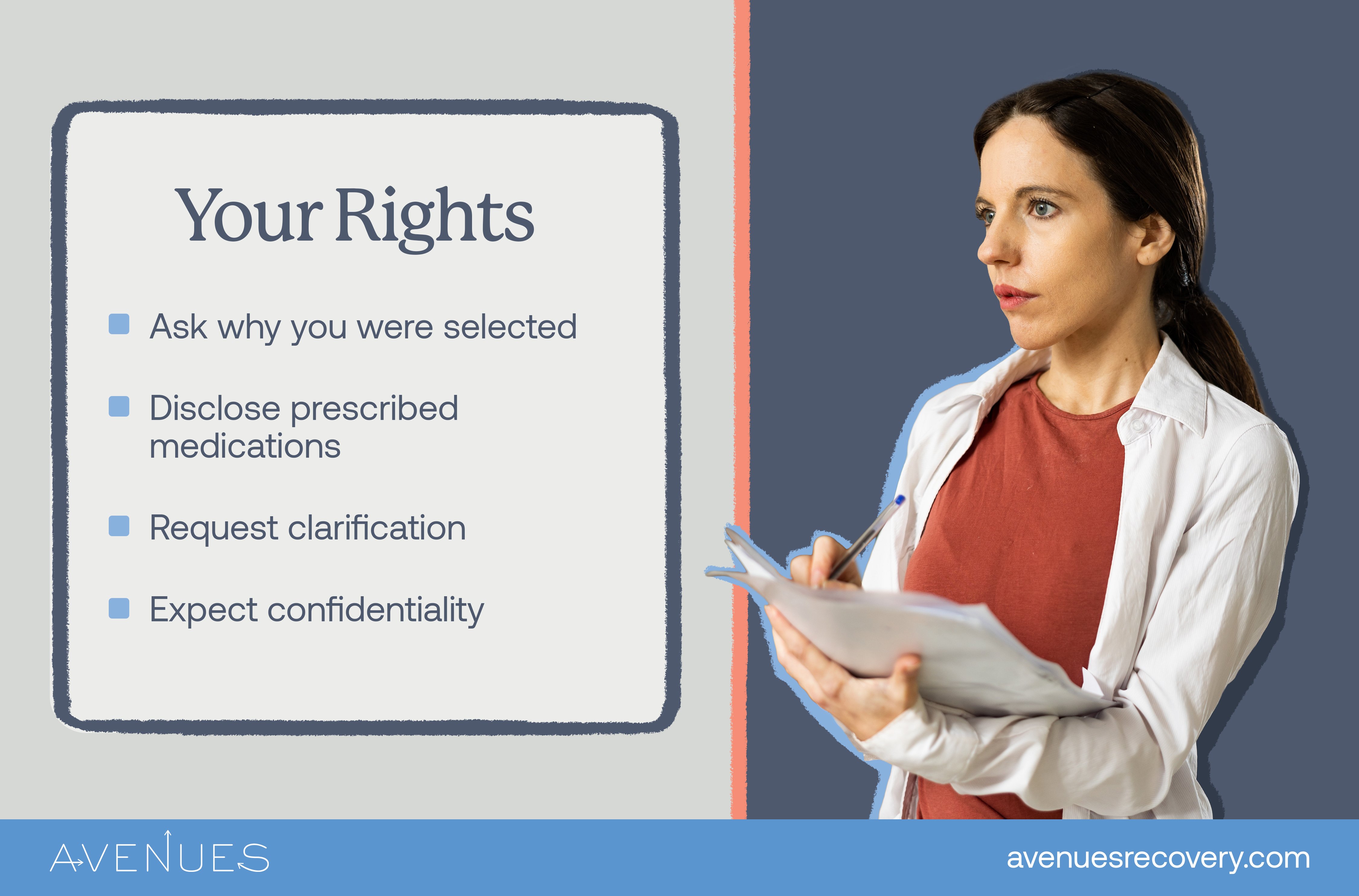
If you’re facing random drug testing at work, it’s normal to feel anxious or uncertain about what you can and cannot do. While employers can require testing as part of company policy, you still have basic rights that are meant to protect you. For example, your employer is generally required to follow the procedures outlined in their policy, treat all employees consistently, and respect your privacy throughout the process.
You also have the right to ask questions. You can request information about why you were selected, what substances are being tested, how the test will be administered, and how the results will be used. If something doesn’t feel right, it’s okay to pause and get clarification before proceeding. Knowing your rights can help you navigate the situation with more confidence and reduce the stress of uncertainty.
Can You Legally Refuse a Drug Test at Work?
Technically, you can refuse a drug test at work, but whether that’s a good idea depends on your situation. In most jobs, especially in the private sector, drug testing is part of company policy. When you accept the job, you’re usually agreeing to those terms. So while no one can physically force you to take a test, refusing can come with serious consequences, including suspension or termination.
There are some situations where refusal may be more understandable or even allowed. For example, if the testing process doesn’t follow proper procedures, feels unsafe, or violates your company’s stated policy, you may have grounds to question it. Certain roles, union agreements, or state laws can also affect what employers are allowed to require and how tests must be handled.
How Employer Drug Testing Policies Work
Most employers who require drug testing have a written policy that explains when and how testing happens. This is usually part of the paperwork you sign when you’re hired, even if you don’t remember all the details. These policies usually outline different types of testing, like pre-employment, random, post-accident, or testing based on reasonable suspicion.
These policies should also explain what substances are being tested, how the test will be done, and what happens with the results. In many workplaces, especially those focused on safety, there’s very little flexibility once a test is required. Refusing, delaying, or not completing the test within a certain timeframe may be treated the same as a positive result.
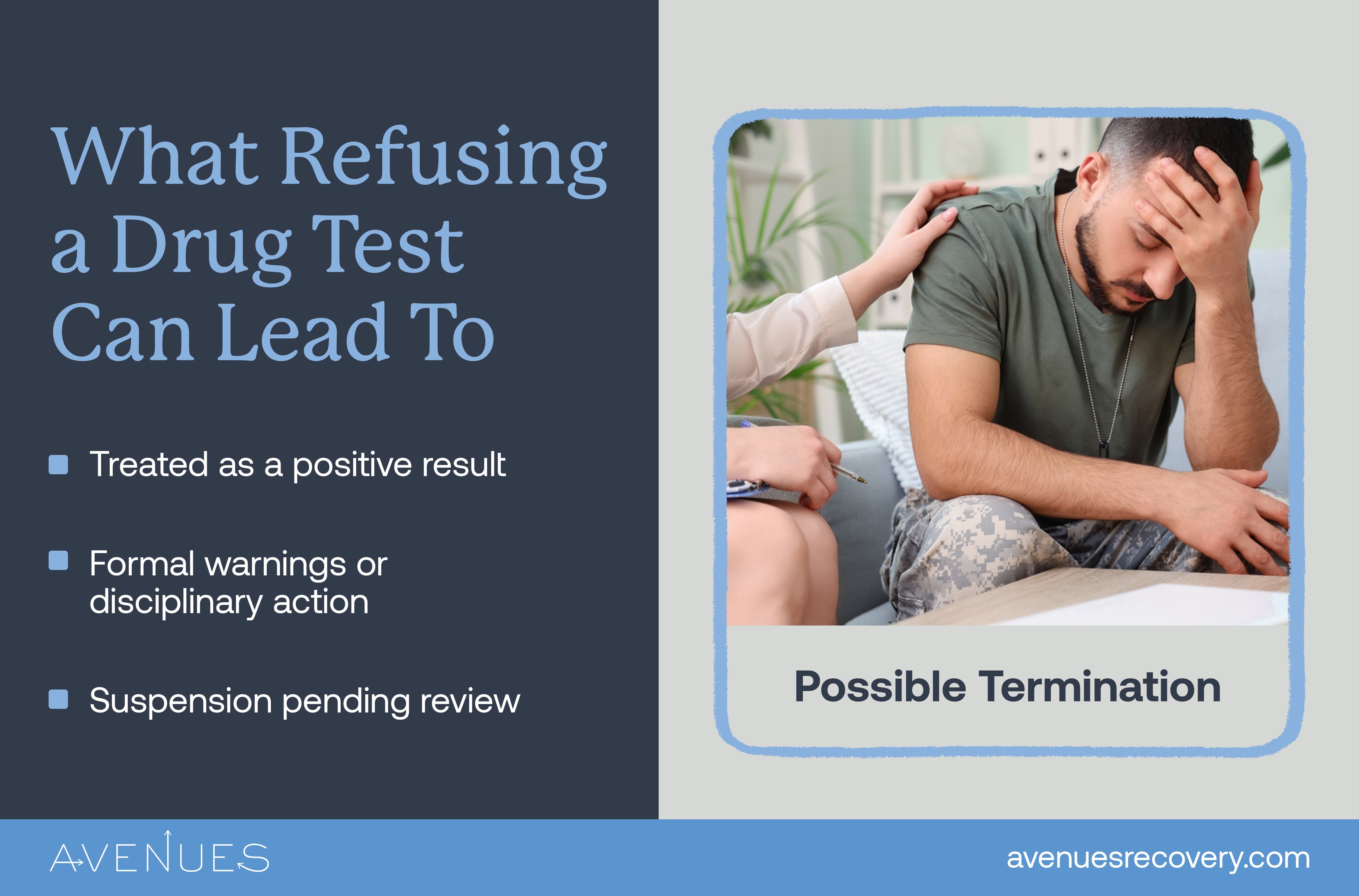
What Refusing a Drug Test Can Lead To:
Refusing a drug test at work is usually taken very seriously. In many workplaces—especially those with strict safety policies—refusing a test is treated the same as a positive result. That can feel frustrating or unfair, but it’s a common part of most drug-free workplace policies.
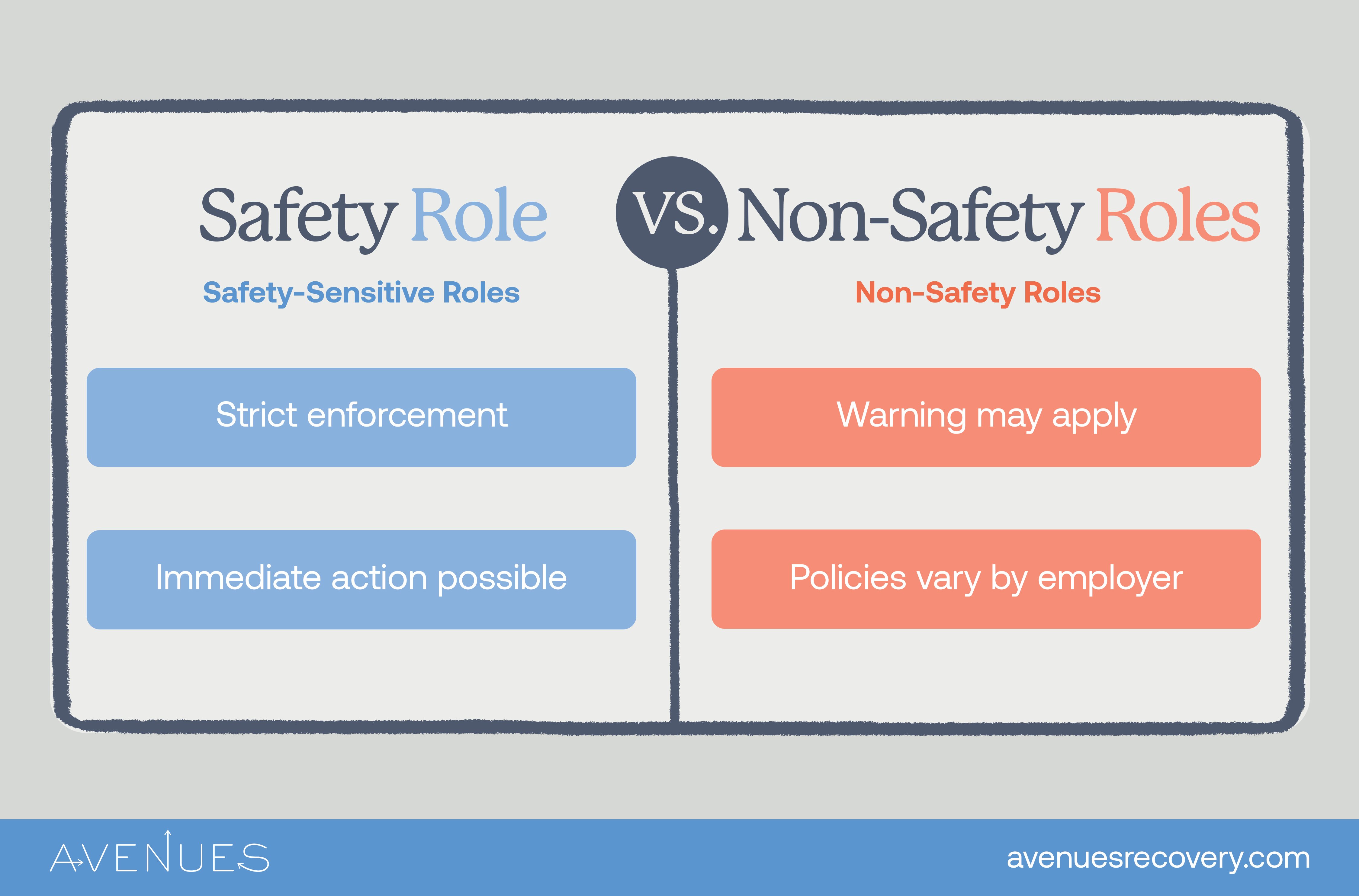
The consequences often depend on your role and the company’s rules. In safety-sensitive jobs, like transportation, construction, healthcare, or operating heavy machinery, refusing a test can lead to immediate suspension or even termination, even on the first instance. These roles carry higher risks if something goes wrong, which is why policies are stricter.
For non-safety-sensitive roles, there may be slightly more flexibility. Some employers might issue a warning, require a follow-up test, or involve HR before making a final decision. However, refusing a test can still carry serious consequences depending on your company’s policies and your employment history.
What are Reasons for Deferral of a Drug Test?
If you’ve been asked to take a drug test and something doesn’t feel right, you might be wondering if there’s any situation where a delay or deferral is allowed. In some cases, there are valid reasons to pause the process, but it’s important to handle this carefully and communicate clearly with your employer.
One common reason for deferral is a medical issue. If you’re unable to complete the test due to a health concern, like a condition that makes it difficult to provide a sample, you may be able to request additional time or an alternative method. In these situations, documentation from a healthcare provider is often required.
Another situation involves prescription medications. If you’re taking a prescribed drug that could show up on a test, it’s usually best to disclose this through the proper process rather than refusing the test altogether. Many workplaces use a medical review officer (MRO) to verify prescriptions confidentially, so your employer doesn’t necessarily see your personal medical details.
There can also be procedural issues that justify a delay. For example, if the testing process doesn’t follow company policy or proper guidelines, you may have grounds to ask questions or request clarification before proceeding. If you’re feeling unsure, it’s okay to pause, ask for information, and make sure everything is being handled correctly.
Practical Steps to Take Before Refusing a Drug Test
If you’ve been asked to take a drug test and your first instinct is to refuse, it makes sense to pause before making that decision. These moments can feel intense, especially if you’re caught off guard. Taking a few minutes to think things through can help you avoid consequences you might not have intended.
Start by reviewing your company’s policy if you can. Even a quick look at your employee handbook or HR guidelines can give you a clearer sense of what refusing might mean in your specific workplace. If something feels unclear, it’s okay to ask questions. You can calmly ask why the test is being requested, what the process involves, and what happens if you don’t comply.
If you’re taking any prescription medications or dealing with a medical issue, consider bringing that up through the proper channels instead of refusing outright. Many workplaces have a process in place to handle this confidentially. What feels like a reason to refuse might actually be something that can be addressed without putting your job at risk.
Most importantly, try not to make a rushed decision in a moment of stress. If substance use is part of what’s making this situation feel overwhelming, that’s something worth paying attention to, not with judgment, but with honesty. Getting clarity first can help you make a decision that protects both your job and your wellbeing.
If you’re struggling with substance use or worried about how it could affect your job, you don’t have to face it alone. Getting support early can help protect your health, your career, and your relationships. At Avenues Recovery Centers, our compassionate team offers professional treatment, guidance, and individualized care to help you take control and start rebuilding your life. Reach out to Avenues Recovery today to learn more and take your first step toward lasting recovery.
- You can technically refuse a drug test at work, but refusal is often treated the same as a positive result.
- Consequences vary by role: safety-sensitive jobs carry stricter policies, while non-safety roles may have more flexibility.
- Random testing doesn’t necessarily mean suspicion; it’s usually part of standard workplace policy.
- You have rights: understanding company policies, asking questions, and disclosing prescriptions can help protect you.
- Deferral may be possible for medical issues, prescription verification, or procedural concerns—but it must be handled properly.
- Seeking professional or legal guidance can help you navigate the situation safely and confidently.
FAQ's
- Can I legally refuse a drug test at work?
Yes, but refusing can still have consequences. In many workplaces, refusal is treated like a positive test, especially in safety-sensitive roles. - What counts as a safety-sensitive job?
Jobs in transportation, construction, healthcare, or operating heavy machinery are considered safety-sensitive because mistakes can risk serious harm. - What happens if I refuse?
Consequences may include warnings, suspension, or termination depending on your role and your company’s policy. - Are there situations where I can defer a test?
Yes—medical issues, prescription verification, or procedural problems may justify a deferral, but it’s important to follow company procedures and communicate clearly.