


If you’re thinking about going to rehab but feel frozen by one question—“Will I lose my job if I do this?”—you’re not alone.
Payal Kakaria, BSN, RN, is the Director of Medical Development at Avenues Recovery Center. A registered nurse by training, she brings a strong foundation in patient-centered, evidence-based care and is committed to advancing high-quality clinical practices across treatment settings.
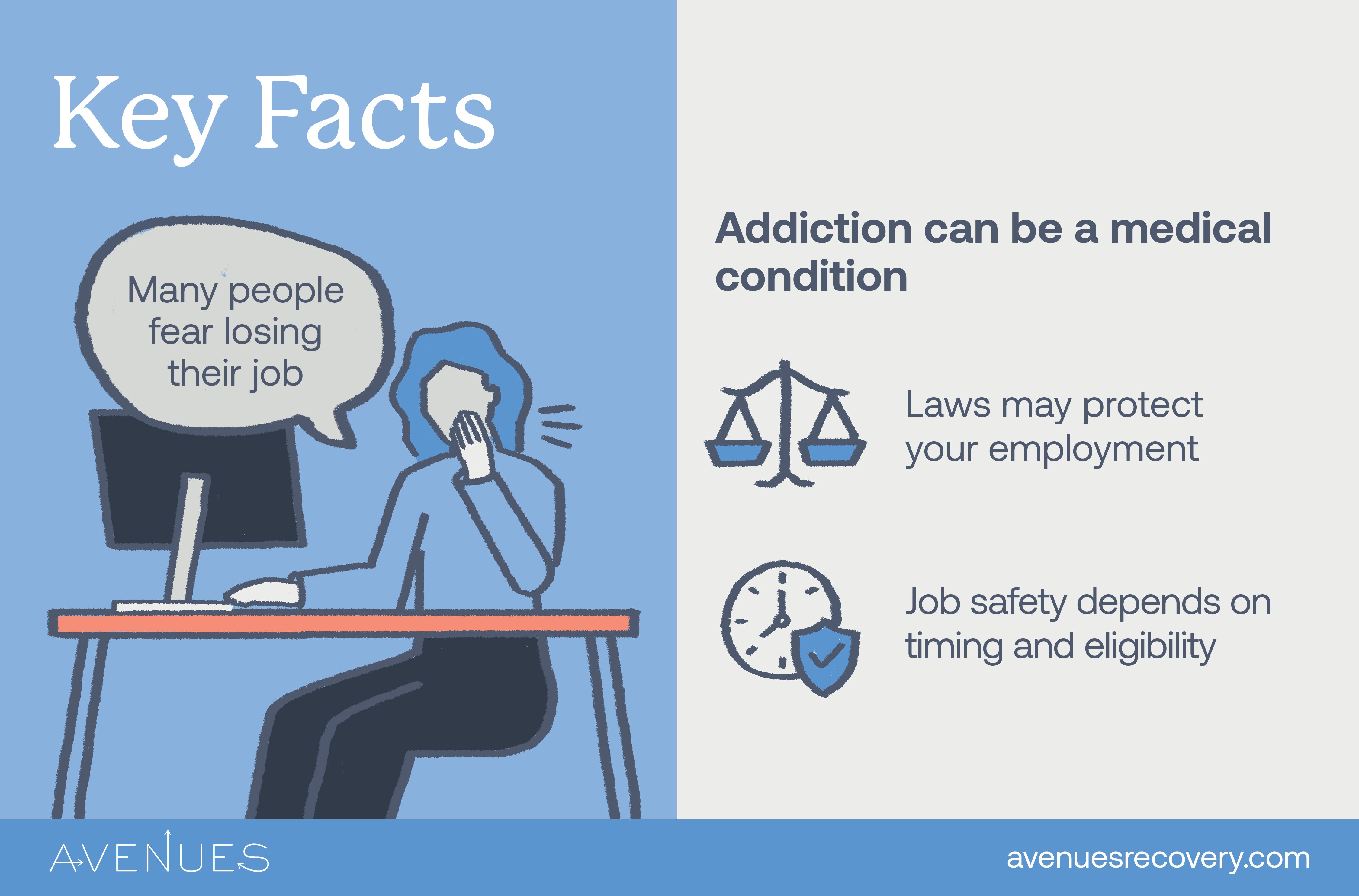
For many people, the fear of unemployment is one of the biggest reasons they delay getting help, even when they know something needs to change. That fear can feel overwhelming, especially if others depend on your income or you’ve worked hard to build your career. The truth is, the answer isn’t a simple yes or no. In many cases, the law offers protections for people who seek treatment for substance use. In other situations, those protections have limits. What matters most is understanding your rights, knowing what steps to take, and remembering that seeking help is not a failure, it’s a responsible and life-saving decision.
Your job vs. rehab
If you’re worried about losing your job because you need rehab, there’s a reason this fear feels so heavy. Work isn’t just a paycheck. It’s stability, routine, identity, and security. The thought of putting that at risk, especially when you’re already struggling, can make asking for help feel impossible. Many people delay treatment because they’re afraid of being judged, replaced, or seen as unreliable. Others worry that their employer will treat addiction as a personal failure instead of a health issue. If these thoughts have been running through your head, it doesn’t mean you’re weak. It means you’re trying to survive while protecting your future at the same time. Understanding your legal rights won’t erase all fear, but it can give you something solid to stand on as you make decisions about your health.
Know your rights: How the Americans with Disabilities Act can protect you
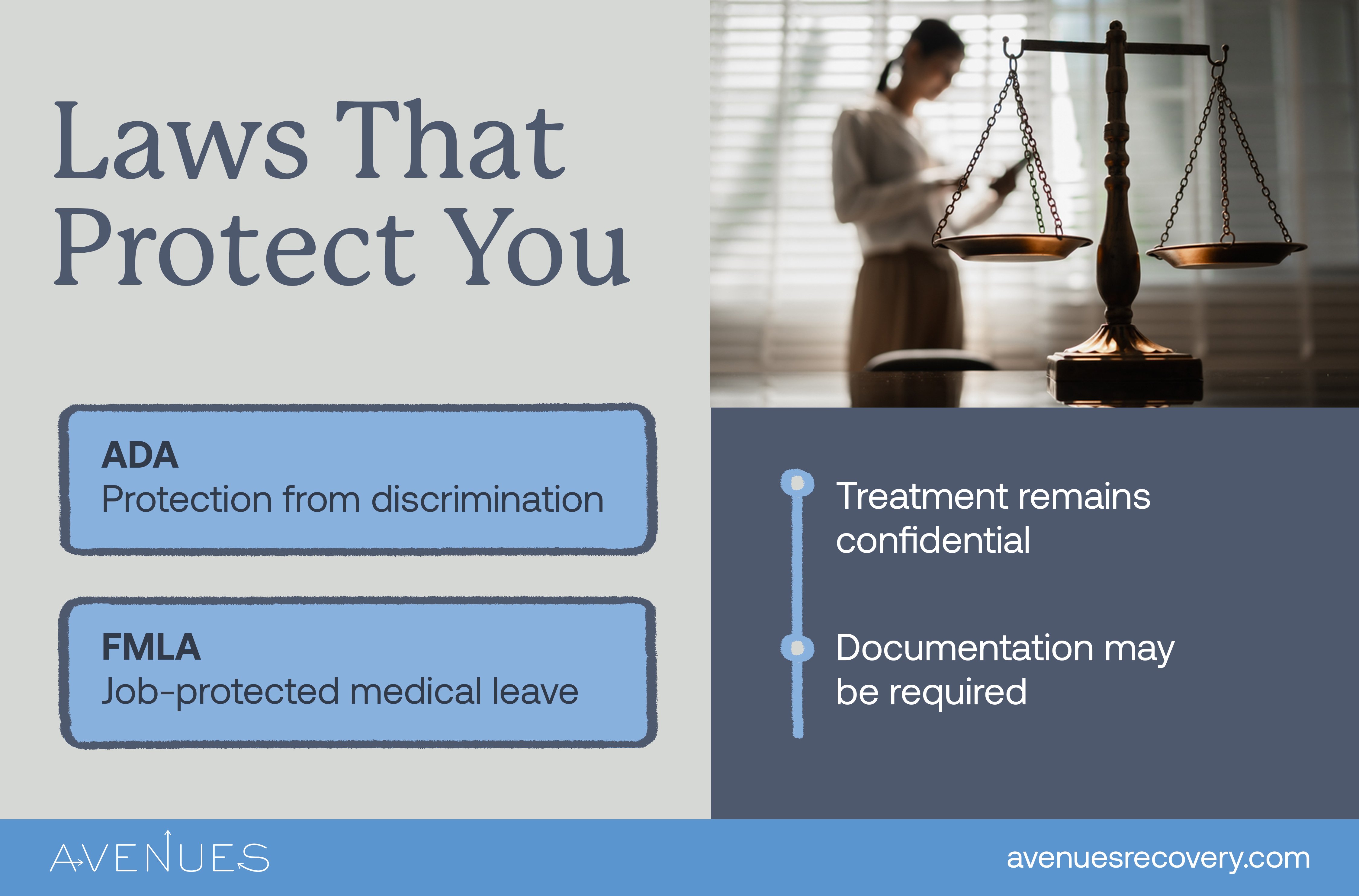
Under the Americans with Disabilities Act (ADA), substance use disorder can be considered a disability in certain situations—particularly when you are actively seeking treatment or are in recovery. This matters because it means your employer cannot legally fire you for going to rehab or for having a history of addiction.
If you qualify under the ADA, your employer is required to avoid discrimination, including in decisions related to hiring, firing, promotions, and workplace treatment. You don’t lose your value as an employee because you choose to take care of your health.
That said, the ADA doesn’t protect everything. It does not cover illegal drug use that is happening at work, and it doesn’t prevent employers from enforcing reasonable workplace policies. What it does protect is your right to seek help without being punished for it.
Taking time off for treatment…and keeping your job
The Family and Medical Leave Act (FMLA) is another key protection that can apply when you go to rehab. If you’re eligible, FMLA allows you to take up to 12 weeks of unpaid, job-protected leave for any serious medical condition, including substance use treatment.
While you’re on FMLA leave, your employer must hold your position—or an equivalent one—and maintain your health benefits. This allows you to focus on recovery without worrying that your job will disappear while you’re away.
Not everyone qualifies for FMLA. In general, your employer must have a certain number of employees, and you must have worked there long enough to meet eligibility requirements. You’ll also need documentation from a healthcare provider. Still, for many people, FMLA becomes the bridge that makes treatment possible.
Understanding the limits of legal protection
Even with laws like the ADA and FMLA in place, it’s important to be honest about the limits. These protections are real, but they aren’t a free pass that overrides workplace rules. You could still legally lose your job if your employer can demonstrate that the termination was not based on your decision to go to rehab. For example, employers are allowed to enforce policies related to job performance, safety, and conduct. If substance use led to repeated violations, unsafe behavior, or being under the influence at work, those issues can still have consequences.
This can feel frustrating or unfair, especially if you’re trying to do the right thing now. But the key distinction is this: your employer can address behavior or performance, but they cannot punish you simply for seeking treatment. Understanding that difference can help you plan your next steps more carefully.
Having the conversation you’ve been dreading
For many people, telling an employer about rehab feels harder than admitting the problem to themselves. You might be wondering how much to say, who to tell, or whether your honesty will come back to bite you. These concerns are incredibly common.
The good news is that you usually don’t have to disclose details about your addiction. In most cases, you can frame the conversation around having a serious medical condition that requires treatment. Human Resources departments are often trained to handle these situations professionally, especially when medical leave is involved.
It can help to prepare ahead of time. Reviewing your employee handbook, understanding your leave options, and having documentation from a healthcare provider can give you confidence going into the conversation. You don’t need to justify why you need help. You only need to communicate that you’re taking steps to address your health.
What going back can feel like
The idea of returning to work after rehab can bring up a mix of hope and anxiety. You may feel stronger and clearer…or nervous about how you’ll be perceived. Both reactions are normal.
Some people choose to keep their recovery private and focus on doing their job well. Others share limited information with trusted coworkers or supervisors. There’s no one “right” way to handle this. What matters most is what helps you stay stable and supported.
In some cases, people request reasonable accommodations, such as a modified schedule or time for ongoing therapy appointments. These adjustments can make the transition smoother and help you protect the progress you’ve made. Recovery doesn’t end when treatment does; it continues as you rebuild routines and confidence.
If you’ve been putting off treatment because you’re afraid of losing your job, it’s important to pause and acknowledge how much weight that fear carries. Wanting to protect your livelihood doesn’t mean you’re avoiding responsibility; it means you care about your future. And choosing to get help is one of the strongest steps you can take toward protecting everything that matters to you.
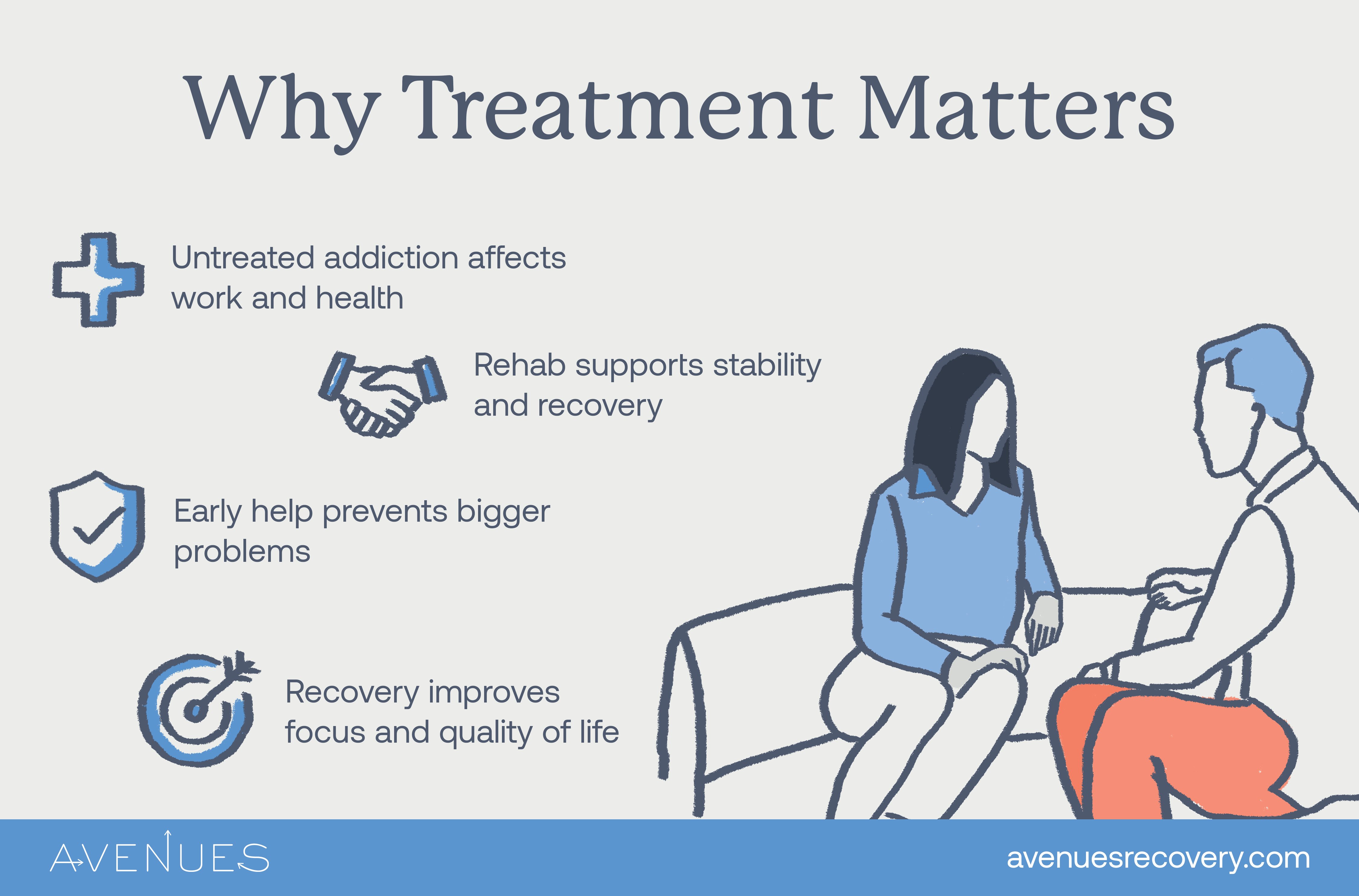
While laws like the ADA and FMLA may offer protection, the most important truth is this: untreated addiction puts far more at risk over time than taking time away to heal. Work, health, relationships, and stability all become harder to hold onto when substance use continues unchecked. Getting support now can prevent far more serious consequences later.
At Avenues Recovery Centers, we understand how overwhelming this decision can feel. Our team works with you compassionately and confidentially, helping you explore treatment options while navigating real-life concerns like employment and time away from work. From medically supervised detox to residential care, we focus on helping you recover in a way that respects both your health and your responsibilities. You don’t have to choose between your job and your life. Help is available, and you deserve support as you take this next step—whenever you’re ready.
Key Takeaways
- Fear of losing your job is a common reason people delay going to rehab.
- In many cases, laws like the ADA and FMLA offer protection when you seek treatment.
- Legal protections have limits, but employers cannot fire you simply for getting help.
- Talking to your employer doesn’t require sharing every detail about your addiction.
- Getting treatment early can protect your health, career, and long-term stability.
- Supportive, confidential care is available through Avenues Recovery.