


Key Takeaways
- Addiction quietly reshapes family roles, creating tension beneath functional appearances.
- Children and parents internalize stress, shame, and chronic anxiety patterns.
- Integrated treatment addresses substance use, trauma, and family dynamics together.
Families of Addicts
From the outside, your family may look stable. The bills are paid. The kids are getting to school. You show up to work. But inside the home, there may be tension no one talks about — mood shifts, walking on eggshells, quiet resentment, or fear of saying the wrong thing. Addiction doesn’t just affect the person drinking; it subtly reorganizes the entire family around it. Everyone adjusts in ways that help the household function — but not necessarily in ways that help it heal.
When alcohol or another substance is mixed with anxiety, depression, or unresolved trauma, the confusion multiplies. Loved ones may not know whether they’re responding to stress, mental health struggles, or substance use. A strong treatment approach addresses all of it, not just the drinking or drug use. Reach out to Avenues today, so we can guide you on your road to recovery.
Children of an Addict
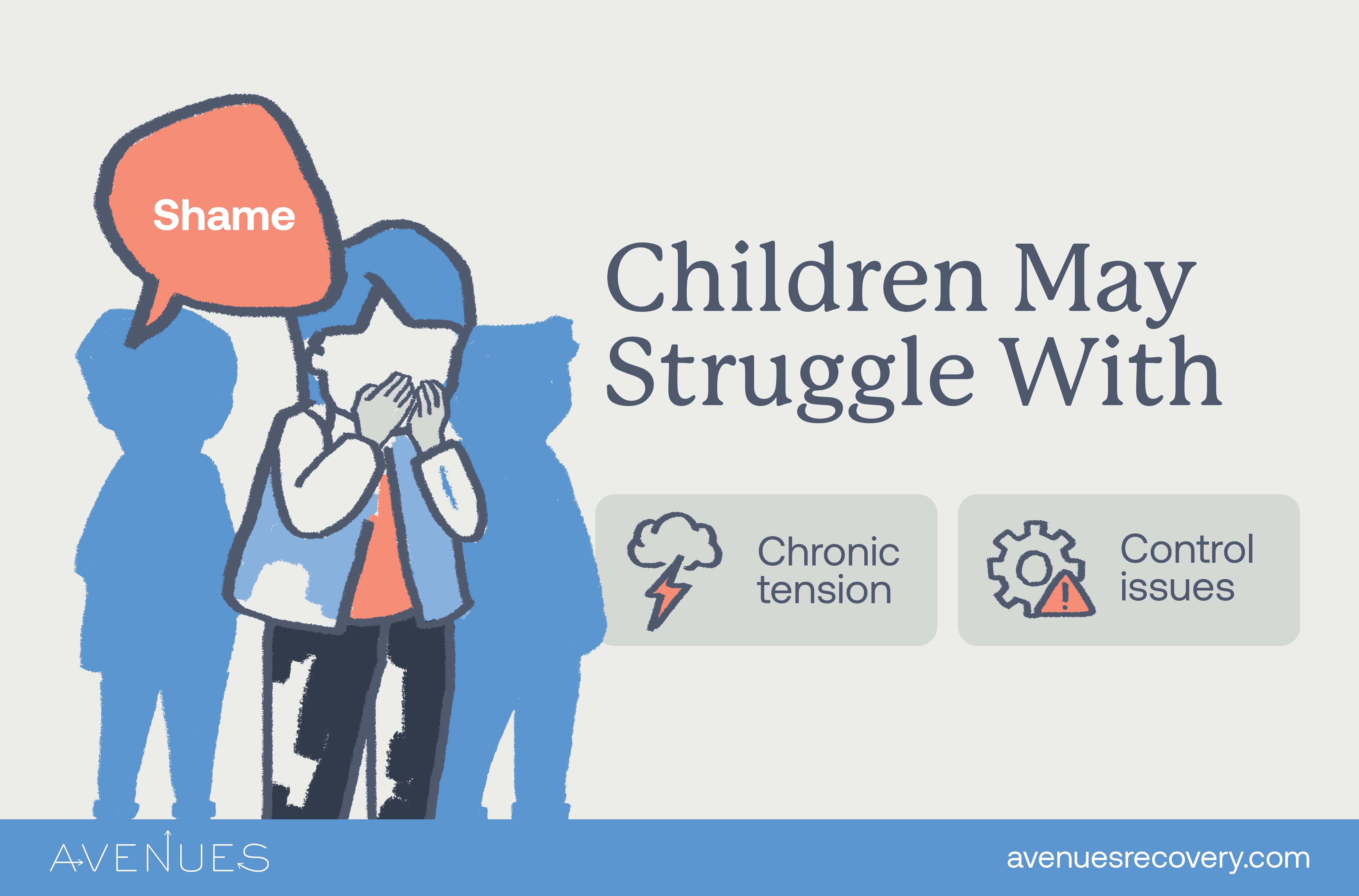
Children are perceptive. Even when things appear “normal,” they sense unpredictability — tension before dinner, silence after an argument, subtle shifts in mood. They often internalize what they don’t understand. Some become hyper-responsible. Others withdraw. Many quietly carry anxiety that doesn’t have words.
As adults, children of addiction may become high-achievers who feel like they’re barely holding it together inside. They may struggle with shame, control, or difficulty relaxing. Treatment that understands trauma, nervous system stress, and substance use together can help untangle those patterns — without blaming the past or labeling the present.
Parents of an Addict
Watching your adult child struggle while you’re still trying to hold your own life together can feel unbearable. You may question every past decision. You may fear stepping in too much — or not enough. The worry follows you into work, into sleep, into conversations you try to keep light.
Parents need support that respects their intelligence and emotional strain. Education about addiction and co-occurring mental health conditions helps separate guilt from responsibility. You can learn where support is helpful, where boundaries protect everyone, and how to remain steady without losing yourself.
{Imagery: Woman in her 50s looking overtired and stressed out, handpalming her head}
Dysfunctional Family Roles in Addiction
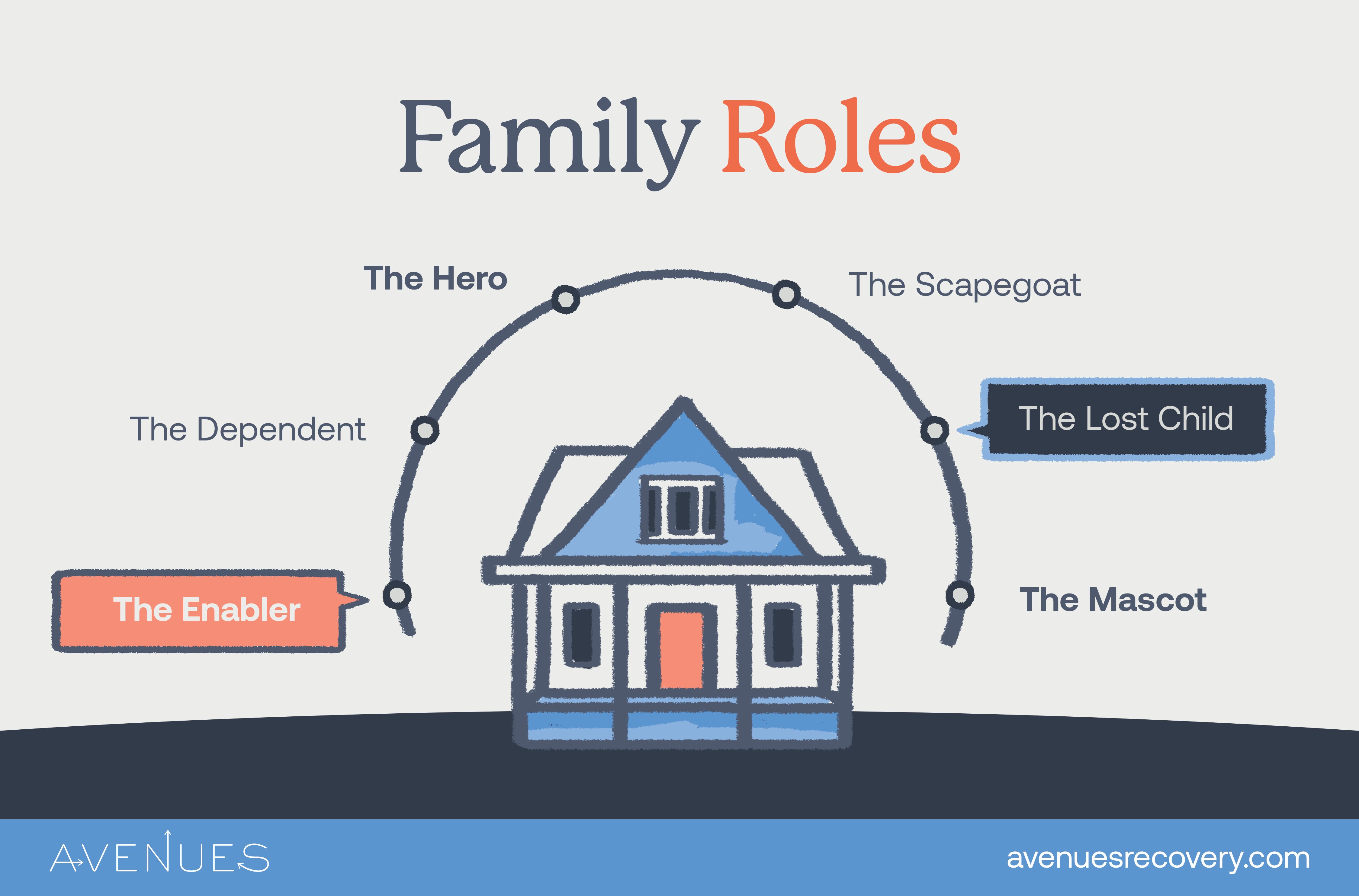
Many clinicians describe six common roles that tend to emerge in families affected by dysfunction. In Another Chance: Hope and Health for the Alcoholic Family, addiction and codependency specialist Sharon Wegscheider-Cruse outlines the roles found in alcoholic family systems.
These roles include:
- The Dependent
- The Enabler
- The Hero
- The Scapegoat
- The Lost Child
- The Mascot
In most discussions of family systems shaped by alcohol misuse, this six-role framework is commonly referenced. We will discuss these different roles now.
The Dependent

The Dependent may organize their life around keeping the peace or maintaining connection at any cost. They may ignore their own stress signals, telling themselves others have it worse. On the surface, they seem loyal and stable. Internally, they may feel panicked at the idea of conflict or separation.
Treatment can help rebuild internal stability so relationships are chosen, not clung to out of fear. Addressing anxiety, attachment patterns, and substance use together creates space for steadier self-trust.
The Caretaker

The Caretaker anticipates needs before they’re spoken. They fix, manage, schedule, and absorb emotional fallout. Their competence is admired. Yet underneath, they may feel invisible, resentful, or chronically tense.
Learning to step out of over-functioning can feel frightening. Who will hold everything together? A thoughtful program teaches boundary-setting, nervous system regulation, and realistic responsibility — without shaming the strengths that once kept the family afloat.
The Problem Child

The Problem Child draws attention through behavior — anger, risk-taking, or defiance. In reality, this role often expresses pain the family cannot openly acknowledge. Acting out becomes a pressure valve.
For high-functioning adults who once held this role, the pattern may shift into self-sabotage or substance use. Treatment that looks beneath behavior — toward trauma, shame, and unmet needs — provides more lasting change than simple behavior correction.
The Scapegoat

The Scapegoat absorbs blame. When tension rises, responsibility lands on them. This role can protect others from facing deeper issues. Over time, the scapegoated person may internalize the narrative that they are inherently flawed.
Rewriting that story requires both emotional processing and practical support. Programs that integrate trauma therapy and substance treatment help separate identity from role — allowing the person to reclaim a more accurate self-understanding.
The Mastermind

The Mastermind manages from behind the scenes — controlling information, smoothing over crises, and keeping appearances intact. They are often strategic and intelligent, ensuring the outside world never sees cracks.
But constant control feeds anxiety. The body remains on alert. Learning to tolerate vulnerability, ask for help, and loosen control safely is part of healing. Treatment should respect competence while gently challenging the belief that everything depends on you.
The Hero

The Hero excels. High grades, career success, reliability. They counterbalance chaos with achievement. From the outside, they look like proof that everything is fine.
Inside, they may feel crushing pressure and shame if they struggle. Seeking help can feel like betraying the role. Programs designed for high-functioning adults normalize this conflict and offer flexible levels of care — outpatient, intensive outpatient, or structured therapy — that fit around work and family life.
The Mascot

The Mascot uses humor, charm, or lightness to diffuse tension. They bring relief to heavy situations. People rely on them to keep things from feeling too serious.
Yet constantly minimizing pain can disconnect someone from their own deeper emotions. Safe therapeutic space allows seriousness without catastrophe — and teaches that relationships can withstand honesty.

The Lost Child

The Lost Child withdraws. They avoid adding to stress by needing very little. Independence becomes armor. Others may describe them as easygoing.
In adulthood, this can look like emotional distance or isolation. Treatment that addresses both trauma and substance use helps rebuild connection — not through force, but through steady, supported engagement.
Overcoming Dysfunctional Family Roles in Addiction
Change begins with awareness, but it doesn’t end there. Insight alone doesn’t calm anxiety or repair trust. Effective programs combine therapy, education, skill-building, and sometimes medical support for co-occurring depression or anxiety.
Levels of care vary — from weekly outpatient therapy to more structured programs — allowing you to choose support that fits your responsibilities. You do not have to dismantle your life to get help. The right plan strengthens it.
Support for Families of Addicts
Families often wait for a crisis before seeking support. But you don’t have to prove severity to qualify for care. If you feel exhausted, anxious, or emotionally stretched thin, that is enough reason.
Family therapy, support groups, and integrated mental health treatment can restore balance without judgment. You deserve relief from constant vigilance and shame. Healing is not about labeling anyone as broken — it is about creating stability, clarity, and sustainable change for everyone involved. Reach out to our experts at Avenues Recovery so we can guide your family to a healthier future.
1. How does addiction affect the whole family?
It shifts roles, increases tension, and creates unspoken stress — even if life looks stable on the outside.
2. How are children impacted?
They often absorb anxiety and unpredictability, becoming overly responsible, withdrawn, or reactive.
3. What if anxiety or depression are involved too?
Substance use and mental health often overlap. Effective treatment addresses both together.
4. Do we need to wait for a crisis?
No. Feeling overwhelmed or strained is reason enough to seek support.
5. Can help fit around work and family life?
Yes. Different levels of care allow treatment to work with real-life responsibilities.