

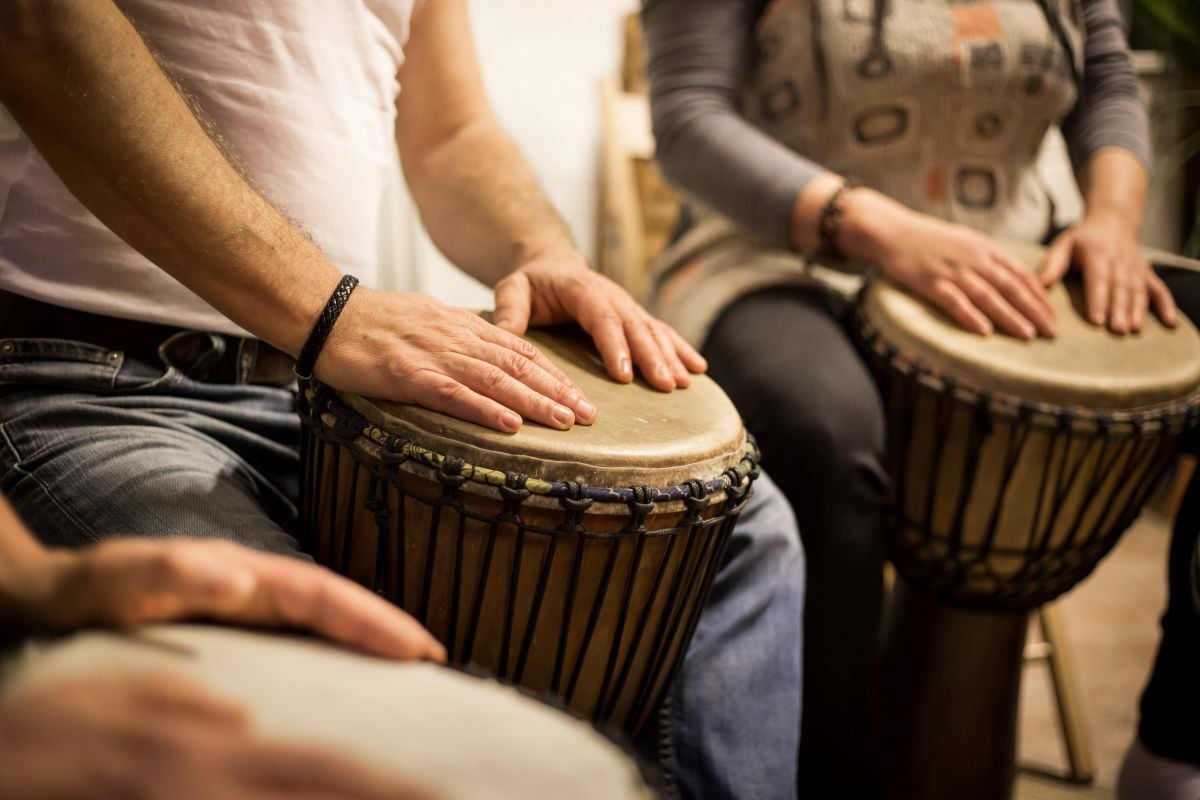
Music has a way of reaching us where words fall short. It lifts our spirits, calms our minds, and helps us express emotions we didn’t even know we were holding. But for people in recovery, music can be especially powerful — a bridge between pain and healing, chaos and calm.
That’s the idea behind music therapy for addiction. This evidence-based approach uses rhythm, sound, and creativity to help people process difficult emotions, reduce stress, and reconnect with themselves in recovery.
Key Takeaways
- Music therapy for addiction recovery helps people process emotions safely and effectively.
- Listening, songwriting, or playing instruments can reduce stress and regulate mood.
- Group music sessions build connection and social support, reinforcing long-term recovery.
- Individual music sessions let participants explore personal triggers and cravings privately.
- Music therapy in rehab can complement medical treatment and counseling programs.
Music for Addiction
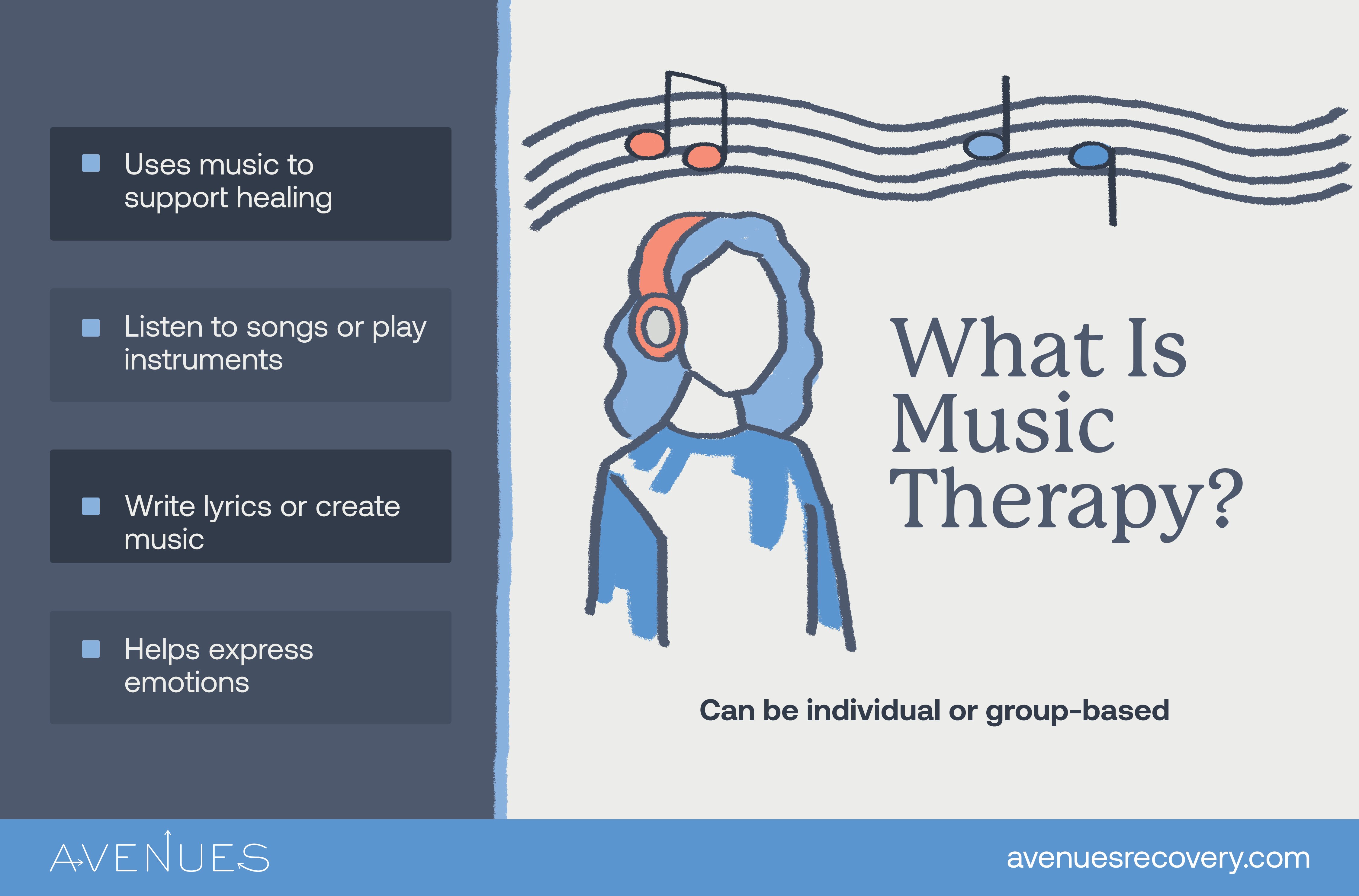
Music therapy is a clinical, evidence-based treatment that uses music to help people heal emotionally, mentally, and even physically. It’s not about being a great singer or knowing how to play an instrument — it’s about using rhythm, melody, and sound as tools for self-expression and connection. In a therapeutic setting, participants might listen to music, write songs, play instruments, or move to the beat, all under the guidance of a licensed music therapist.
The process of music therapy works on multiple levels. Music naturally engages the brain’s reward system, releasing dopamine — the same “feel-good” chemical that substances often trigger artificially. By creating music instead of using drugs or alcohol, people in recovery can experience joy and connection in a safe, healthy way.
Beyond the biological effects, music therapy for addiction recovery also helps people explore emotions they’ve numbed or suppressed. Writing lyrics, choosing songs that reflect your story, or even just listening to certain melodies, can all open doors to self-awareness and healing. In group sessions, music can also strengthen bonds between people, helping them feel less isolated and more understood — a powerful step in rebuilding a sense of community after addiction.
The Role of Music in Emotional Regulation and Stress Relief
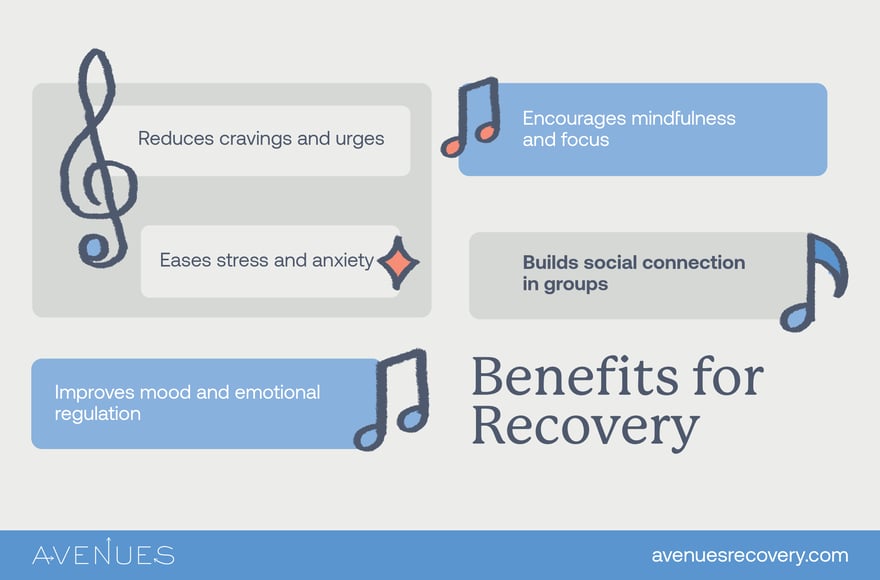
Addiction often leaves emotional chaos in its wake — anxiety, guilt, sadness, and anger can all bubble to the surface once drugs and alcohol are removed. Music gives a safe, structured way to face and manage those emotions. In music and recovery, sound becomes a grounding force. Slow, rhythmic music can help calm the nervous system, lower heart rate, and reduce cortisol levels (the body’s main stress hormone). Upbeat or expressive music, on the other hand, can help release tension and channel emotion in a positive, creative way.
For many people, music therapy for addiction recovery becomes a healthy outlet — a way to process feelings that might otherwise lead to relapse. Learning to sit with emotions instead of escaping them is a key part of recovery, and music offers an accessible, nonverbal path to do just that. Whether someone is journaling lyrics, drumming out frustration, or closing their eyes to a soothing song, the act of engaging with music teaches emotional awareness and control.
How Music Therapy Helps With Cravings and Triggers
When a craving hits, the body and brain react with tension and restlessness. Music works on both levels. Physiologically, it slows breathing, steadies heart rate, and helps regulate stress hormones. Psychologically, it shifts the mind’s focus away from the craving and toward something immersive and meaningful. Listening to music that evokes positive memories, or even creating music in the moment, can interrupt the craving cycle before it takes hold.
For example, in music rehab programs, clients often build personalized playlists to use when they feel triggered. These playlists might include songs tied to hope, peace, or strength — tracks that ground them in the reasons they chose recovery in the first place. Others might use drumming, singing, or songwriting as active coping techniques. The act of creating sound with intention helps transform anxiety or longing into expression, giving the mind a healthy outlet instead of an escape route.
In music and recovery, the power of sound becomes a form of relapse prevention. By learning to reach for music in moments of craving, people build a reliable, positive coping tool — one that’s always accessible, free, and deeply personal. Over time, music therapy doesn’t just help manage triggers; it rewires emotional responses, teaching the brain to associate calm and connection, not chaos and craving, with emotional intensity.
Evidence-Based Research Supporting Music Therapy Outcomes
While music therapy may feel deeply personal and creative, its benefits are also supported by research. Studies have shown that music therapy can significantly reduce symptoms of anxiety, depression, and cravings among people in substance use treatment. For example, a 2021 study published in the Journal of Substance Abuse Treatment found that patients who participated in group music therapy reported higher levels of motivation and emotional stability during detox and early recovery.
Another review published in Frontiers in Psychology highlighted how music stimulates areas of the brain linked to emotion, memory, and reward — the same regions often affected by addiction. By activating these pathways in a healthy way, music helps rewire the brain for pleasure and connection without substance use.
In short, the science backs what many people in recovery already know: music heals. It brings calm when life feels turbulent, focus when the mind wanders, and hope when things feel uncertain.
Group vs. Individual Music Therapy in Rehab
Just like recovery itself, music therapy isn’t one-size-fits-all. Some people benefit most from the shared energy of music group rehab, while others find that one-on-one sessions offer the privacy and focus they need to heal.
In group music therapy, participants come together to play instruments, sing, or share songs that represent their stories. The experience helps build connection and trust — two essential elements of long-term recovery. Group sessions often encourage teamwork and empathy, showing participants that they’re not alone in their struggles. Making music together can also be incredibly uplifting; it replaces isolation with belonging and transforms self-consciousness into confidence.
Individual music therapy, on the other hand, allows participants to dig deeper into personal emotions and experiences. A licensed therapist might help them write a song about their journey, use guided relaxation and music to reduce anxiety, or explore specific triggers that arise during treatment. These sessions can be customized to the client’s emotional state and recovery goals, making them especially powerful for trauma-informed care.
Music Rehab Programs
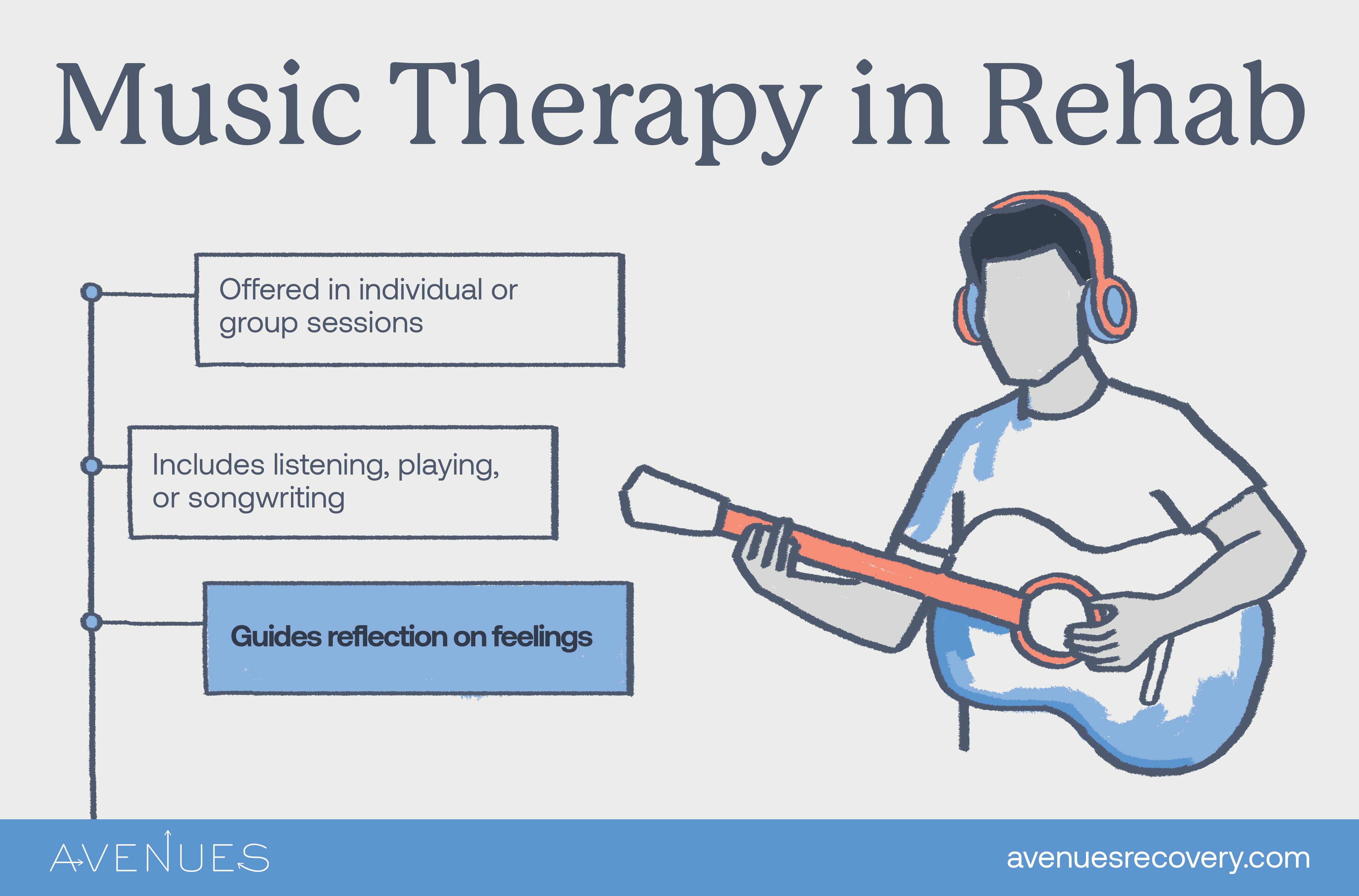
In many modern treatment centers, music rehab is integrated as part of a comprehensive recovery plan alongside talk therapy, behavioral therapy, and holistic practices like yoga or meditation. It’s not meant to replace traditional therapy — rather, it enhances it by giving patients another language to express what’s hard to say out loud.
A well-structured music rehab program might include daily or weekly sessions led by certified music therapists, group drumming circles, lyric analysis workshops, or guided relaxation sessions with calming music to ease anxiety and cravings. For people dealing with co-occurring conditions like depression or PTSD, music therapy for mental health can be especially effective, helping to regulate mood, build mindfulness, and reconnect individuals with positive emotions.
What a Typical Session Looks Like
A typical music therapy session in rehab lasts about 45–60 minutes. It may start with a short mindfulness exercise, allowing participants to settle in and focus on the present moment. The therapist might then introduce a theme — such as resilience, forgiveness, or hope — and guide participants to express that theme through music.
This could involve:
- Listening to and discussing a song with meaningful lyrics
- Writing a short song or poem about their recovery experience
- Playing simple percussion instruments in rhythm with others
- Engaging in guided imagery with relaxing background music
The session usually ends with reflection, where participants share what the music brought up for them emotionally. Over time, these sessions help build coping skills, reduce stress, and deepen self-awareness — all essential parts of sustainable recovery.
Music can be a powerful tool for healing — but it’s not a substitute for professional treatment. If you find that cravings, triggers, or emotional struggles are starting to control your life, it may be time to reach out for help. Common signs include relying on substances to manage stress, struggling to stop even when you want to, or feeling isolated from loved ones. The sooner you seek support, the stronger your recovery foundation can be.
Fortunately, there are many resources for addiction recovery that can help you take the next step. From local 12-step meetings and therapy groups to holistic rehab programs that include music therapy for addiction recovery, there’s no single path — just the one that fits you best.
At Avenues Recovery Center, we believe in meeting each person exactly where they are. Our treatment plans often integrate creative therapies, including music, art, yoga and mindfulness, alongside evidence-based medical and clinical care.
Finding Your Rhythm in Recovery
Recovery isn’t about silence — it’s about finding your new song. If you or someone you love is ready to take that next step, Avenues Recovery Center can help. Our team of compassionate professionals will guide you through detox, therapy, and aftercare in a supportive, uplifting environment where healing truly begins. Let’s help you rediscover your rhythm, your peace, and your purpose. Reach out to Avenues Recovery Center today to learn more about our programs and begin your journey toward lasting recovery.