


Key Takeaways:
• Recovery moves through five stages from denial to sustained change.
• The process blends medical care, planning, and practical life adjustments.
• Support and structure help protect progress and prevent setbacks over time.
Stages of Recovery Explained
For many people, recovery feels less about wanting help and more about not knowing how to make room for change.
When you’ve been pushing through life with work deadlines and family expectations, it’s easy to convince yourself you can straighten it out on your own. All the while, there’s a quiet fear that things are starting to slip. Maybe you’ve already tried cutting back or switching substances. Maybe you’ve had a bad weekend, a close call at work, or a doctor finally told you the truth. Whatever brought you here, it doesn’t mean something is wrong with you. It just means the way you’ve been coping has stopped working.
Recovery isn’t a grand declaration or a lifestyle slogan. It’s a practical process that has stages—physical, mental, and logistical. When you understand those stages, it becomes easier to picture how people get from crisis to being steady again in their everyday lives. Avenues Recovery can walk you through that process with dignity, medical supervision, and a clear plan for returning to everyday life.
The Five Stages of Recovery
Recovery usually begins long before treatment ever starts. These are the five stages of recovery:
Stage #1: Pre-Contemplation
At this point, you’re not seriously considering change. Maybe other people have suggested it. Maybe someone at work made a comment, or there was a close call that made you think twice. But the idea that substances are the problem feels off. You might see them as a coping tool, a release valve, or even a reward for carrying heavy responsibility.
From the outside, life often still looks functional—job, bills, family, routines. Inside, it’s harder to admit how much energy it takes to keep things held together. Many people stay in this stage longer than they expected because acknowledging there’s a problem feels like admitting failure. It’s not. It’s simply how the process starts for most.
Stage #2: Contemplation
Now the questions get louder. You’re not jumping into treatment yet, but you’re weighing the pros and cons. Maybe you’re tired of hangovers, health scares, or the anxiety cycle that comes with stopping and starting. You begin asking yourself what life would look like without relying on substances to steady the day.
This stage can last weeks or months, especially for people who have jobs, families, or reputations they’re worried about. The biggest barrier here isn’t usually willpower—it’s fear. Fear of withdrawal, fear of losing control, fear of being judged, fear of messing up again. The important thing is that you’re finally imagining change, even if you’re not ready to commit.
Stage #3: Preparation
This is often the moment when curiosity turns into momentum.
Here, thoughts turn into plans. You might research detox, talk to someone who’s been through treatment, or quietly look up how long withdrawal lasts. You want clarity—how long you’d need to be away, what happens to work, what you’d tell family, and whether you’d still be treated like an adult in the process.
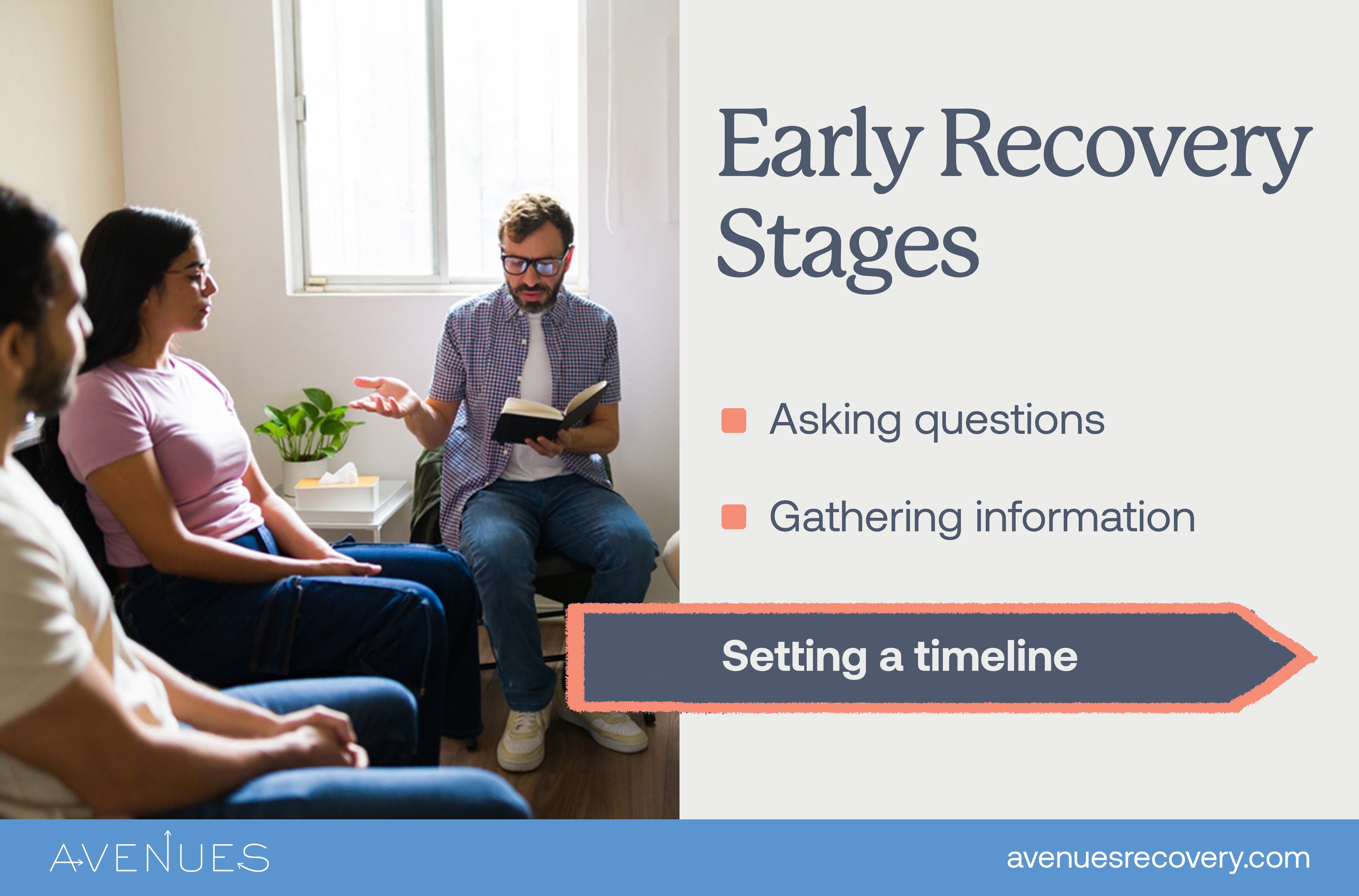
Preparation is also where reality checks happen. You start to see that continuing the same way has its own risks. Medical, legal, career, and relationship consequences begin to come into focus. That pushes you to sketch out a practical path forward. Not fix everything at once, just take the first serious step. Even small moves count here: asking questions, gathering information, or setting a timeline.
Stage #4: Action
This is where recovery becomes real. Action can look like medical detox, residential treatment, outpatient work, or a structured plan with professionals who know what withdrawal and early sobriety actually feel like. It’s not about slogans or feeling perfectly ready. It’s about stabilizing the body, clearing the mind, and learning new ways to deal with pressure without numbing out.
During this stage, many people realize they’re not alone. Plenty of others are mid-career, supporting a family, and terrified to lose what they’ve built. In a strong program, detox is supervised, respect is a priority, and conversations are adult-to-adult. This is where sleep improves, anxiety levels start to settle, and the thought of going back to work or home life becomes possible again.
Stage #5: Maintenance
Staying steady is less about willpower and more about structure.
Once you’ve stabilized and gained skills, the focus shifts to protecting progress. Maintenance isn’t perfection. It’s learning how to manage stress, boredom, conflict, and old triggers without sliding backwards. Support doesn’t need to be intensive—sometimes it’s therapy, sometimes groups, sometimes a handful of check-ins each week.
What matters in this stage is having a plan. Life doesn’t stop throwing curveballs just because you got sober. The difference now is you’re not white-knuckling it alone. With the right structure, staying steady becomes the new normal, and setbacks become something you know how to handle instead of something that takes you out. If part of you knows things can’t keep going the same way, you don’t have to figure it out alone. 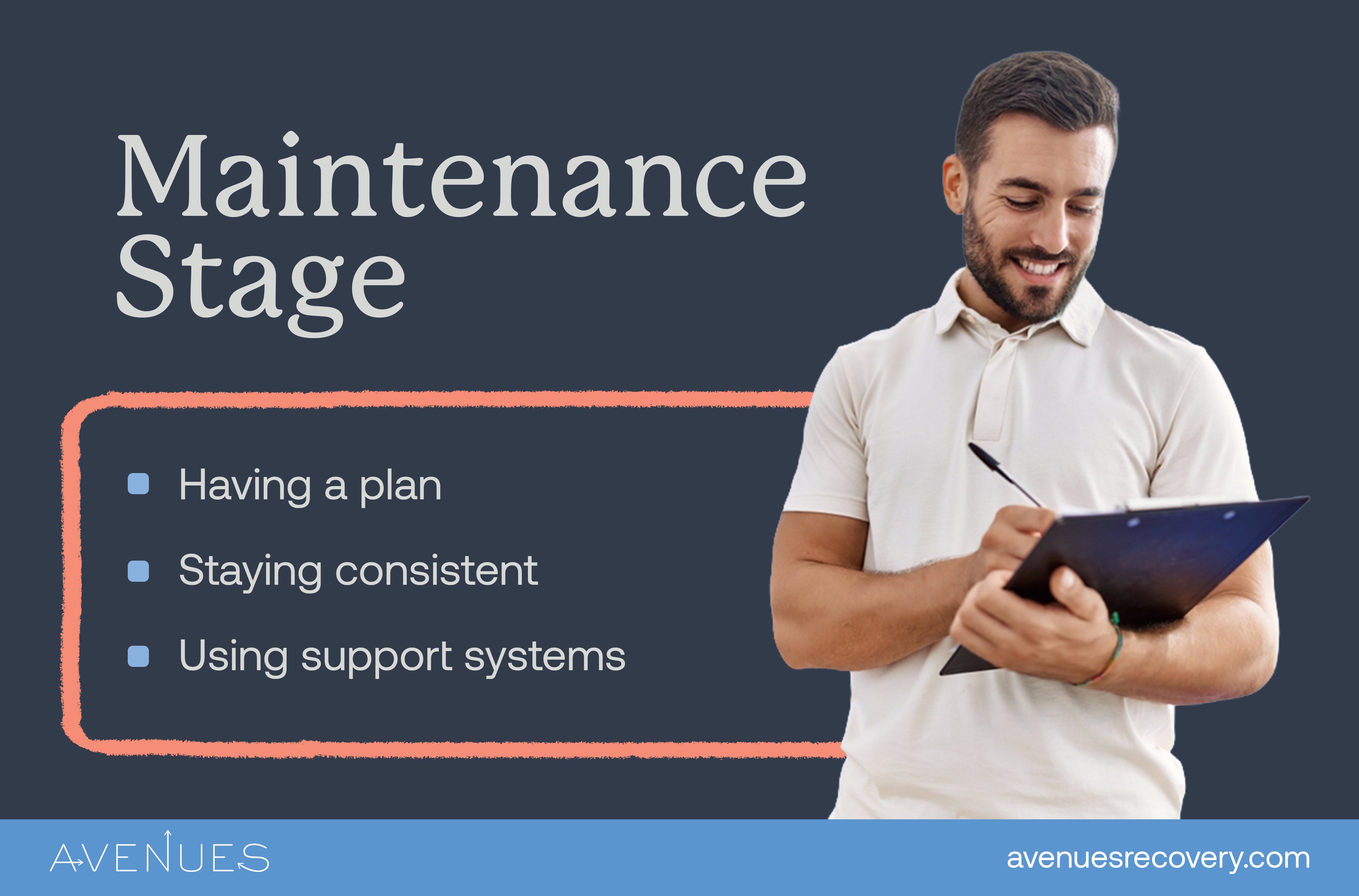 If part of you knows things can’t keep going the same way, that’s often where recovery actually begins.
Avenues Recovery offers medical care, structure, and real support for people who want their life back. Reach out, ask questions, and get clarity on what your next step could look like.