


The first step in the rehab admissions process isn’t paperwork or appointments. It’s courage. Simply deciding to reach out for help takes strength most people never see from the outside. If you’ve made that call, you’ve already begun your healing journey, and that deserves recognition.
When you call Avenues Recovery Centers, you won’t be met with judgment or a cold script. You’ll be met with compassion, respect, and real people who want to understand your story. Many of our admissions team members have walked a path similar to yours. They know the fear, the questions, and the weight of every step that comes before treatment.
This process is designed to be simple, supportive, and centered around you: your history, your needs, and your goals for recovery. From that first phone call to the moment you walk through our doors, we’re here with you.
What to Expect When You Call
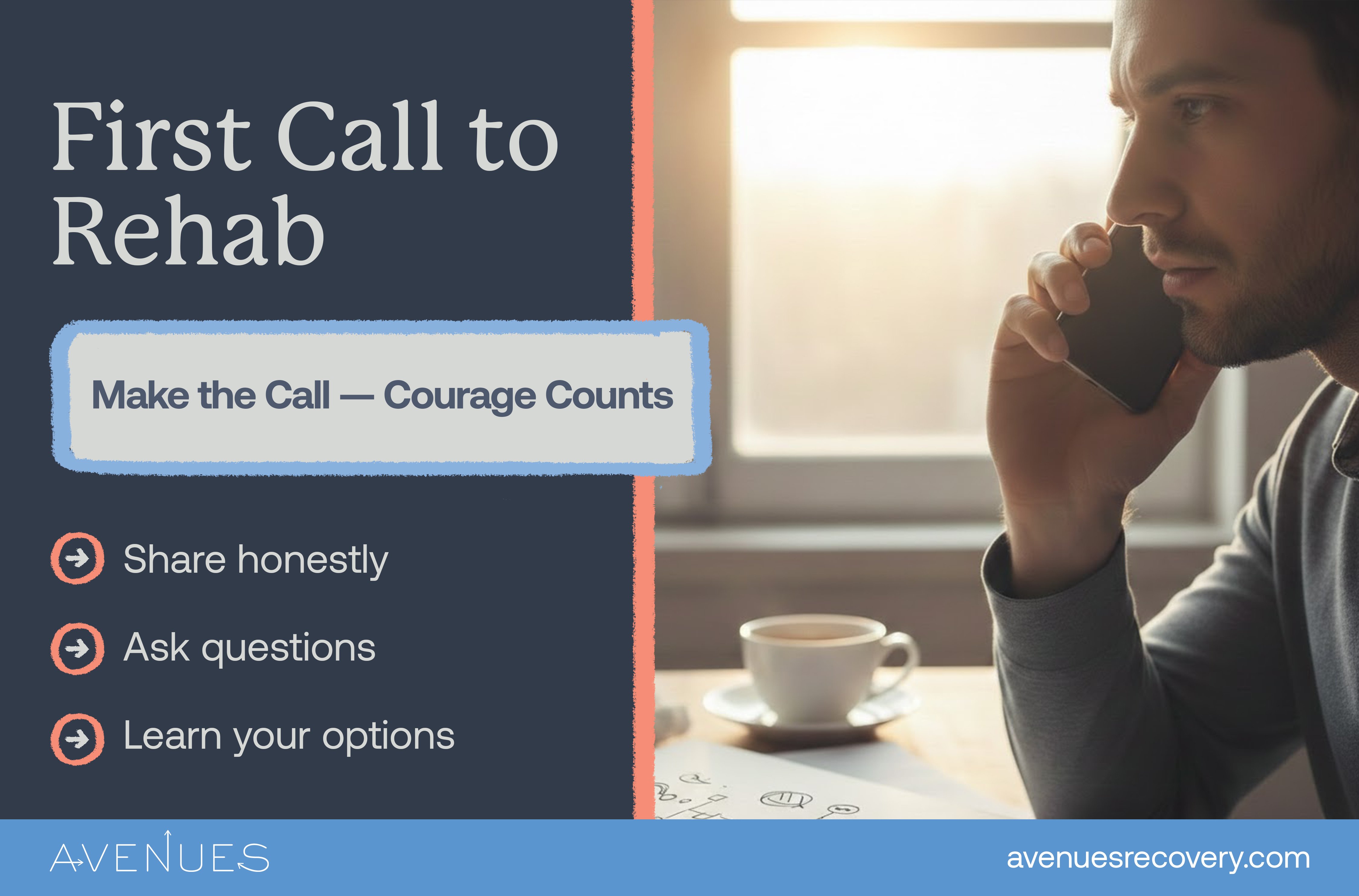
Making that first call can feel intimidating. You might not know what to say, what questions you’ll be asked, or whether you’re even ready to talk. If your hands are shaking when you dial, you’re not alone. Almost everyone feels nervous before reaching out for help.
When you call Avenues Recovery Centers, the goal is simply is simply to understand what you’re going through and how we can help. The conversation is private, confidential, and focused entirely on you.
Sharing Your Story
You’ll be invited to talk about what’s been happening in your life, your substance use, your health, and what led you to reach out today. You don’t need to have the perfect words. You don’t need to explain everything at once. Just start where you are.
This part of the conversation helps the admissions team understand your situation so they can guide you toward the right level of care. Everything you share is treated with respect and compassion.
Learning About Treatment Options
Next, the admissions specialist will explain the treatment programs available and what they involve. They’ll walk you through options like detox, residential care, or outpatient services, depending on your needs.
If you’re unsure what kind of treatment you need, that’s okay. Many people don’t know. The goal here is to help you understand what support might look like and what could be most helpful for your recovery.
Insurance Verification and Financial Questions
Finances are often one of the biggest concerns when considering rehab. During this step, the admissions team will check your insurance benefits and explain what is covered, what costs may apply, and what options are available to you.
This conversation is meant to be clear and transparent, not overwhelming. You’ll have a chance to ask questions and understand what to expect before making any decisions.
Clinical Assessment
To make sure you receive safe and appropriate care, a brief clinical assessment is usually completed by phone. This includes questions about your substance use history, physical health, mental health, and any medications you may be taking.
This step helps determine whether you need medical detox and what level of treatment will best support your recovery. It’s not a test, and there are no right or wrong answers. Honesty simply helps us take better care of you.
Scheduling Admission and Planning Your Arrival
Once a treatment plan is recommended and logistics are in place, the admissions team will help schedule your admission date and walk you through what comes next. They’ll explain what to bring, how to prepare, and what your first day will look like.
If transportation is a concern, support may be available to help you get safely to the facility. The goal is to remove as many barriers as possible so you can focus on taking this important step.
What Happens When You Arrive
Walking through the doors of rehab for the first time can feel overwhelming. New faces, routines, and rules can make anyone anxious. That’s completely normal. You’re stepping into a new environment, and it’s okay to feel a mix of emotions: excitement, fear, relief, or uncertainty.
The admissions team will welcome you with compassion and understanding, helping you settle in without pressure or judgment. They’ll guide you through the intake process, which includes verifying your information, completing any necessary paperwork, and reviewing your treatment plan. Everything is designed to make the transition as smooth as possible.
Initial Assessment and Orientation
Once paperwork is complete, you’ll have your first assessment with a counselor or clinician. This helps tailor your treatment to your unique needs, from your substance use history to your mental and physical health. Think of this as a map for your journey: the more honest and open you can be, the more effective your care will be.
After the assessment, you’ll receive an orientation to the program. You’ll learn about daily schedules, therapy sessions, group activities, and any house rules. While it may feel like a lot of information at first, the orientation is meant to provide structure and clarity so you can feel more settled in your new environment.
Meeting Your Support Team
Early in your stay, you’ll meet your counselors, nurses, and support staff. These are the people who will walk beside you throughout your recovery. They’re there to answer questions, offer guidance, and help you navigate challenges. Don’t hesitate to reach out. The staff’s role is to support you, not judge you.
Settling Into Your New Routine
The first days of rehab can feel intense, but they’re also full of opportunity. Engaging in sessions, connecting with peers, and following your schedule helps you build a sense of routine. Even small steps, like attending your first group or checking in with a counselor, are meaningful milestones in recovery.
Remember, it’s okay to feel nervous or uncertain. Everyone in the program has been there at some point, and support is always available.

Tips for a Smoother Admissions Experience
Even though the admissions process is designed to be supportive, a little preparation can make it easier.
- Gather important information ahead of time: medical history, medications, and insurance details
- Write down questions: about treatment, insurance, or daily routines
- Arrange support at home: so you can focus fully on treatment
- Pack comfort items: such as a journal or favorite clothing, while following facility guidelines
- Be honest and open: the more we know, the better we can support you
Entering rehab can feel like stepping into the unknown. Feeling nervous, uncertain, or overwhelmed is normal. Reaching out for help is one of the most important decisions you can make for yourself.
At Avenues Recovery Centers, our admissions process is designed to be simple, supportive, and focused on you. From the first phone call to your first day in treatment, our team will guide you step by step, helping you feel safe, understood, and supported.
You don’t have to navigate this alone. Treatment is available, support is ready, and recovery is possible.
- Making the first call is brave and meaningful
- Admissions conversations are confidential and supportive
- Honesty helps tailor your care
- Preparation can ease stress
- Early days focus on assessment, orientation, and routine
- Support is available every step of the way