


Recovering from addiction is a huge accomplishment. Often, returning to work after addiction treatment can stir up challenging emotions that risk undermining the progress you’ve worked hard to achieve. At Avenues Recovery, supporting individuals as they return to work is a top priority because we understand how important this stage is to long-term recovery.
Key Takeaways: Employment After Addiction
- Returning to work after addiction treatment can trigger stressful emotions that may challenge early recovery if not properly supported.
- Disclosure of addiction or rehab history is a personal choice, and individuals are never required to share more than they are comfortable with.
- Workplace environments may contain relapse triggers, including stress, social events involving substances, or workplace culture norms.
- Ongoing support, such as outpatient treatment, counseling, and peer support, plays a key role in maintaining recovery while working.
Consider Finding a New Job After Rehab
If you have a job to return to, the decision to return isn’t automatic. If you had coworkers who enabled or encouraged substance abuse, or if the job doesn’t provide routine or stability, it may be time to look for another job. Additionally, after addiction treatment, you may find that your goals, interests, skills, and passions lie in a different field. Be ready to pivot to a new industry and/or take additional training.
When finding employment after treatment, consider the following types of workplaces:
- Stable hours and expectations: A job with regular hours and expectations provides structure and routine, which are essential to people in recovery. A workplace with changing deadlines and odd schedules could be a source of uncertainty and stress.
- Healthy environment: This refers to both the physical environment and your coworkers. Both should be conducive to your physical, mental, and emotional wellbeing.
- Opportunities for growth: Setting goals is key to a healthy recovery; therefore, a position where you can learn more skills and/or gain promotion will help not only your career but also your sobriety.
Navigating Employment Challenges Due to Rehab
If you are looking for a new job after treatment, there are some things you need to prepare for.
Potential employers are not allowed to ask you about prior substance abuse, but you may find it necessary to be upfront with this information either during an interview or after getting the job. Weigh the pros and cons for every new situation, and be prepared to explain employment gaps on your resume during which you sought treatment. If your addiction has left you without references, you can rebuild your professional network by interning or volunteering.
Plan What to Say, and to Whom, After Rehab
When returning to work after rehab, you get to decide how much detail about your recovery you want to divulge, and to whom. If you’re returning to a previous job, your coworkers may already know some details. Still, practice what you’re going to say. Maybe you’re more comfortable with a vague explanation, like, “I had some medical issues to work through.” Or perhaps you prefer to share the full truth with some, but not all, of your colleagues. Don’t feel pressured to disclose more than necessary.
You may also be worried about the social stigma surrounding addiction and rehab. Prepare for negative reactions, but also celebrate positive responses or improvements in work relationships due to your sobriety.
Rehab During Employment: Know Your Rights
The Americans with Disabilities Act (ADA) protects people with an addiction history from discrimination. If you think coworkers are discriminating against you because of your addiction or rehab history, first reach out to your company’s HR department to see if the conflict can be resolved directly. If not, file a complaint or talk to an ADA specialist.
Additionally, the Family Medical Leave Act (FMLA) protects employees’ time off for ongoing or residential drug treatment. Your employer cannot terminate or alter your employment because of these absences. However, FMLA does not protect time off due to substance abuse. Read up on the benefits and limitations of both the ADA and FMLA so you know what applies to your unique situation.
Find Support for Employment After Rehab
Several organizations can assist you with questions and concerns regarding legal rights and discrimination when returning to work after rehab. Below is the contact information for a number of sources, aside from ADA:
- Equal Employment Opportunity Commission: Find a local field office.
- Job Accommodation Network: http://askjan.org/ or 1-800-526-7234.
- If you have a criminal record, you can find support on the National H.I.R.E. Network.
- The National Skills Coalition and U.S. Department of Labor provide inclusive support for job seekers with a history of addiction.
As you transition back to work and life, outpatient treatment or counseling through your rehab center can provide the support you need and help you with any concerns.
Avoid Relapse Triggers
Recognizing that workplace environments may contain ongoing relapse triggers is an important part of sustained recovery. These can be “normal” workplace occurrences to most people, but those in recovery need to stay vigilant. Some examples include:
- company lunches or dinners involving alcohol
- coworkers who drink or use recreationally
- stress (from work and/or personal life)
- celebrations, as they can either give you the confidence to handle “just one drink” or make you want to enhance the natural high with substances
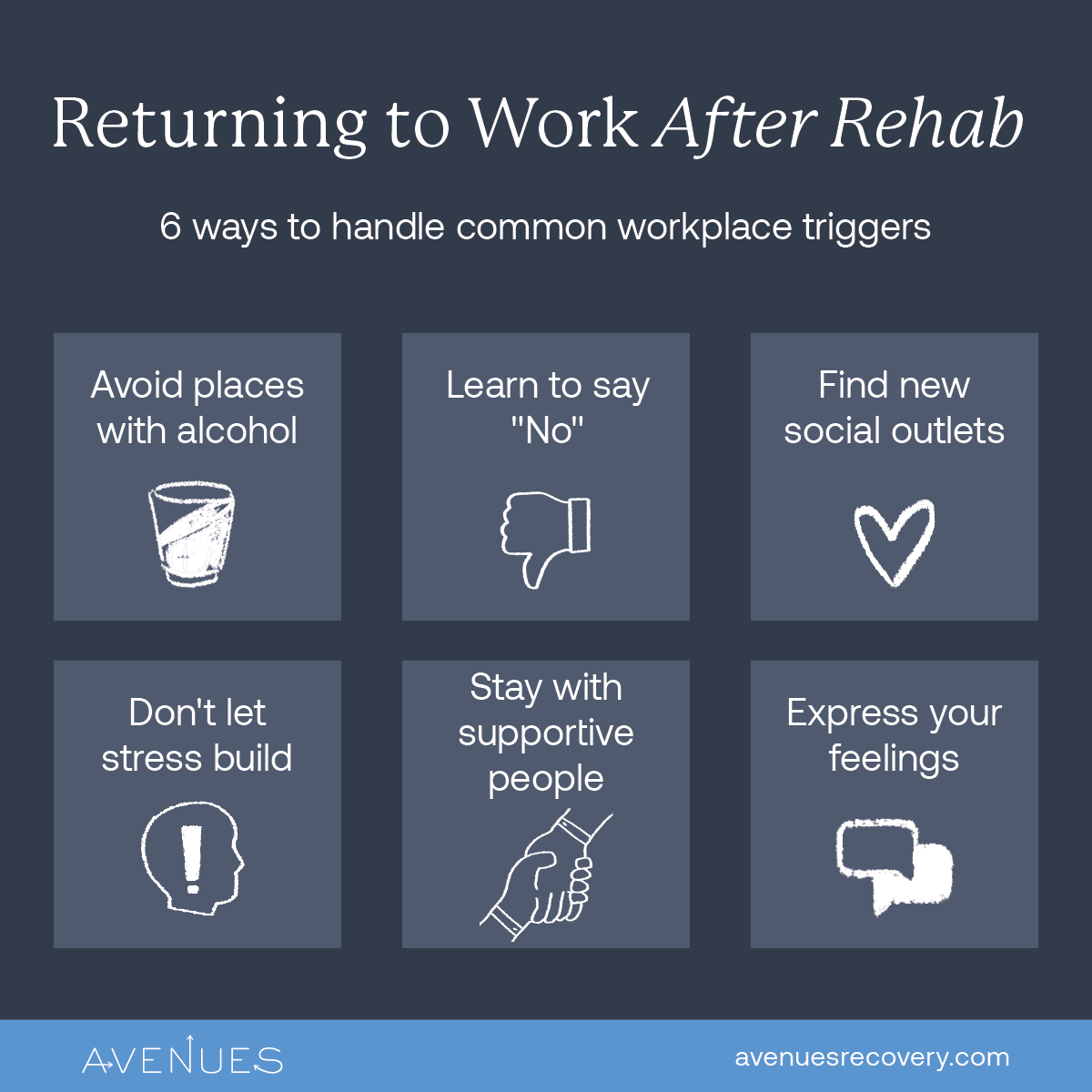
To combat these triggers, establish new rules and boundaries for yourself. Abstain from dinners at bars and take coworkers to lunch at a cafe instead. Accept that you’ll have to say no to certain social activities involving substances, and find new ways to be social. Surround yourself with people who support your sobriety, and learn how to manage stress in a healthy way.
Staying Sober as You Reenter the Workplace
At Avenues Recovery, we understand that returning to work and daily life after treatment isn’t easy. Our programs provide compassionate therapy and counseling to help you strengthen your recovery and build confidence. We offer ongoing weekly support, in individual or group sessions, so you never have to face challenges alone. Our programs are flexible, designed to fit your life, and focused on helping you take each step forward safely while protecting the progress you’ve worked so hard to achieve, while reclaiming your everyday life.
Reach out today for more information on our programs or to have your questions about returning to work after rehab answered.
FAQs on Going Back to Work After Rehab
Do rehab programs help with work and housing after treatment?
Rehab programs help with work and housing after treatment by offering job placement services, vocational training, and transitional housing support. Many facilities partner with local employers and housing providers to assist clients in securing stable employment and accommodations during recovery.
How soon should I go back to work after rehab?
There is no universal timeline. Some individuals return shortly after treatment, while others benefit from a gradual transition or continued outpatient care before re-entering the workforce.
Can a nurse work after rehab treatment?
A nurse can work after rehab treatment if they meet recovery milestones, comply with monitoring programs, and receive clearance from licensing boards. Many states require participation in alternative-to-discipline programs to support safe reentry into practice while ensuring patient safety.
How do you find a job after treatment?
How to find a job after rehab includes working with rehab case managers, using workforce reentry programs, and applying through job placement services. Many treatment centers connect clients to employers willing to hire individuals in recovery, often through partnerships with community organizations.