


When a child does not receive the care that he or she needs, whether due to maltreatment or other causes, they often wind up in the foster system. While foster care exists for noble reasons, there are some issues within the system, too. One of these is the major issue of substance abuse and addiction.
Preventing substance abuse among youth in foster care is possible, but it first requires an understanding of the situation. At Avenues Recovery, we are committed to finding solutions by exploring the underlying causes and identifying effective interventions.
Key Takeaways: Substance Abuse and Child Welfare
- Youth in foster care face significantly higher rates of substance abuse compared to the general population.
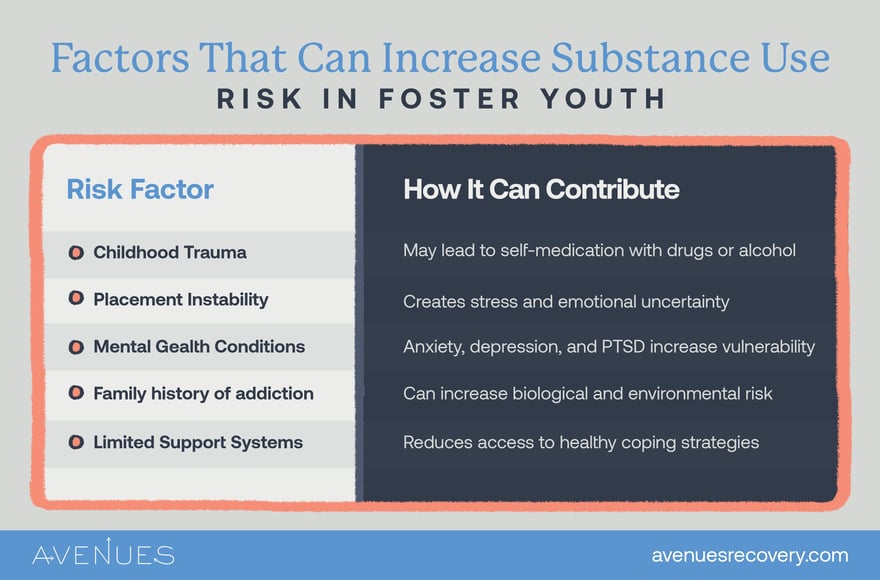
- Many foster youth experience mental health challenges, including PTSD, depression, and anxiety, which contribute to substance use.
- Systemic issues, such as placement instability and inconsistent care, can increase vulnerability to addiction.
- Parental substance abuse often creates a cycle of addiction that continues across generations.
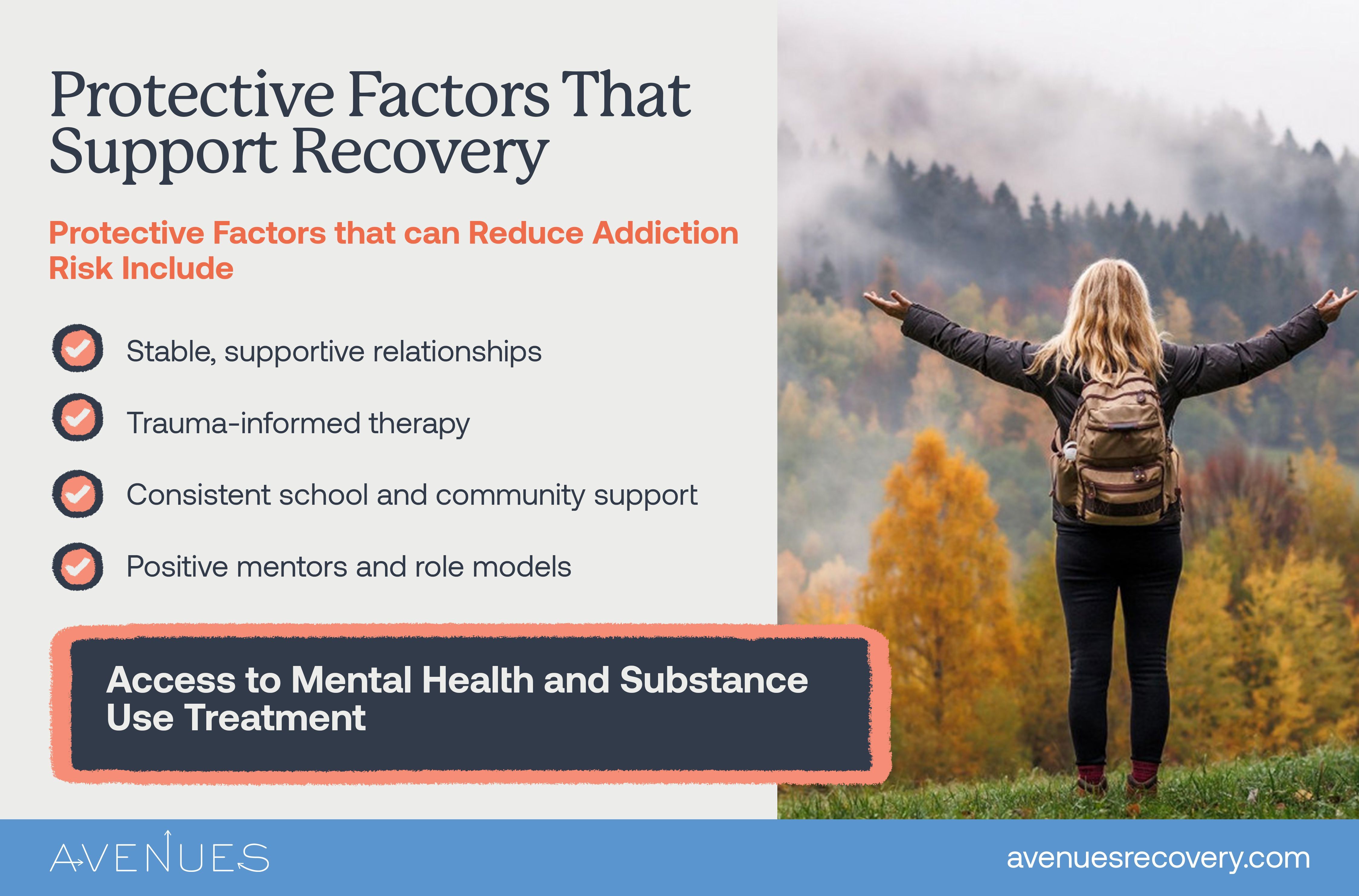
- Trauma-informed treatment, including therapy and mental health support, is essential for effective recovery.
Substance Abuse in Foster Care: The Percentages
According to the National Youth in Transition, 25.2% of 17-year-olds in foster care have been referred for substance use treatment. Furthermore, Greeno et al in 2019 found that youth who were previously in foster care have higher lifetime use rates than their contemporaries who were never in foster care.
According to SAMHSA, 48.4 million Americans age 12 or older — 16.8% of that population — met criteria for a substance use disorder. The disparities in the percentages of substance use and abuse among older youth in foster care compared to the general public indicate a serious issue.
New York-based writer, Lisa Marie Basile, lived in foster care between the ages of 14 and 19. Speaking to The Fix, she discussed the reality of these high addiction rates.
“I know the immense burden of loss and personal erasure that could lead to [criminal] behaviors. I was one of the luckier ones. That particular vice [drug addiction] skipped me. But that was sheer luck, personal genetics. If I were a betting person, I would have bet my younger self would have been abusing drugs. I had all the reasons to.”
When Basile says that she can see “all the reasons” for a foster child to engage in substance abuse, she isn’t alone. In fact, professionals on the subject name a few major reasons for this problem.
Factors Affecting Substance Abuse in Welfare
Addiction professionals and researchers have long been working to better understand why youth in the child welfare system are at a higher risk of substance use. Over time, they have identified several common contributing factors that help explain these patterns.
Neglect and Abuse Causing Addiction in Foster Kids

Children typically do not enter foster care without having experienced some form of abuse or neglect. Compounding this, studies suggest that nearly one-third of foster children may face additional abuse while in foster placements. This repeated exposure to trauma is a significant contributing factor to the development of substance use and addiction.
Dr. David Sack notes that: “The Adverse Childhood Experiences study, which is based on data from over 17,000 Kaiser Permanente patients, found correlations between severe childhood stress (e.g., abuse, neglect, loss of a parent, domestic violence, or having an addicted or mentally ill parent) and various types of addictions.”
This includes not only substance use disorder but also behavioral addictions, such as eating disorders or hypersexual disorders. Children cannot generally process traumatic experiences without support from family. When family causes said trauma, children seek unhealthy ways of finding the support they need. Lacking a proper support network leads them to simply avoid their problems through self-medication. When viewed in this light, it’s almost surprising that addiction rates in the foster system aren’t even worse.
As for why children would receive inadequate treatment in foster care, the problem stems from the system itself. A 1992 grand jury investigation in Santa Clara, California, found that the Department of Family and Children’s Services received more funding for placing children in foster care, even when removal may not have been necessary. This raised concerns about both agency priorities and the vetting of foster homes. Financial incentives for foster placements can also lead to situations where some homes are neglectful or even abusive.
Parental Substance Abuse Raises Addiction Risk in Foster Youth
Parental substance abuse often forms the basis of the neglect and abuse suffered by foster children. In fact, some state statutes in the US actually consider parental drug use a form of child abuse. Due to prenatal drug exposure, some children sadly suffer from addiction before even exiting the womb. These children experience withdrawal at birth and often suffer numerous co-occurring disorders as they grow older.
Even when prenatal exposure plays no role, parental drug use causes massive childhood stress. Children of addicts and alcoholics often find themselves embarking on a similar path to what they’ve seen growing up. This domino effect leads to problems affecting teen pregnancy rates, juvenile court records, and, our focus, the foster care system. When parents abuse drugs or alcohol in front of their children, it can trigger a chain of unfortunate events that often leads to continued cycles of substance abuse.
Seeking Possible Solutions For Foster Care Addiction

In a discussion with The Fix, Basile highlights an often-overlooked but powerful starting point for supporting foster youth: simply caring. She explains that the narrative around foster children is often distorted, framing them as “lost causes” when in reality, many have experienced significant trauma and instability that shape their outcomes. What is frequently missing from public understanding is the deep sense of loneliness many foster youth endure. This points to a clear need for greater awareness.
From a treatment perspective, research shows that many foster youth struggling with substance use have also experienced significant childhood trauma. This often calls for trauma-informed care, including approaches such as cognitive behavioral therapy (CBT), and in some cases, medication to address co-occurring conditions like PTSD, depression, or anxiety.
Recovery also begins with recognition and acceptance of the problem, which can be especially difficult for young people who have already experienced repeated emotional disruption. This is where counselors, social workers, and Court Appointed Special Advocates (CASA) can play a vital role, guiding youth toward available resources and helping them understand that support and recovery are possible.
Once connected to treatment and support systems, foster youth can begin to access the stability and care they may have lacked earlier in life. With the right intervention, they are given not only treatment for addiction, but also the opportunity to experience key elements that can support long-term recovery and healing.
Moving Forward From Foster Care Substance Abuse
Through education, support, and comprehensive care, we work to address both addiction and the contributing factors that make young people vulnerable in the first place. If you’ve been affected by substance abuse, whether at home or in foster care, we can help support your journey to healing and recovery. Contact us at any time; we’re here for you.
FAQs on Alcohol & Drug Addiction and Foster Care
What role does trauma play in addiction among foster children?
Trauma is one of the strongest contributing factors of addiction in foster children. Experiences such as abuse, neglect, and loss can lead to conditions like PTSD, anxiety, and depression. Without proper support, many youth turn to drugs or alcohol to cope with emotional pain.
How can support systems help prevent addiction?
Support systems prevent addiction by reducing risk factors and strengthening protective behaviors. Strong family, peer, and community support lowers substance use risk by improving emotional regulation and accountability. Access to counseling, mentorship, and structured activities builds coping skills and reduces relapse rates by 20–40% in high-risk individuals.
What services help foster youth stay substance-free?
SAMHSA-funded substance use programs, trauma-focused cognitive behavioral therapy (TF-CBT), Court Appointed Special Advocates (CASA), independent living programs, and school-based counseling can help children in foster care stay substance-free. Access to consistent case management and positive peer networks reduces substance use risk by up to 30–50% in foster youth populations.
Are there biological factors that are affecting substance abuse in foster care youth?
Biological factors affect substance abuse in foster care youth through genetics, brain development, and stress response systems. Youth with a family history of addiction have a 40–60% higher risk. Early trauma alters brain regions like the amygdala and prefrontal cortex, increasing impulsivity and stress sensitivity, which raises the likelihood of substance use.