


Adderall alternatives are natural supplements, lifestyle changes, or non-stimulant medications that aim to improve focus and attention without the use of amphetamines. At Avenues Recovery, our clinical team has helped many individuals recover from stimulant misuse and understands the benefits, risks, and limitations of both prescription and natural Adderall alternatives. If Adderall is not working for you, there are several options for alternative drugs or natural supplements you can try. These alternatives vary in their effectiveness and may not work the same for everyone, as each option comes with its own potential side effects and risks.
This article will delve into what Adderall is, who takes the drug and why, the problems with it, and potential substitutes. Additionally, we will try to shed light on drugs similar to Adderall that are non-prescription so you can try an Adderall substitute for ADD/ADHD.

Key Takeaways on Adderall Alternatives
- Adderall isn't right for everyone, and several prescription and natural options exist to help manage ADHD symptoms.
- Prescription alternatives like Ritalin, Vyvanse, and Strattera work differently, so side effects and results can vary from person to person.
- Natural options such as omega-3s, bacopa monnieri, and mineral supplements may support focus, though they're milder than prescription drugs.
- Because Adderall carries a real risk of dependency, any medication change should be made with a doctor's guidance.
- If Adderall use has become difficult to control, professional treatment can help you find a safer, more sustainable path forward.
What is Adderall?
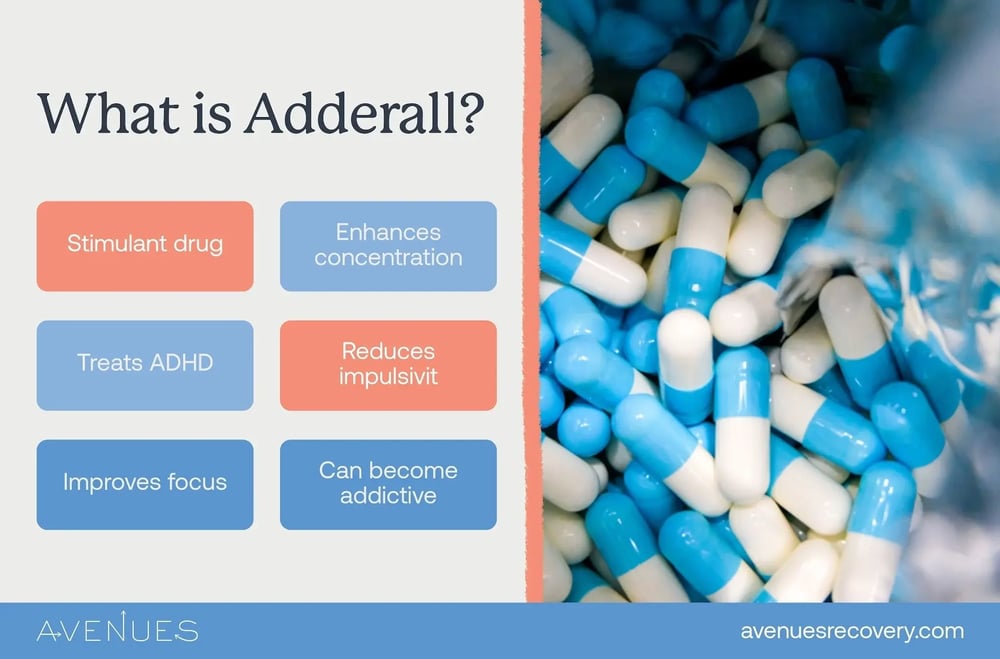
Adderall is a stimulant drug prescribed to help people with ADHD manage their symptoms. It is a combination of Amphetamine and Dextroamphetamine - two stimulants that trigger the release of neurotransmitters in the brain (norepinephrine and dopamine), which improve focus and organization, and help with concentration. Adderall is also prescribed to treat narcolepsy.
The problem with Adderall is that it has a high potential for abuse. In fact, the DEA (Drug Enforcement Administration) has classified Adderall as a Schedule II substance. People who have a history of drug abuse and addiction are particularly at risk for developing dependency and addiction to Adderall if they need to take it every day.
Side Effects of Adderall
Like every drug, there are some unpleasant side effects associated with Adderall. These side effects vary from mild to severe, depending on the individual and the dosage taken. Of course, when the drug is abused and an excessive dose is taken, the side effects are worse.
Common side effects include:
- Loss of appetite
- Abdominal pain
- Insomnia
- Headache
- Diarrhea
- Dizziness
- Nausea and vomiting
- Elevated blood pressure
If you have been prescribed Adderall to manage ADHD or narcolepsy, it’s likely that the benefits of the drug outweigh the potential side effects. However, if you experience serious side effects like numbness of the fingers and toes, depression, mood swings, aggression, seizures, irregular heartbeat, or blurred vision, reach out for medical help immediately.
It’s important to note that it is dangerous to stop taking Adderall cold turkey. Whether you’re taking liquid Adderall or the pill form of the drug, there are severe withdrawal effects associated with it, so medical supervision is needed to taper off the drug slowly and safely.
Prescription Alternatives to Adderall
Prescription medications are a common treatment for ADD/ADHD, and studies published by the National Library of Medicine (NIH) show that the use of these medications has been increasing in recent years. If you are looking for prescription medicine similar to Adderall, the following guide may be helpful.
Adderall Alternative #1: Ritalin
Ritalin is the second most widely prescribed drug to treat ADHD. Its main ingredient is methylphenidate, a stimulant that manipulates neurotransmitters in the brain to lower hyperactivity and improve concentration. Ritalin is classed as a Schedule II drug, much like Adderall, due to its high potential for abuse.
Like Adderall, Ritalin has some side effects, including:
- Loss of appetite
- Increased blood pressure
- Numb or cold fingers and toes
- Fast or irregular heartbeat
- Breathing problems
- Anxiety or depression
- Confusion
- Hallucinations
- Blurry vision
- Irritability
Adderall Alternative #2: Provigil
Provigil is another Adderall alternative. Its main ingredient is modafinil, a drug approved to treat narcolepsy but used off-label for ADHD. Provigil is also a stimulant, although milder than both Adderall and Ritalin, and does the same job of improving focus and concentration and lowering impulsivity. Provigil also has the potential for dependence and abuse.
Side effects of Provigil include:
- Dizziness
- Drowsiness
- Chest pain
- High blood pressure
- Depression
- Vision issues
Adderall Alternative #3: Strattera
Strattera is an Adderall alternative ideal for people who have trouble with stimulant drugs, as it is not a stimulant but a selective norepinephrine reuptake inhibitor (SNRI). Its main active ingredient is Atomoxetine, which helps improve impulse control and focus by changing the patterns of norepinephrine reabsorption in the brain.
Strattera causes some side effects, including:
- Lightheadedness
- Dizziness
- Drowsiness
- Loss of appetite
- Abdominal pain
- Changes in blood pressure
- Changes in mood
Adderall Alternative #4: Vyvanse
Vyvanse is a stimulant prescribed to treat ADHD and binge eating disorder. Its main ingredient is lisdexamfetamine, a stimulant that increases focus and decreases impulsive behavior. It is another Adderall substitute that may be prescribed depending on an individual's needs.
Side effects of Vyvanse include:
- Decreased or loss of appetite
- Anxiety
- Weight loss
- Diarrhea
- Dizziness
- Dry mouth
- Irritability
- Sleeping issues
- Nausea
- Stomach pain
- Vomiting
Adderall Alternative #5: Focalin
Focalin is a mild stimulant drug that increases the levels of norepinephrine and dopamine in the brain. Its active ingredient is dexmethylphenidate, and it operates in a similar fashion to other stimulant medications, making it one of the closest things to Adderall
Focalin side effects include:
- Chest pain
- Loss of appetite
- Fever
- Nausea
- Blood circulation issues
- Trouble breathing
- Aggression or hostility
- Hallucinations
What Are Some Natural Alternatives to Adderall?
Natural Adderall alternatives refer to different drugs, herbs, or supplements that can be obtained over the counter, such as supplements, natural acids, and herbal remedies. Over-the-counter Adderall alternatives aren’t as effective as their prescription counterparts, but they also do not carry the potential for abuse. They are often the preferred option for people who have a history of drug or stimulant substance abuse, or for people who prefer not to take Adderall for some other reason.
Drugs similar to Adderall that are non-prescription include:
- Nootropic supplements: These can be obtained in a non-stimulant version over the counter. Nootropics are supplements like Adderall that are believed to boost mental functions such as concentration, focus, alertness, memory, and other cognitive abilities. Some people use these supplements, such as Adderall, for energy and improved mental performance, although results can vary depending on the individual.
- Omega-3 fatty acids: According to a study performed on people with ADHD, Omega-3 fatty acids have proven to decrease impulsivity and hyperactivity, and improve concentration.
- Bacopa monnieri: This is a plant extract with medicinal properties and is a popular herbal Adderall alternative. Studies have demonstrated that Bacopa monnieri can improve stress and other physical and emotional symptoms. Particularly for people with ADHD, it has shown the ability to decrease impulsive behaviors.
- Mineral supplements: This can include minerals like magnesium acid, zinc, vitamin D, and iron, which have shown varying levels of effectiveness in addressing the core issues of ADHD. They can boost relaxation and brain function, regulate mood, and reduce hyperactivity and impulsiveness. Some people also explore these supplements as Adderall alternatives for fatigue, especially when looking for non-prescription options to support focus and energy levels.
While there is no true closest drug to Adderall available without a prescription, some people choose these legal Adderall alternative options as part of a broader treatment plan after discussing them with a healthcare provider.
If you are struggling with the side effects of Adderall or are concerned about becoming dependent upon or addicted to Adderall, it may be worthwhile to explore Adderall alternatives and determine what is similar to Adderall based on your individual health needs.
Treatment for Adderall Addiction
If you or a loved one has been prescribed Adderall to treat ADHD (or narcolepsy), it’s important to be aware that it is a Schedule II drug and has a high potential for abuse. While Adderall can be incredibly helpful when taken as prescribed, it also carries a significant abuse potential.
If the person taking the medication is taking a higher dose than prescribed or more frequently than prescribed, is running out of prescribed Adderall faster than expected, is exhibiting withdrawal symptoms when the drug leaves the body, or seems to be suffering from the side effects of Adderall, there’s a chance they are addicted to the drug.
At Avenues Recovery, we have successfully assisted hundreds of people in recovering from Adderall addiction. From medical detox to therapy and inpatient and outpatient rehab options, we provide the support, resources, and mental health professionals you need to begin on the road to recovery.
You don’t have to continue struggling. Reach out today to find recovery, serenity, and freedom.
FAQs on Adderall Alternatives
What are some good alternatives to Adderall during a shortage?
During an Adderall shortage, your doctor may switch you to a similar stimulant like Ritalin or Vyvanse, or a non-stimulant option like Strattera, depending on what's available and what suits your needs. Pharmacy shortages have become more common in recent years, so it's worth talking to your provider ahead of time about a backup plan rather than waiting until you're out of refills.
Is there an over-the-counter Adderall alternative that actually works?
There isn't an over-the-counter Adderall alternative that matches its effects, but some people find that certain supplements help take the edge off mild symptoms. Options like omega-3s or magnesium won't replace a prescription stimulant, but they can be a reasonable addition to a broader treatment plan.
What is the closest thing to Adderall without a prescription?
Nothing sold without a prescription comes especially close to Adderall, since its effects come from regulated amphetamine compounds. Herbal and nootropic supplements may offer a mild boost in focus, but they work through different mechanisms and shouldn't be expected to replicate what a stimulant medication does.
Are there natural Adderall alternatives for adults with ADHD?
Yes, several natural options like bacopa monnieri, omega-3 fatty acids, and certain mineral supplements have shown some promise for adults managing ADHD symptoms. These aren't a substitute for prescribed treatment in most cases, but many people use them alongside medication or during a break between prescriptions.
What's a good Adderall substitute for someone who can't tolerate stimulants?
Strattera is often recommended as an Adderall substitute for people who don't respond well to stimulants, since it works through a different pathway in the brain. It takes longer to build up in your system compared to Adderall, so patience is part of the process if you make the switch.