

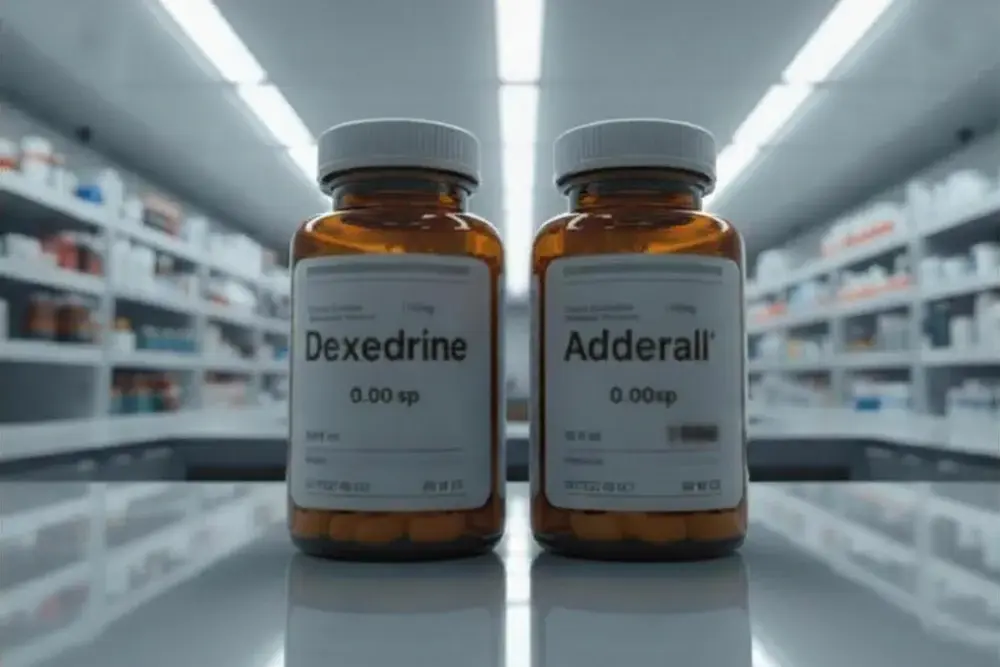
Dextroamphetamine and Adderall are two similar yet distinct drugs, often prescribed to manage ADHD symptoms. When used correctly, dextroamphetamine and adderall can significantly improve quality of life for individuals with ADHD. However, these drugs are sometimes misused to boost energy or chase the euphoric high the stimulant can produce, leading to a risk of dependency and addiction. In this article, Avenues Recovery analyzes the features of each one as well as compares the use of dextroamphetamine vs Adderall for the treatment of Attention Deficit Hyperactivity Disorder (ADHD). Read on to explore how they can be misused and how their drug abuse can be treated.
Key Takeaways on Dextroamphetamine vs Adderall:
- While similar in substance makeup and function, dextroamphetamine and adderall have differences in composition, duration, and effect
- Adderall is generally more commonly prescribed in the U.S. mainly due to cost, insurance coverage, and longer duration.
- Both drugs are Schedule II controlled substances with high abuse potential.
- It’s important to take ADHD medications exactly as prescribed and to tell your doctor right away if you notice yourself needing more or any other worrisome signs.
- Effective treatment is available for those struggling with addiction to stimulants such as Dexedrine or Adderall.
Is Dextroamphetamine the Same as Adderall?
People sometimes mistakenly assume that dextroamphetamine is the same as Adderall. Both dextroamphetamine and Adderall are stimulants that impact dopamine and norepinephrine and can improve focus, motivation, and task completion.
Yet each has a distinct composition and works in its unique way. They are also often felt differently by different individuals.
Dexedrine
Dexedrine (the brand name for dextroamphetamine) is a central nervous system stimulant that works by increasing the levels of dopamine and norepinephrine in the brain - neurotransmitters involved in attention, motivation, and impulse control.
Dexedrine, which is composed purely of the dextroamphetamine stimulant, is used to treat ADHD by helping individuals to focus better, control their impulses, and reduce hyperactivity. It can also help people with narcolepsy stay awake during the day by making them feel more energetic and alert.
Adderall
Adderall (the brand name for a levoamphetamine/dextroamphetamine combination drug) is also a central nervous system stimulant used to treat ADHD and narcolepsy. Whereas Dexedrine is just made up of dextroamphetamine, Adderall is a combination of levoamphetamine and dextroamphetamine.
The effects of Adderall are very similar to those of Dexedrine - they help individuals with ADHD reduce their restlessness and distraction from external stimuli, causing them to be more focused and controlled. Adderall also helps people with narcolepsy to stay awake during the day.
Dextroamphetamine vs Adderall: Side Effects
Since Adderall contains dextroamphetamine as one of its two active components, it has similar side effects to those of Dexedrine. But they may appear in different frequencies and intensities between the two medications. The side effects can vary from person to person and can be more or less severe depending on the dose. Some of the most common side effects include:
- Nervousness
- Anxiety
- Insomnia
- Headache
- Dizziness
- Dry mouth
- Loss of appetite
- Weight loss
- Stomach upset
- Nausea
- Vomiting
- Increased heart rate
- Increased blood pressure
- Changes in sex drive
In rare cases, dextroamphetamine can cause more serious side effects, such as:
- Serotonin syndrome
- Psychosis
- Seizures
- Heart problems
- Liver problems
- Addiction
What Is the Difference Between Dextroamphetamine and Adderall?
While Dexedrine (dextroamphetamine) and Adderall are similar in that they are both prescription stimulant medications used to treat the same conditions and they share common components, they are not the same. They differ mainly in their exact chemical composition, potency, and duration.
The Composition Differences Between Dexedrine and Adderall
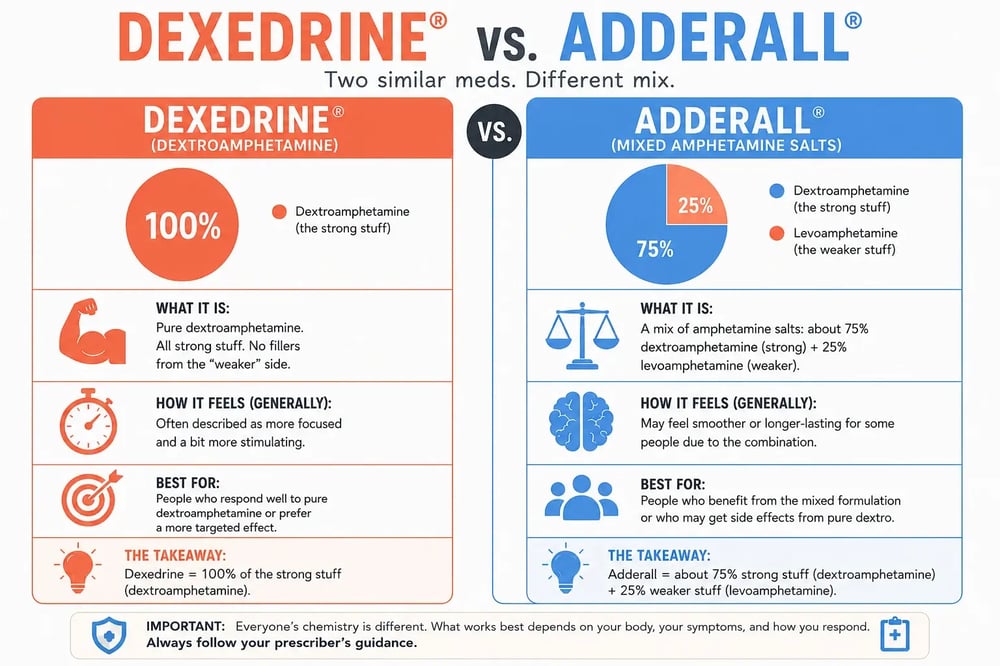
Dexedrine is composed completely of dextroamphetamine, while Adderall contains 75% dextroamphetamine and 25% levoamphetamine. The difference in composition means Dexedrine tends to act more potently per milligram, while Adderall's added levoamphetamine contributes more to peripheral effects and helps extend its overall duration.
Is Dextroamphetamine Stronger Than Adderall?
Dexedrine (dextroamphetamine) is considered to be stronger than Adderall.
Dexedrine is considered stronger per milligram because it contains 100% of dextroamphetamine, a potent stimulant. In comparison, Adderall contains only 75% dextroamphetamine, mixed with 25% of a milder stimulant.
But just because Dexedrine is stronger than Adderall doesn’t mean dextroamphetamine is better than Adderall. While Dexedrine may be more potent per milligram than Adderall, greater potency doesn't mean it’s more effective, since the right choice ultimately depends on individual response, side effect tolerance, and how well each drug controls a person's symptoms.
Dex vs Adderall: Effect Duration
When examining the difference between dextroamphetamine and Adderall, it’s important to note how long each one’s effect lasts in the body. Both drugs come in two formats: immediate-release tablets and extended-release tablets.
|
Drug |
Dexedrine |
Adderall |
|
Immediate-release Formula |
4-6 hours |
4-6 hours |
|
Extended-release Formula |
Up to 8 hours |
Up to 12 hours |
Dexedrine vs Adderall for ADHD
In current U.S. clinical practice, Adderall (or its generic counterpart) is typically the more common first choice. However, it's worth noting that neither is necessarily the overall first-line stimulant most doctors reach for (methylphenidate-based options like Ritalin/Concerta are also frequently first-line, especially in children).
Why Adderall Tends to be Favored Over Dexedrine:
- Since Adderall became the dominant amphetamine stimulant in the U.S. starting in the late 1990s, guidelines and default practice lean toward it
- Adderall is cheaper and has better insurance coverage; Dexedrine has fewer generics and can be harder to find.
- Long-release Adderall covers up to 12 hours while Dexedrine only covers 8 hours.
When Dexedrine Might be Chosen First Instead:
- Patients with sensitivity to Adderall's cardiovascular side effects (from the levoamphetamine component)
- Cases where a slightly different chemical profile is wanted, sometimes as a second-line option after Adderall specifically, rather than a true "first" choice
- Some prescribers' personal experience/preference, or regional/formulary differences
What May be Reasons to Switch from Adderall to Dexedrine?
There may be several reasons why a physician might switch his patient from Adderall to Dexedrine:
- The patient experiences elevated heart rate or blood pressure, possibly linked to Adderall's levoamphetamine component.
- Adderall isn't adequately controlling ADHD symptoms even after proper dose titration.
- The patient reports significant jitteriness, anxiety, or irritability while on Adderall.
- A change in insurance coverage makes Dexedrine cheaper or more accessible than before.
Dexedrine vs. Adderall for Weight Loss
Both Dexedrine and Adderall can suppress appetite as a side effect of their stimulant action, which sometimes leads to unintentional weight loss. Because Dexedrine is more potent per milligram, it may produce a somewhat stronger appetite-suppressant effect at comparable doses, though this varies significantly from person to person. Neither drug is FDA-approved for weight loss today, and any weight change should be monitored by a prescribing doctor rather than pursued intentionally. Unmanaged appetite suppression can lead to nutritional deficiencies or unhealthy weight loss patterns.
Addiction Potential of Dextroamphetamine vs Adderall
Both dextroamphetamine and the levoamphetamine/dextroamphetamine combo in Adderall have a high potential for addiction. They are both Schedule II controlled substances, meaning that they have a high potential for abuse and could lead to severe psychological or physical dependence.
The addiction potential of dextroamphetamine vs Adderall is rooted in the way they affect the brain. They increase dopamine and norepinephrine levels, neurotransmitters (brain chemicals) involved in reward and motivation. These boosts can lead to a feeling of euphoria and increased energy, which can be addictive.
Prescription Drug Abuse
Misusing dextroamphetamine and adderall is a form of prescription drug abuse, which is defined by the Substance Abuse and Mental Health Services Administration (SAMHSA) as “using a medication not prescribed for you, using a medication in a manner other than prescribed… or using a medication for the experience or feeling the drug can cause.” To explain each part of this definition further:
Using a medication not prescribed for you
This can mean stealing medicine prescribed for someone else or someone with a legitimate prescription sharing/ giving the drugs to a friend. Individuals can also forge or alter prescriptions to get drugs they are not entitled to.
Using medication in a manner other than prescribed
This refers to taking medication that is prescribed to you but taking a higher dosage than prescribed or taking the drug more frequently than prescribed. Alternatively, it includes taking medicine differently than one is supposed to, such as crushing pills and snorting them or combining them with alcohol.
Using a medication for the experience or feeling the drug can cause
This refers to using medicine for non-medicinal purposes (i.e., getting high).

Recognizing Stimulant Abuse
In addition to these factors just listed, other signs and symptoms of addiction to Adderall or dextroamphetamine can include:
-
Craving the medication
-
Feeling anxious or irritable when not taking the medication
-
Difficulty sleeping
-
Changes in appetite
-
Weight loss
-
Social isolation
As the rate of ADHD stimulant prescriptions increases, the misuse of stimulant medication has also been growing over the past two decades, reinforcing concerns that greater access to prescription stimulant medication could lead to potential misuse in the general population.
Who Is Likely to Abuse Stimulant Drugs?
College students in particular are one demographic that has been shown to abuse stimulant drugs for cognitive enhancement (i.e., increased focus and concentration, ability to study for long periods, etc.). Adderall and dextroamphetamine give users the feeling of more energy, and students misuse the drugs to help stay awake for long periods, particularly in exam season when they might want to stay up late studying.
Other people who are at risk of developing an addiction to Adderall or dextroamphetamine include those with a history of substance abuse, those with mental health disorders, and those who take high doses of the medication for extended periods due to the severity of their ADHD.
Dextroamphetamine vs Adderall: Treatment for Addiction
If you are concerned that you or someone you know may be addicted to dextroamphetamine or Adderall, it is important to seek professional help. Avenues Recovery Center has helped thousands recover from addiction in both inpatient and outpatient drug programs.
Our dedicated and talented team will be at your side every step of the way. If you are serious about addiction recovery, contact Avenues Recovery today so that you can begin the journey toward the happy, healthy, and sober future you deserve.
FAQs About Dextroamphetamine vs Adderall
Which is stronger, Adderall or dextroamphetamine?
Dextroamphetamine is generally considered stronger on a per-milligram basis because Adderall contains a mix of amphetamine salts while dextroamphetamine contains only the more potent dextro form. That said, stronger doesn't always mean more appropriate - the right medication depends on the individual.
What is the strongest ADHD stimulant?
Dextroamphetamine and high-dose mixed amphetamine salts are among the most potent commonly prescribed options. Because of this, they carry a higher potential for dependence and are classified as Schedule II controlled substances.
Why would a doctor prescribe dextroamphetamine?
A doctor may prescribe dextroamphetamine when a patient hasn't responded well to other ADHD medications or when a cleaner stimulant profile is preferred. Like all stimulants, it is intended for carefully managed use under medical supervision.
Why switch from Adderall to Dexedrine?
Some patients switch from Adderall to Dexedrine because they experience fewer side effects without the levoamphetamine component, such as less anxiety or irritability. Switching should always be done under a doctor's guidance, and if stimulant use is becoming difficult to manage, speaking with a treatment professional is a worthwhile step.
Are withdrawal symptoms from dextroamphetamine and Adderall similar?
Yes, withdrawal symptoms can be similar with Adderall and Dexedrine, as both work through the same core mechanism (raising dopamine and norepinephrine). Stopping either one tends to produce a similar "crash": fatigue, increased appetite, low mood, irritability, and cravings. Some people report Adderall's crash feeling slightly different due to the levoamphetamine component's added effects, but the overall pattern is the same for both drugs.
Does treatment for Dexedrine and Adderall addiction include detox?
Yes, treatment typically starts with medically supervised detox to manage the crash/withdrawal safely (since abrupt stimulant withdrawal can bring severe depression and cravings), followed by therapy, most often cognitive behavioral therapy (CBT) or contingency management, to address the psychological and behavioral side of addiction. There's no FDA-approved medication specifically for stimulant addiction (unlike opioids or alcohol), so treatment relies mainly on therapy, support groups, and sometimes medications to manage other symptoms like depression or insomnia during recovery.