


Study drugs are substances people use to improve focus and concentration.
The pressure to excel academically has driven many to turn to these substances, hoping to gain an edge in concentration and stamina. Avenues Recovery explains what study drugs are and safer ways to stay focused.
Key Takeaways About Study Drugs
- Study drugs are substances people take to boost focus and alertness, often prescription stimulants like Adderall and Ritalin used without a prescription.
- Misusing prescription or illegal stimulants differs from using legal options like caffeine or L-theanine in moderation.
- Without medical supervision, study drugs carry risks that range from a racing heart and anxiety to dependence and addiction.
- Research suggests they don’t reliably improve grades; students who avoid them often do better academically.
- Better study habits, and professional support when needed, are safer ways to handle academic pressure.
What Are Some Common Study Drugs?
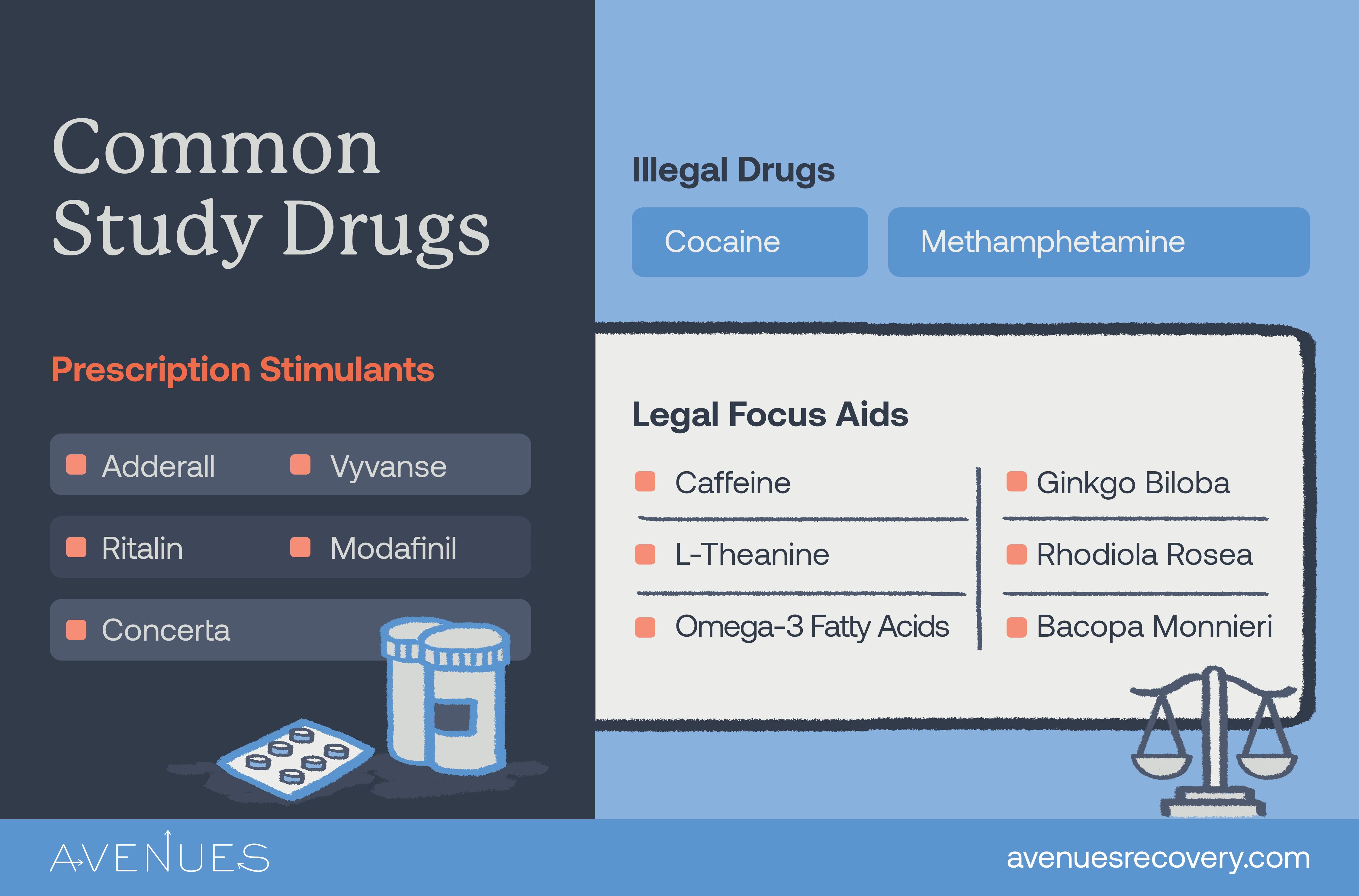
The most common study drugs are prescription stimulants like Adderall and Ritalin, used without a prescription.
These drugs are typically prescribed to treat ADHD, but are often misused by individuals without the condition to boost cognitive function and academic performance. Another prescription drug, Modafinil, is primarily used to treat narcolepsy (a sleep disorder), but is sometimes used off-label by those looking to improve alertness and concentration. Taken without medical oversight, these are among the most dangerous prescription drugs a student can rely on.
Some people go further, turning to illegal drugs in their quest for enhanced focus. Substances like cocaine and methamphetamine, which are both illegal and dangerous, are sometimes used by students seeking immediate and intense boosts in focus and energy. The misuse of these drugs carries significant risks, including addiction and serious heart or mental health problems.
Not everything students use to help them study is a drug, though. Legal options such as caffeine and L-theanine work very differently from prescription stimulants.
Why Do Students Use Study Drugs?
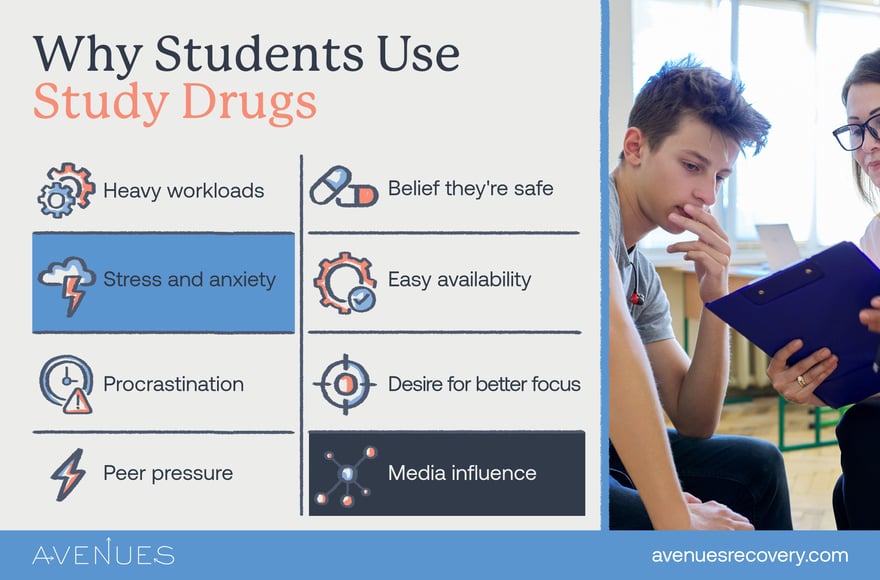
Students use study drugs to increase focus, stay awake longer, and improve academic performance during demanding study periods. Common reasons include exam pressure, heavy workloads, competition, and time management challenges.
An estimated 14.5% of college students report misusing prescription stimulants like Adderall, Ritalin, Concerta, and Vyvanse. Here are some reasons why:
To Manage Heavy Workloads
High school and university students often face significant workloads with tight deadlines. They may look for drugs that help them concentrate, allowing them to complete assignments and prepare for exams more effectively.
To Cope With Stress and Anxiety
The stress associated with academic demands can be overwhelming. They may be tempted to turn to cognitive enhancers to manage these feelings, hoping that improved performance will reduce stress levels.
Procrastination and Poor Time Management
If they procrastinate or struggle with time management, they may be tempted to use study pills as a last-minute solution to cram for exams or complete assignments. The ability to stay awake and focus for extended periods becomes crucial when students are running out of time.
Peer Pressure and Social Norms
The use of study drugs has become normalized in some academic and social circles. Students may feel pressure from peers who are using these substances and achieving high grades, leading them to try study drugs themself.
Belief in Safety and Efficacy
There is a common misconception that prescription medications are safe if used occasionally and that they are more effective than other study methods. This belief can lead one to misuse these drugs without fully understanding the potential risks.
Accessibility and Availability
Prescription stimulants and over-the-counter supplements are relatively easy to get, whether through personal prescriptions, friends, or online sources. This can make it tempting to use these substances.
Desire for general cognitive enhancement: Beyond academic performance, students may be motivated by the desire to enhance their overall cognitive abilities. They might seek improvements in areas such as problem-solving and creativity, hoping that these benefits will extend beyond their studies.
Influence of Media and Culture
Study drugs are glamorized in movies that depict them as a quick fix for achieving success. This can encourage students to use study drugs to do well in school, even though substance abuse in college carries serious risks.
Do Study Drugs Work?
Study drugs can sometimes improve alertness, attention, and wakefulness in some people, but they do not reliably increase learning or intelligence. That’s the part that surprises many students: study drugs do not reliably make you a better student. Research on the use of stimulants like Concerta as a study drug in people without ADHD finds little real gain in learning or memory, and some studies link nonmedical stimulant use to lower grades rather than higher ones. What students usually feel is a lift in confidence and wakefulness, which is not the same as actually understanding or retaining the material. For someone without a diagnosed condition, the risks tend to outweigh any short-lived edge.
Safer Alternatives to Study Drugs
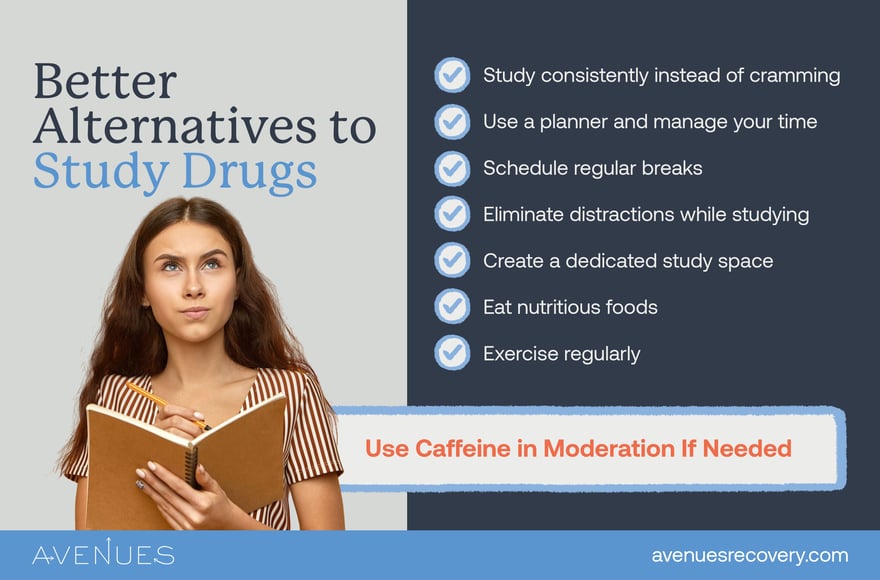
If your goal is better focus, there are safer ways to get there that do not put your health or your record at risk.
Healthy Study Habits
Below are some practical tips for excelling in school without the help of study drugs:
- Study consistently each day to avoid last-minute cramming.
- Use a daily planner to plan your study schedule.
- Include breaks and leisure activities in your day to decrease stress.
- Turn off your phone and other distractions (like television and loud music) while you study.
- Choose a study space that you enjoy working in.
- Eat healthily and exercise regularly to boost focus and calm.
Safe Study Drugs: Supplements That Help You Focus
Unlike the study drugs above, the options below are legal and widely available, but they still work best in moderation and with a doctor’s input.
- Caffeine: Found in coffee, tea, and some energy drinks, moderate amounts of caffeine can help improve your focus and concentration.
- L-Theanine: Often taken in combination with caffeine, L-Theanine, an amino acid found in tea leaves, can help you improve your cognitive performance and reduce anxiety.
- Omega-3 Fatty Acids: Found in fish oil supplements, omega-3 fatty acids are essential for brain health and can help improve your cognitive function over time.
- Ginkgo Biloba: This herbal supplement is believed to enhance your cognitive function and improve memory.
- Rhodiola Rosea: An herb that may help reduce fatigue and improve mental performance.
- Bacopa Monnieri: A herb that is thought to improve memory and cognitive function.
Risks and Side Effects of Drugs That Help You Focus
Using study drugs like Adderall and Ritalin without a prescription can lead to serious health risks. These drugs can increase your heart rate and blood pressure, raising the chances of heart attacks and strokes. They can also disrupt your sleep and lead to weight loss from appetite suppression. Other common study drug side effects include headaches and dizziness.
Mentally, study drugs can heighten anxiety and cause paranoid thoughts or behaviors. If you use them, you may experience mood swings and irritability, and there is a risk of depression, especially with long-term use or withdrawal. High doses can even lead to psychosis, with symptoms like hallucinations or delusions.
The risk of addiction and dependence is significant. You may find yourself requiring higher doses over time to achieve the same effect and experiencing withdrawal symptoms such as fatigue and disturbed sleep if you try to stop.
Academically, reliance on study drugs can compromise integrity and genuine learning, and socially, the mood changes and erratic behavior associated with prescription stimulant use can strain your relationships.
Long-term use can lead to chronic health problems and a decrease in quality of life.
There is another danger, too: pills bought online or from a friend are sometimes counterfeit and laced with fentanyl, which can be deadly even in tiny amounts.
It’s essential to use these drugs only under medical supervision and to explore safe ways to improve your academic performance and manage stress.
Help for Study Drug Abuse
Help for abuse of drugs for studying is available through many resources and support systems. Counseling and therapy are crucial. Individual therapy offers one-on-one sessions with licensed therapists to address the root causes of substance abuse, while group therapy provides a supportive environment where you can share your experiences and learn from others.
Educational institutions often provide valuable resources such as counseling services and support groups to help you manage academic stress without resorting to study drugs. Additionally, community resources such as hotlines and online support groups can provide immediate help and guidance. These resources aim to provide comprehensive support, helping people overcome their dependency on study drugs and find healthier ways to cope with academic pressures. You can also explore Avenues’ drug education resources to learn more about prescription and illicit substances.
Avenues Recovery Can Help You With Study Drug Abuse
If you or a loved one relies on study drugs, reach out to our experts at Avenues Recovery so we can guide you on your road to recovery. Our caring and dedicated staff have helped over 40,000 individuals struggling with addiction, and they can help you too. Contact us today to take the first step toward a healthier, substance-free life.
Frequently Asked Questions About Study Drugs
Are nootropics safe?
Nootropics are a broad group of substances meant to support memory and focus, and their safety depends on which one you mean. Everyday options like caffeine or L-theanine are generally safe in moderate amounts for healthy adults. Prescription stimulants marketed as cognitive enhancers are a different story, since using them without a prescription carries the same risks of dependence and heart strain as any study drug. If you are considering any supplement, it is worth checking with a doctor first.
Are caffeine pills good for studying?
Caffeine pills can improve studying by increasing alertness and reaction time when used in moderate doses, but they are easy to overdo. A single pill often contains as much caffeine as one or two cups of coffee, so doses add up quickly and can leave you with a racing heart and trouble sleeping. If you use them, keep the amount modest and avoid taking them late in the day. For many people, a cup of coffee or tea offers the same benefit with less risk of accidentally taking too much.
Does Adderall help you study?
In people without ADHD, Adderall may increase wakefulness but does not reliably improve study efficacy, memory, or academic performance. The benefit is mostly perceived rather than real.
Are study drugs legal?
Study drugs like Adderall and Ritalin are legal only when a doctor prescribes them to you. These medications are classified as Schedule II controlled substances, which means using them without a prescription, or sharing or selling your own prescription, is against the law. Illegal stimulants such as cocaine and methamphetamine are never legal.
What is ‘kiddie coke’?
“Kiddie coke” is a slang term that refers to prescription stimulants, especially methylphenidate (Ritalin, Concerta), prescribed to children for attention-deficit/hyperactivity disorder (ADHD) and sometimes abused by students. The term compares these medications to cocaine because both are stimulants, but they differ substantially in dosage, medical use, effects, and safety when taken as prescribed.