

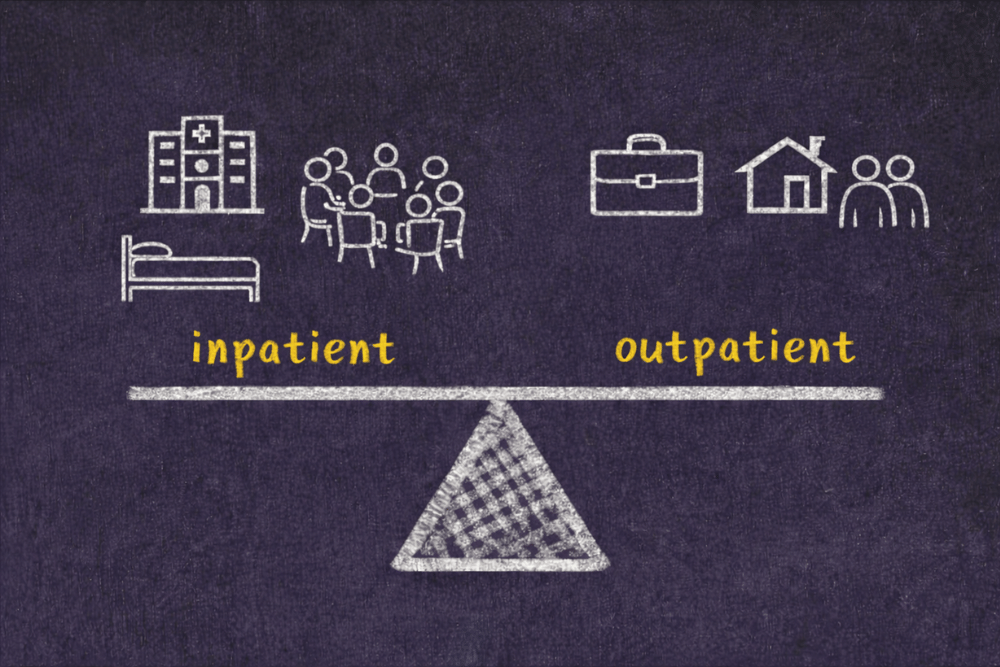
If you or a family member is seeking substance abuse treatment, the first step toward recovery is choosing the right program. Many people get stuck deciding between inpatient and outpatient rehab, and there are numerous factors to consider. Read on for a comprehensive comparison of inpatient vs. outpatient rehab by Avenues Recovery, leaders in addiction rehabilitation.
Key Takeaways on Inpatient vs. Outpatient Rehab
|
What Is the Difference Between Inpatient and Outpatient Rehab?
The main difference between inpatient and outpatient rehab for alcohol and drug addiction is the treatment setting. Inpatient rehab requires patients to live at a facility for 24-hour care, while outpatient rehab allows patients to live at home and attend scheduled therapy sessions during the day.
What Daily Life Looks Like in Both Rehab Settings
Seeing what a typical day looks like in each setting can help you better choose the level of care that suits your needs.
Daily Life in Inpatient Rehab
Inpatient rehab involves staying at a rehab facility for the duration of treatment. It offers an opportunity for a fresh start in a safe, supportive environment, although it limits contact with family and friends.
In inpatient rehab facilities, patients build a sense of community and can establish beneficial relationships with peers in recovery. Being surrounded by people with similar daily struggles and goals helps those in recovery feel less alone and motivates them to work for a healthier future.
Inpatient rehab programs offer a host of treatment options and amenities that outpatient options do not provide. For example, inpatient facilities have 24/7 medical care and psychotherapy, and many also include other facilities to improve your health, such as:
- A gym
- Yoga classes
- Equine therapy
Daily Life in Outpatient Rehab
Outpatient rehab offers patients the opportunity to receive substance abuse treatment while surrounded by family and friends, while attending inpatient treatment limits contact with loved ones.
When attending outpatient rehab for substance abuse, clients either live at home or in a partner sober living facility. Sober-living facilities can help keep clients on track toward recovery by placing them in a substance-free environment with others on the path to wellness.
.png?width=1000&height=667&name=Couple%20discussing%20pros%20and%20cons%20of%20inpatient%20vs.%20outpatient%20rehab%20(1).png)
What Inpatient and Outpatient Rehab Have In Common
Both inpatient and outpatient treatment include:
- Ongoing assessments
- Integrated counseling methods
- The 12-step model
- Individual and group counseling
- Relapse prevention training
Teams of professional staff provide physical, emotional, and psychological support for clients in a variety of settings. Considering the whole person, including their rehabilitation needs, maintains an individual-centered mindset and bolsters patient confidence while providing tools for the recovery journey.
Key Differences That Affect Daily Life
Examining how each rehab option affects your daily responsibilities can help you understand which level of care may suit your situation.
Environment and Stability
Sometimes, difficult home circumstances and family relationships can trigger substance abuse. In such cases, spending time away at an inpatient rehab offers better chances for recovery.
Schedule and Responsibilities
Committing to inpatient treatment means taking a substantial amount of time off work and could mean unemployment following discharge. However, many people qualify for leave under specific programs, and counseling staff can assist clients in completing the appropriate paperwork to protect their jobs.
Committing to outpatient rehab enables clients to maintain their daily schedules, including work and family life, while still receiving critical support for recovery.
Level of Medical and Clinical Support
Because they don’t offer 24/7 support, outpatient drug rehab may not be the right fit if you require comprehensive medical treatment for co-existing disorders or health problems, or if urges to use occur very often.
Family Contact and Social Support
Family support can greatly assist with addiction recovery, and for some this will be the deciding factor when choosing a rehab program.
Following both inpatient and outpatient rehab, it’s highly recommended to attend recovery meetings such as NA (Narcotics Anonymous) or AA (Alcoholics Anonymous) for continued support.
Time Commitment
Recovery takes time, so patients can’t expect to make tremendous progress overnight. The timeframes for inpatient and outpatient counseling differ significantly.
Inpatient Rehab: Typically 28–90 days
Outpatient Rehab: Ranges from weekly sessions to several months, depending on needs
Cost and Insurance Considerations
Outpatient rehab is generally significantly cheaper than inpatient programs and allows clients to continue working during treatment.
Many financing programs help cover the cost of outpatient or inpatient treatment, enabling access to services at a manageable price.
Location and Logistics
Depending on where you live, outpatient treatment could require a long drive for each counseling session, while inpatient treatment requires relocation for the duration of care.

When Each Level of Care May Be Recommended
Inpatient rehab may be appropriate if:
- Substance abuse is severe and long-term
- You need a regimented treatment approach
- Home environment triggers use
Outpatient rehab may be appropriate if:
- Addiction is mild to moderate
- A strong support network exists
- Work or family responsibilities must continue
While inpatient and outpatient rehab are the two main treatment options, some people benefit from programs that fall between these levels of care. A partial hospitalization program (PHP) provides structured, clinically supervised treatment during the day without requiring an overnight stay.
Outpatient Rehab vs. Inpatient Treatment: Which Is Better?
Every case of substance abuse has unique circumstances and requires a treatment program that fits. Comparing inpatient and outpatient rehab success rates is misleading because so many variables affect outcomes. Both have high success rates with the right candidates.
Generally, structured inpatient treatment suits long-term addiction, while outpatient rehab may work well for newer or less severe addiction. Success depends on treatment quality, patient commitment, and consistency.
How Professionals Can Help You Choose
It’s best to discuss your needs and options with a substance abuse professional before making your choice, as they have the experience to guide you on the path most suitable for you.

Choosing the Right Rehab Program for You
While these points are important to consider when deciding on a rehab, nothing should stop you from getting the help that you need. Your recovery comes first, and costs, work, or care for your family can almost always be arranged when necessary.
Our friendly staff at Avenues Recovery would be happy to help you work out which type of rehab would be best for you. If you have any questions about rehab or would like guidance with choosing a treatment program, contact our team at Avenues Recovery. Start your journey to recovery today.
FAQs on Outpatient vs. Inpatient Rehab
How do I know which rehab is right for me?
Choose between inpatient and outpatient rehab by evaluating the severity of your addiction, your support system at home, and your daily responsibilities. Inpatient rehab is suitable for severe cases that require full-time care. Outpatient rehab fits those with strong support networks and mild to moderate addiction.
Can outpatient treatment be as effective as inpatient?
Yes, outpatient treatment can be as effective as inpatient rehab for individuals with mild to moderate addiction and strong home support. Success depends on treatment quality, patient commitment, and consistency. Inpatient is preferred for severe cases needing intensive supervision and a structured environment.
Do inpatient programs include medical detox?
Yes, most inpatient rehab programs include medical detox as the first phase of treatment. Detox is supervised by medical professionals to manage withdrawal symptoms safely. This step ensures patients are physically stabilized before beginning therapy and long-term recovery work.
Can I switch between inpatient and outpatient care?
Yes, you can switch between inpatient and outpatient care based on your progress and clinical assessment. Many treatment plans begin with inpatient care and transition to outpatient for continued support. Changes depend on your stability, needs, and recommendations from healthcare providers.
What is the difference in the cost of inpatient vs. outpatient rehab?
Inpatient rehab is significantly more expensive since it includes housing, meals, and round-the-clock supervision. Outpatient rehab is more affordable since it does not require residential services or full-time staffing.