


Key Takeaways:
- Anxiety and addiction often happen together and reinforce each other.
- High-functioning adults may struggle privately while appearing stable outwardly.
- Treating both anxiety and addiction together supports lasting recovery.
Payal Kakaria, BSN, RN, is the Director of Medical Development at Avenues Recovery Center. A registered nurse by training, she brings a strong foundation in patient-centered, evidence-based care and is committed to advancing high-quality clinical practices across treatment settings.
Prevalence of Co-occurring Anxiety and Addiction
From the outside, your life may look steady. You show up to work, take care of responsibilities, and keep things moving for your family. But inside, it can feel like you’re constantly holding everything together by sheer effort. Your mind rarely slows down, your body stays tense, and by the end of the day you reach for a drink or something else just to quiet the noise in your head.
You may even wonder if anyone else feels this way while still managing a “normal” life. The truth is, many high-functioning adults struggle with both anxiety and substance use at the same time. If you’re trying to keep everything running while quietly feeling overwhelmed, you’re not alone. Avenues Recovery offers treatment that understands both anxiety and substance use, helping you find real relief and regain a sense of control.
Anxiety vs. Anxiety Disorder
Everyone feels anxious sometimes. You might worry about work, finances, your kids, or whether you’re keeping up with everything you’re supposed to handle. In many cases, those worries come and go depending on what’s happening in your life.
But anxiety disorders feel different. The worry doesn’t shut off, even when things are technically fine. Your mind keeps running through problems, worst-case scenarios, or things you may have done wrong. When that kind of anxiety becomes constant, it’s common to start relying on something – like drugs or alcohol - to slow your thoughts or finally relax.
Signs of Anxiety Disorders
Anxiety can feel like your brain never gets a break. You may lie awake at night replaying conversations, worrying about tomorrow, or trying to calm thoughts that won’t settle. Even when you’re sitting still, your mind may feel like it’s racing.
Your body often feels it too. Tight shoulders, headaches, stomach issues, a racing heart, or constant fatigue are all common signs. When those feelings build up day after day, it can start to feel like you need something just to take the edge off, which is often how substance use quietly enters the picture.
Types and Symptoms of Anxiety
Anxiety doesn’t look the same for everyone. For some people, it’s constant worry about many areas of life:
- Work
- Family
- Health
- Finances
For others, anxiety shows up as sudden panic attacks where their heart races and it feels like they can’t breathe.
Some people feel intense fear of being judged or embarrassed in social situations, while others carry anxiety connected to past trauma or long-term stress. No matter the type, anxiety can slowly wear you down, especially when you’re trying to keep your life functioning at the same time.
Addiction and Anxiety – Dual Diagnosis
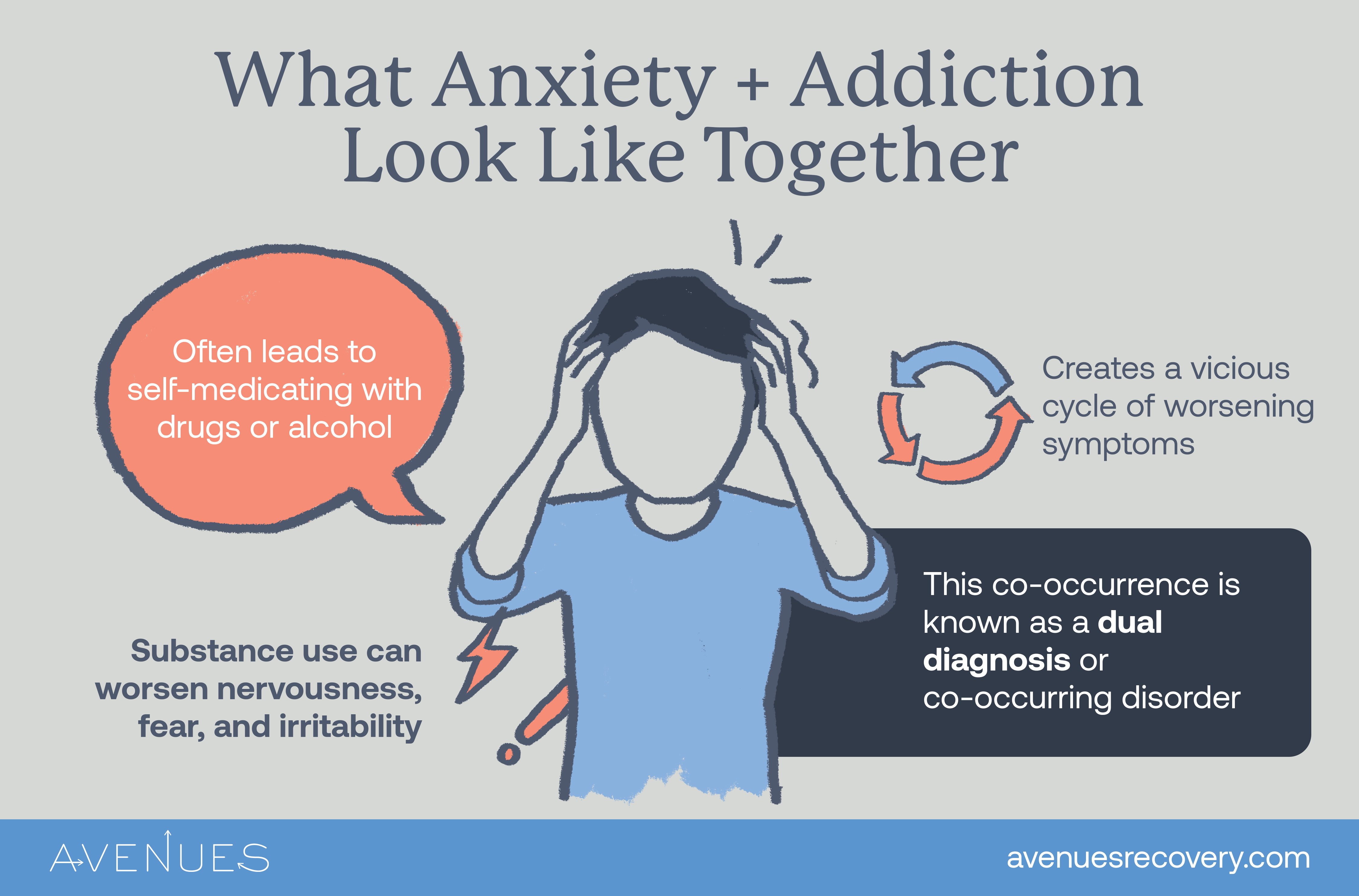
If you’ve ever used alcohol or another substance to calm your nerves, help you sleep, or quiet your thoughts, you’re far from alone. Many people with anxiety start using substances as a way to cope with the constant pressure they feel inside.
Over time, though, the two problems can start feeding each other. Anxiety leads to substance use, and substance use can make anxiety worse. When both happen together, it’s called a dual diagnosis, and treating both at the same time is usually the key to real recovery.
Causes of Co-occurring Substance Abuse and Anxiety
You might wonder how things got to this point. For many people, it starts gradually. Maybe you were always a bit anxious, or maybe stress slowly built up over the years through work pressure, family responsibilities, or difficult experiences.
At some point, alcohol or another substance may have felt like relief. It helped you unwind, sleep, or stop overthinking for a while. But what once felt like a solution can eventually turn into something you rely on just to feel normal.
Identifying Co-occurring Anxiety and SUD
One of the hardest parts of this struggle is that your life may still look functional. You’re still working, showing up for your family, and getting things done. Because of that, you might question whether your situation is “serious enough” to deserve help.
But if anxiety feels constant and substances have become your main way to relax, sleep, or cope with stress, that’s important to pay attention to. Recognizing the pattern is often the first step toward changing it.
Anxiety and Addiction Treatment
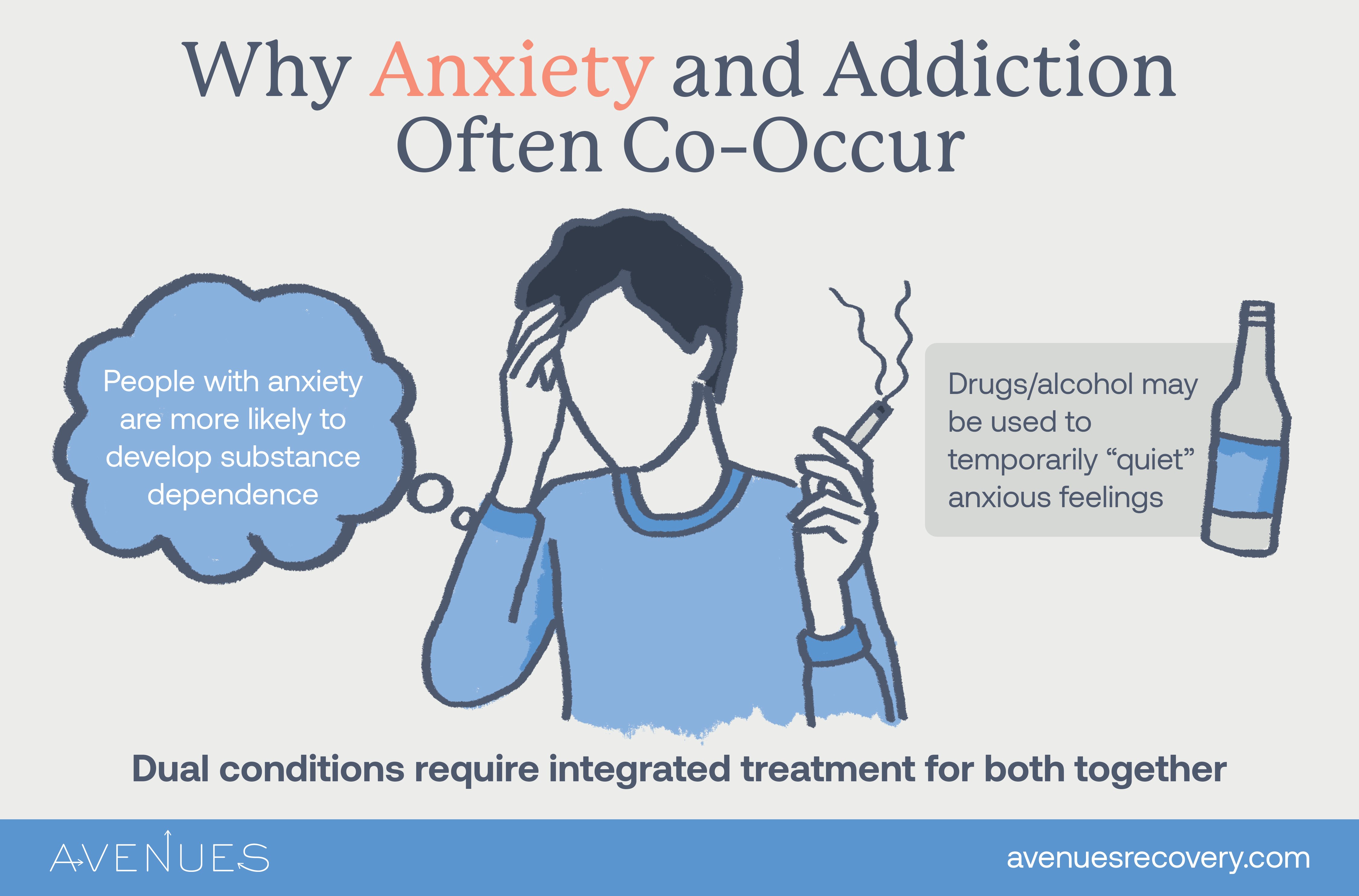
When anxiety and substance use happen together, treatment needs to address both. Focusing only on the substance without helping you manage anxiety can leave the underlying struggle untouched.
Good treatment helps you understand what’s driving the anxiety, learn ways to calm your mind and body, and build healthier ways to cope with stress. The goal isn’t just stopping substance use—it’s helping you feel more stable and in control of your life again.
Rehab Treatment Options for Anxiety and Addiction
Treatment doesn’t look the same for everyone. Some people benefit from residential programs where they can step away from daily pressure and focus fully on healing.
Others choose outpatient programs that allow them to keep working or staying connected to family while receiving structured support. The right option depends on your situation, your symptoms, and what level of care will help you feel safe and supported.
Help for Anxiety and Drug Abuse
Trying to carry anxiety, responsibilities, and substance use at the same time can feel incredibly heavy. You may worry about how it would affect your family, your work, or how others might see you if you asked for help.
But you don’t have to keep holding everything alone. If anxiety and substance use are making life feel harder than it should, Avenues Recovery offers treatment designed for people facing both struggles, helping you regain balance, clarity, and a real sense of peace.
FAQ Section:
- Can someone struggle with anxiety and addiction at the same time?
Yes. Many people experience both anxiety and substance use together, often using alcohol or drugs to try to calm their thoughts or reduce stress. - What is the difference between normal anxiety and an anxiety disorder?
Normal anxiety comes and goes with life’s challenges, while an anxiety disorder involves persistent worry that doesn’t easily shut off even when things are going well. - What are some common signs of anxiety disorders?
Common signs include constant worry, racing thoughts, trouble sleeping, muscle tension, headaches, stomach issues, and feeling mentally exhausted. - What does “dual diagnosis” mean?
Dual diagnosis means a person is experiencing both a mental health condition, such as anxiety, and a substance use disorder at the same time. - How are anxiety and addiction treated together?
Effective treatment focuses on addressing both conditions by helping people manage anxiety, develop healthier coping strategies, and reduce reliance on substances. This can be done through therapy, medication, or a combination of both.