


Key Takeaways:
- Mental health challenges and substance use often occur together and influence each other.
- Many people function outwardly while struggling internally with this ongoing cycle.
- Treating both together can break the cycle and restore stability.
You may be holding everything together on the outside. You’re meeting responsibilities, caring for your family, and showing up where you’re needed. But inside, things feel less stable. When anxiety, low mood, or ongoing stress mixes with alcohol or other substances, it can create a cycle that’s hard to understand and even harder to stop. This is called co-occurring disorders, or a dual diagnosis. It simply means that mental health challenges and substance use are happening at the same time and affecting each other.
You don’t have to prove how serious things are to deserve help. If you feel like you’re losing control, or your usual ways of coping aren’t working anymore, that’s enough. Treatment that addresses both mental health and substance use can help you feel steady again, without judgment and without asking you to step away from your responsibilities.
If this feels familiar, consider reaching out to Avenues Recovery to explore support for dual diagnosis.
What is a Dual Diagnosis?
You might have wondered whether what you’re dealing with is “just stress,” or “just drinking,” or something else entirely. A dual diagnosis means that two things are happening at once: a mental health condition - like anxiety, depression, or trauma - and a pattern of substance use that’s become difficult to manage. These aren’t separate issues living in isolation; they interact, often intensifying each other.
This can look like using alcohol to quiet your mind, only to feel more anxious or low the next day. Or trying to function through stress while relying on something to take the edge off. Understanding dual diagnosis isn’t about labeling. It’s about recognizing the full picture so that the support you receive actually fits your life.
How Common Are Dual Diagnosis and Co-occurring Disorders?
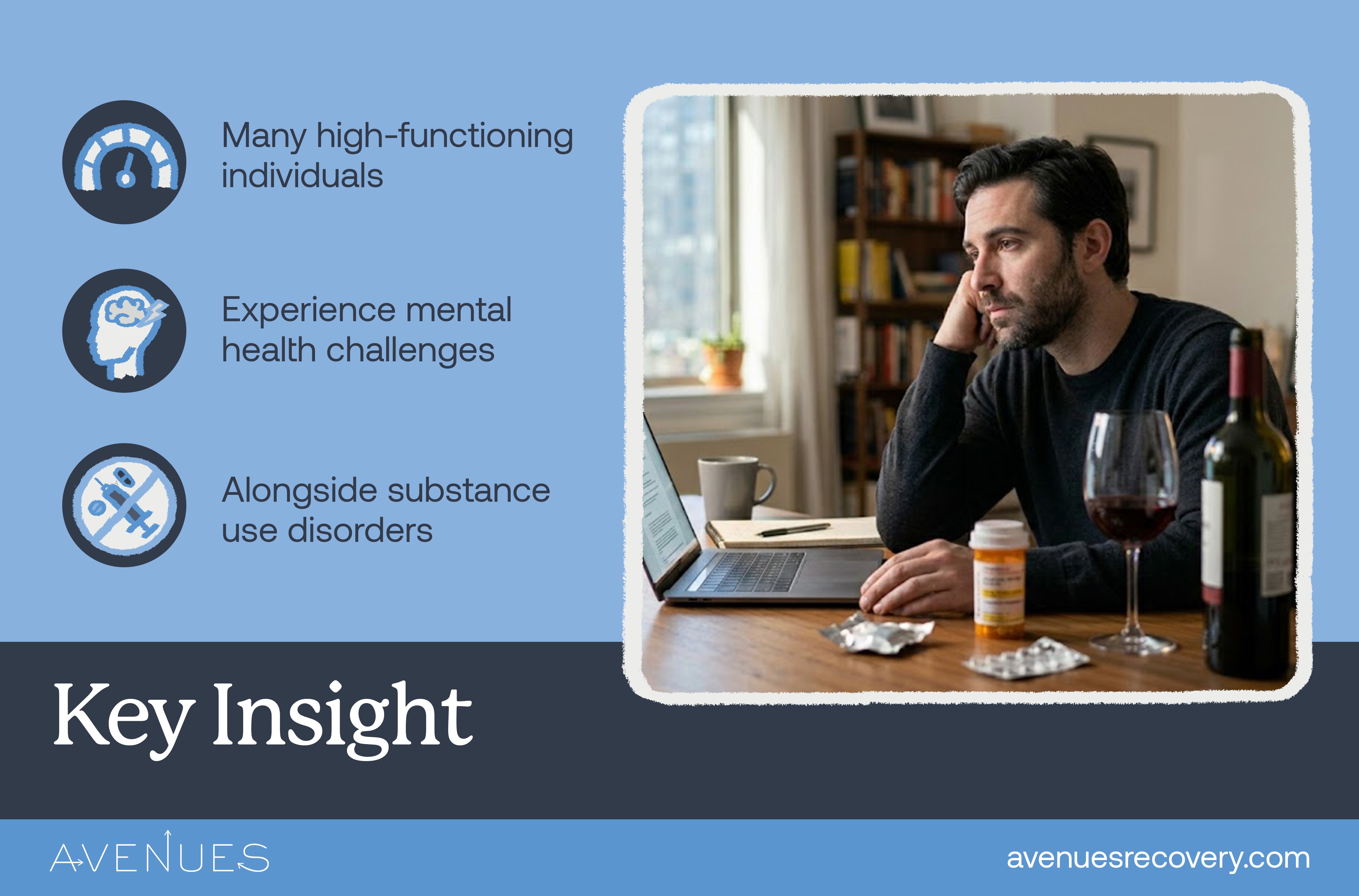
If part of you worries that you’re in this alone, you’re not. Many high-functioning adults quietly experience both mental health struggles and substance use at the same time. It often goes unnoticed because life still “works” on the surface - until it starts to feel like it might not.
There’s a quiet group of people who carry this same tension: outward stability, inward strain. Knowing how common this is can ease some of the shame. It doesn’t minimize what you’re going through; it simply means that there are established, effective ways to address it.
Addiction or Mental Illness, Which Comes First?
You may have tried to trace this back. Was it the stress that led to drinking more, or did the drinking slowly affect your mood and clarity? The truth is, it’s often not a straight line. For many people, it’s a loop rather than a starting point.
What matters more than which came first is how they’re interacting now. Treatment that focuses on only one side can miss the bigger picture. When both are addressed together, it becomes possible to untangle the cycle and regain a sense of control.

Mental illness can lead to addiction and SUD
When your mind feels overwhelmed - racing thoughts, constant pressure, lingering sadness - it makes sense to look for relief. Substances can seem like a practical solution at first: something that helps you relax, sleep, or just get through the day.
Over time, though, what started as a coping mechanism can become something you rely on more than you intended. That doesn’t make you weak. It means you adapted in a way that worked temporarily. Now, it may just need a different kind of support.
Drug and alcohol use increase the risk of mental health disorders
Even if things felt manageable at the beginning, substance use can gradually shift your emotional baseline. You might notice more anxiety, less patience, disrupted sleep, or a sense that your thoughts are harder to organize.
This isn’t a personal failing. It’s how the brain responds. Understanding this can help you step out of self-blame and into a clearer perspective: what you’re experiencing has a pattern, and patterns can be changed with the right kind of care.
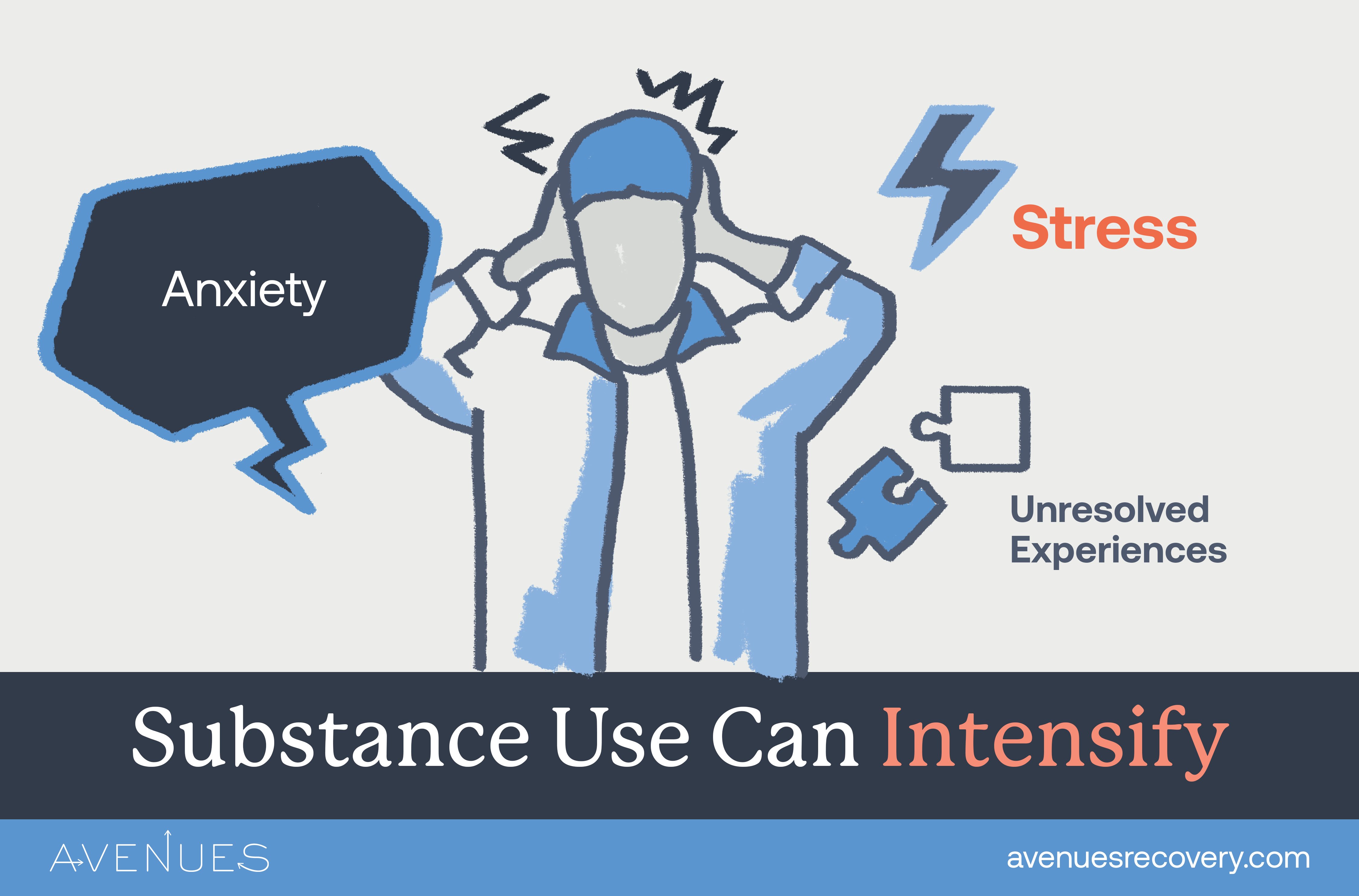
Alcohol and Drug use exacerbates mental illness:
If you’re already carrying anxiety, stress, or unresolved experiences, substances can amplify those feelings in subtle but persistent ways. What once helped you take the edge off might now be making everything feel sharper, heavier, or more unpredictable.
This can create a frustrating loop - trying to feel better, but ending up feeling worse. Recognizing that connection is often the first step toward breaking it, not by force, but by replacing the cycle with something steadier and more sustainable.
Diagnosis for Co-occurring Disorders
You might hesitate at the idea of a diagnosis, worrying it could define you or oversimplify what you’re going through. In reality, a thoughtful assessment is about understanding your experience in a way that leads to meaningful support.
A good evaluation looks at your mental health, your substance use, your daily life, and your responsibilities. It’s not about putting you in a box; it’s about building a plan that respects everything you’re balancing.

Understanding Denial
You may tell yourself, “It’s not that bad,” especially when you’re still functioning in many areas of life. That thought is counterproductive, though, since it keeps you from getting support sooner.
Often, denial doesn’t mean you’re being dishonest. It means you’re trying to survive. But acknowledging that something isn’t working doesn’t mean everything is falling apart. It can simply mean you’re ready for things to feel different.
Co-Occurring Mental Health Disorders in Teens
For younger people, the same pattern can appear in different ways—stress, social pressure, emotional ups and downs, combined with early exposure to substances. It may not always look severe, but it can still have a real impact.
If you’re thinking about someone younger in your life, early support can make a meaningful difference. Addressing both emotional health and substance use together helps create a stronger foundation moving forward.
Mental Illnesses Co-occurring with Substance Use Disorder
Common combinations include anxiety with alcohol use, depression with various substances, or trauma alongside patterns of coping that have become difficult to manage. These pairings aren’t random; they often reflect attempts to self-regulate.
Understanding the specific combination you’re dealing with can guide more effective care. It allows treatment to focus on what’s actually happening in your day-to-day life, not just a general idea of what should work.
Dual Diagnosis Treatment
You don’t have to choose between treating your mental health or your substance use. Dual diagnosis treatment is designed to address both at the same time, recognizing how closely they’re connected.
This kind of care can be flexible, meeting you where you are - whether you need structured support or something that fits alongside your existing responsibilities. The goal isn’t to disrupt your life, but to help stabilize it.
What Is the Best Treatment for Dual Diagnosis?
The best approach is one that sees you as a whole person. That includes therapy for anxiety, depression, or trauma, alongside support for reducing or stopping substance use. It also considers your schedule, your family, and your work.
There isn’t a one-size-fits-all solution, and that’s a good thing. Personalized care means your treatment can adapt to your reality, rather than forcing you into a rigid model that doesn’t fit.
Treatment for Dual Diagnosis and Co-occurring Disorders at Avenues Recovery
You deserve a place where both sides of what you’re dealing with are taken seriously. At Avenues Recovery, care is built around understanding how your mental health and substance use interact, and how to support you in regaining balance.
You don’t need to have everything figured out before reaching out. If something feels off, if you’re tired of holding it together on the outside while struggling inside, there is a path forward that meets you where you are.
FAQ's:
- What is a dual diagnosis?
It means a person is dealing with both a mental health challenge and substance use at the same time. - How do these two issues affect each other?
They can interact and make each other worse, creating a difficult cycle. - Are many people affected by co-occurring disorders?
Yes, many people experience this, even if it’s not always visible from the outside. - Does it matter which problem started first?
Not as much—what matters is treating both together now. - What kind of treatment helps most?
Treatment that addresses both mental health and substance use at the same time can help restore balance.