

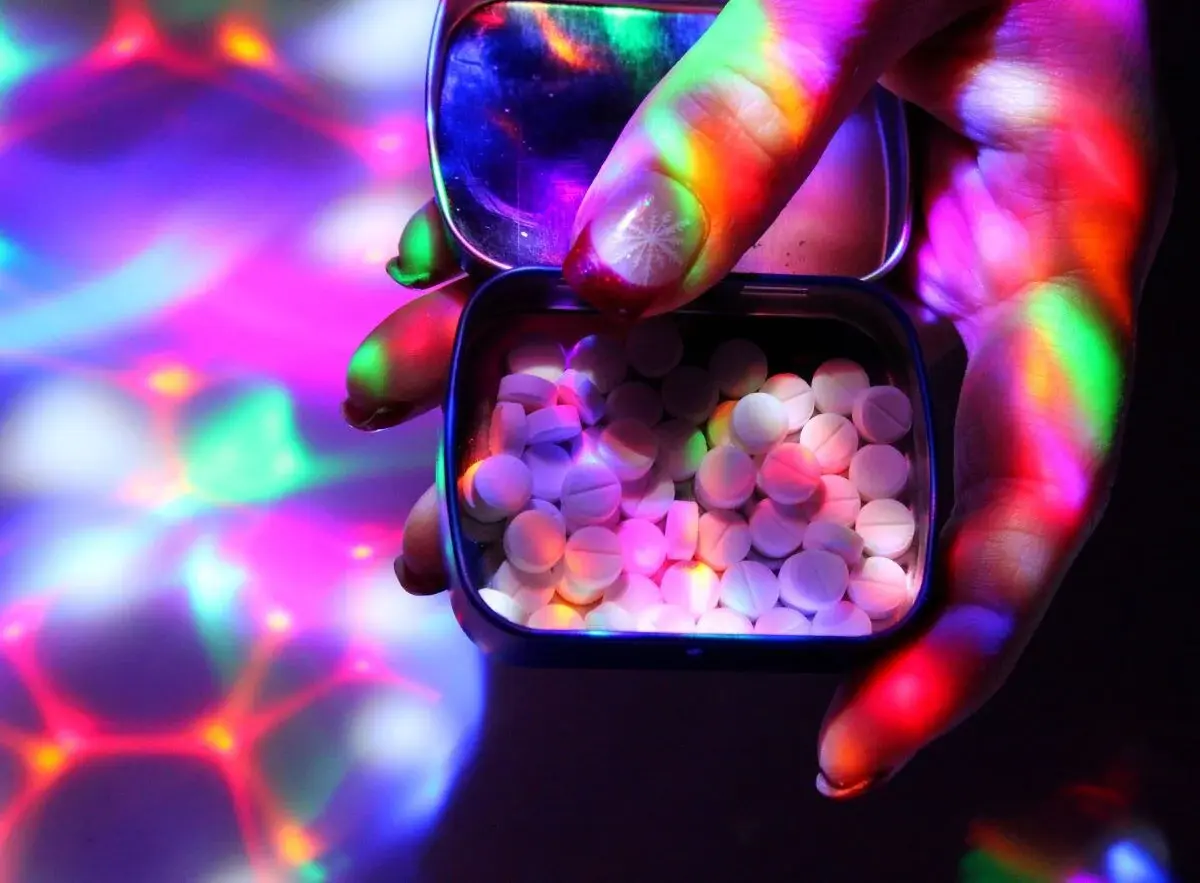
Club drugs, also known as party or rave drugs, are drugs that are used in social settings, such as nightclubs, bars, concerts, raves, and parties. Club drugs are known to enhance social experiences and alter perceptions. They can make users feel more energetic, euphoric, and connected to others, which is why they are popular in these environments.
Key Takeaways:
- Club drugs, also known as party drugs or rave drugs, are drugs that are used in social settings like nightclubs, parties, and bars.
- The risks of party drugs include unpredictable effects, serious health issues, and addiction.
- Treatment for club drug addiction involves detox and individually-tailored behavioral therapy.
What Are Some Examples of Club Drugs?
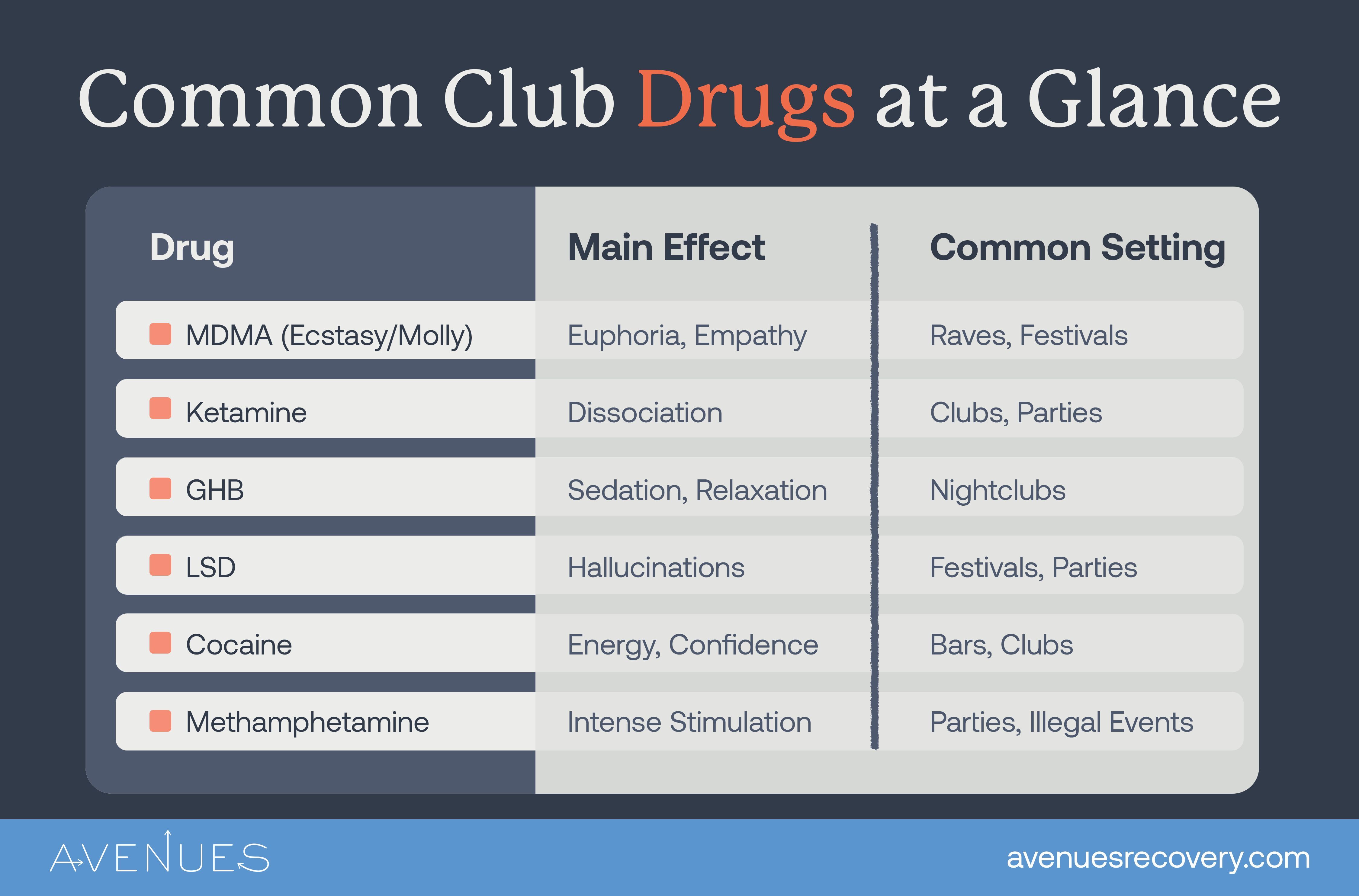
Here’s a list of common party drugs:
- MDMA (also known as Ecstasy or Molly)
- GHB (also known as G or Liquid Ecstasy)
- Ketamine (also known as Special K or K)
- LSD (also known as Acid)
- Rohypnol or flunitrazepam (also known as Roofie)
- Methamphetamine (also known as Meth, Speed, or Ice)
Risks Of Using Club Drugs
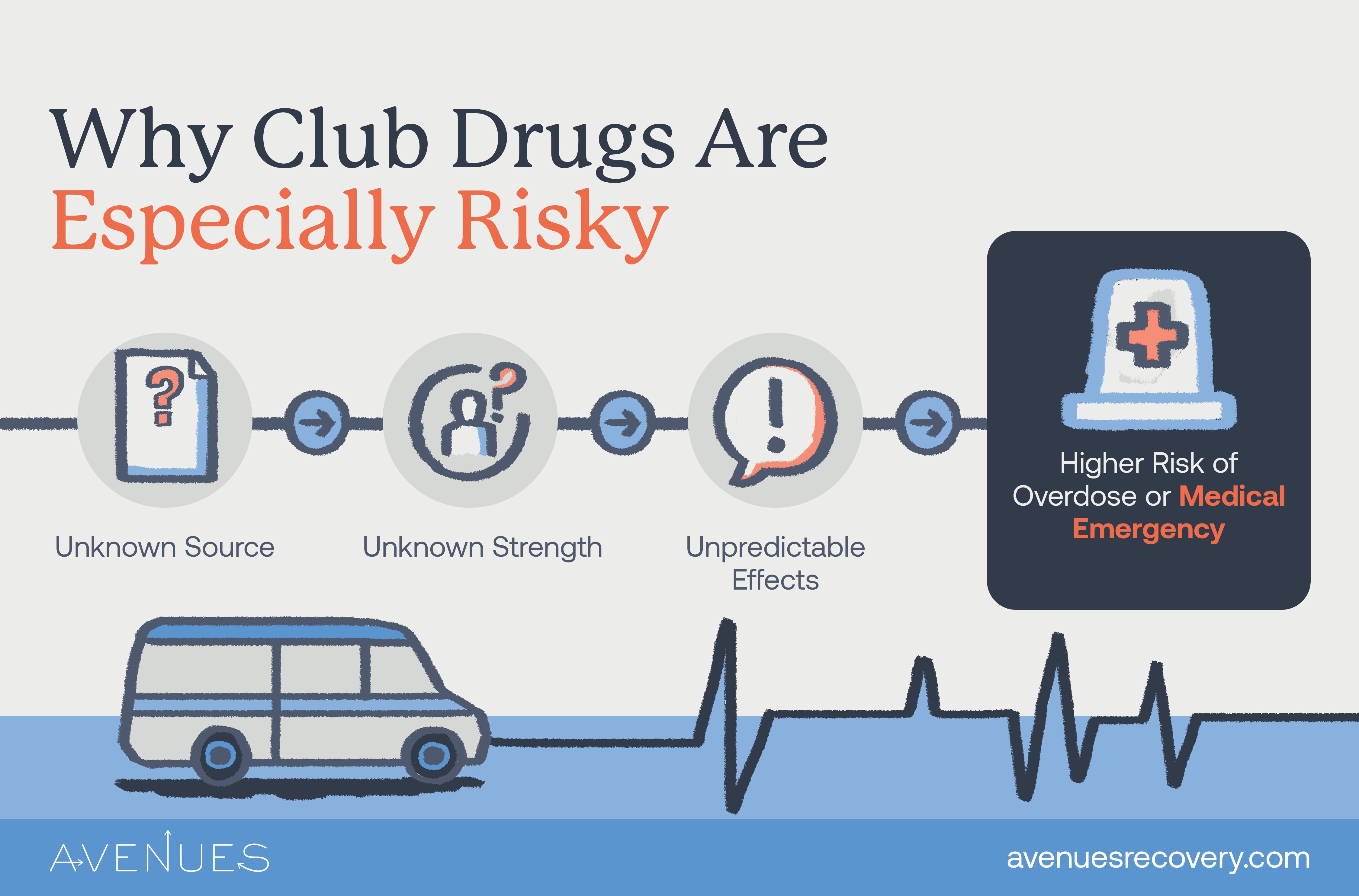
While using these drugs at parties can seem appealing, their effects can be highly unpredictable. Factors such as the user’s physical and mental state, the environment, and the specific drug and its purity can all influence the outcomes. Club drugs can also affect judgment, coordination, and perception, increasing the risk of accidents. Additionally, they can lead to dehydration, overheating, and serious heart problems.
Who Uses Party Drugs?
Drug use at parties is particularly common amongst some groups:
- Young adults and teenagers: Many party drug users are in their late teens to mid-20s. Among the many reasons teens use drugs, this age group often experiments with different substances to enhance their social activities.
- Club and rave attendees: People who go to nightclubs, music festivals, and rave parties are more likely to use club drugs.
- College students: Some college students use club drugs for fun during parties and social gatherings.
- LGBTQ+ community: Studies have shown higher rates of club drug use within the LGBTQ+ community, particularly at events like circuit parties.
- People who seek enhanced social experiences: People looking to enhance their social experiences, increase their energy levels, or alter their perceptions may turn to club drugs.
Where Do Club Drugs Come From?
Club drugs can come from various sources, including secret labs, pharmaceutical diversion (taking drugs from pharmacies legally and distributing them illegally), and illegal imports.
Secret Labs
Many club drugs, such as Ecstasy, methamphetamine, and GHB, are produced in illegal laboratories. These labs can range from small-scale operations to large, sophisticated setups. The production process often involves using chemicals that are legally restricted or controlled.
Pharmaceutical Diversion
Some club drugs, such as ketamine and prescription medications like benzodiazepines, come from legitimate pharmaceutical sources but are diverted for recreational use. Pharmaceutical diversion can happen through stealing, fake prescriptions, or illegal sales by individuals with access to these medications.
Illegal Imports
Many club drugs are smuggled into countries through various illegal channels. For example, significant amounts of MDMA are produced in Europe, particularly in countries like the Netherlands and Belgium, and then trafficked to other regions.
Chemical Suppliers
Some chemicals used in the production of club drugs are obtained from chemical suppliers. While these chemicals might have legitimate industrial or research uses, they can be sold to illegal drug manufacturers.
The Internet and Dark Web
The rise of the internet and dark web marketplaces has made it easier to sell and distribute club drugs. Users and dealers can purchase drugs anonymously online, often using cryptocurrencies to make transactions difficult to trace.
The production and distribution of club drugs is highly illegal and poses significant risks to public health and safety. Law enforcement agencies worldwide work to combat the illicit drug trade, but the demand for these substances and the adaptability of those involved in their production and distribution make it an ongoing challenge.
Examples of Common Club Drugs and Their Dangers
The chart below gives a thorough description of many common drugs at parties and raves, along with their side effects.
|
Drug |
Description |
Side Effects |
|
MDMA (Ecstasy, Molly) |
Synthetic drug that alters mood and perception, increases energy, pleasure, and emotional warmth, and distorts senses. |
Increased heart rate, hyperthermia (overheating), dehydration, anxiety, memory impairment, nausea, jaw clenching, and serotonin syndrome, which can be deadly. |
|
Ketamine (K, Special K) |
Dissociative (out-of-body) anesthetic with hallucinogenic effects; used both medically and recreationally. |
Disorientation, hallucinations, nausea, increased heart rate, impaired motor function leading to injuries, and “out of body” experience. |
|
GHB (G, Liquid Ecstasy) |
Central nervous system depressant known for euphoric and sedative effects; also a "date rape" drug. |
Drowsiness, nausea, unconsciousness, seizures, respiratory depression, memory loss, overdose risk, and death (especially when mixed with alcohol). |
|
LSD (Acid) |
Potent hallucinogen altering thoughts, feelings, and awareness; popular for profound perceptual effects. |
Hallucinations, altered perception, paranoia, mood swings, dizziness, and long-term psychological effects. |
|
Cocaine |
Powerful stimulant increasing dopamine levels, leading to intense euphoria. |
Increased heart rate, euphoria followed by depression, paranoia, nasal damage, and addiction risk. |
|
Methamphetamine (Meth, Speed, Ice) |
Highly addictive stimulant affecting the central nervous system, known for strong euphoria and increased energy. |
Increased heart rate, hyperactivity, anxiety, paranoia, aggressive behavior, dental issues, physical deterioration, overdose risk. |
|
Rohypnol / flunitrazepam (Roofies) |
Benzodiazepine that is not legally available in the U.S., known as a "date rape" drug due to its incapacitating effects. |
Drowsiness, confusion, dizziness, amnesia, decreased blood pressure, respiratory depression, overdose risk. |
|
Nitrous Oxide (Laughing Gas) |
Colorless gas used medically for anesthesia and pain relief, but abused for euphoric and dissociative (out-of-body) effects. |
Dizziness, euphoria, nausea, loss of motor control, temporary unconsciousness, and risk of neurological damage. |
The purity and composition of club drugs are often unknown, increasing the risk of accidental overdose and the ingestion of harmful substances. Long-term use can result in lasting cognitive and emotional impairments, addiction, and social consequences.
Signs and Symptoms of Club Drug Addiction
Here are some signs to look out for if you suspect a loved one may be suffering from a club drug addiction.
Behavioral signs of club drug addiction:
- Increased secrecy or changes in social circles
- Frequent attendance at parties or clubs where drugs are used
- Neglecting responsibilities at work, school, or home
- Financial problems due to spending money on drugs
- Legal issues related to drug use
Physical and psychological symptoms of club drug addiction:
- Noticeable changes in appearance or personal hygiene
- Weight loss or gain
- Insomnia or irregular sleep patterns
- Increased tolerance, requiring more of the drug to achieve the same effect
- Withdrawal symptoms when not using the drug, such as anxiety, depression, or agitation
- Mood swings, irritability, or aggression
- Memory problems, confusion, or impaired judgment
- Persistent cravings and inability to stop using the drug despite negative consequences
Awareness of these signs can help in identifying and addressing club drug addiction early.
How is Club Drug Addiction Treated?
Treating addiction for club drugs such as MDMA, ketamine, and GHB involves a multi-faceted approach that addresses both the physical and psychological aspects of dependence.
The first step is detoxification from the drug you’ve been using, which should be carried out under medical supervision in a certified facility like Avenues Recovery to manage withdrawal symptoms safely. Following detox, behavioral therapies such as Cognitive-Behavioral Therapy (CBT), Motivational Interviewing (MI), and group therapy play an important role. For some, contingency management programs, which offer rewards for maintaining sobriety, can also be effective.
Club Drug Addiction Treatment at Avenues Recovery
If you or a loved one suffers from club drug addiction, reach out to our professionals at Avenues Recovery so we can guide you on your road to recovery. Our expert staff have helped over 30,000 people overcome their addictions, and we can help you too.
FAQs on Club Drugs
What’s the difference between party drugs vs hard drugs?
Party drugs are typically used in social settings to enhance mood or energy, like MDMA or ketamine, while hard drugs, such as heroin or meth, are considered highly addictive and more physically harmful. Some substances, like cocaine, can fall into both categories depending on use and context.
What are date rape drugs?
Date rape drugs are drugs that are used to make sexual assault easier by making you disoriented or unable to resist, and causing you to forget what has happened afterwards. Some club drugs, especially GHB and flunitrazepam, can be used as date rape drugs.
Is cocaine a party drug?
Yes, cocaine is often used in social settings because it leads to intense euphoria, so it is considered a party drug. However, it is a dangerous drug with a strong addiction risk that can have devastating consequences.
Are club drugs addictive?
Using club drugs can lead to serious addiction. While dependency will vary based on the type of drug you use, many club drugs cause both physical and psychological dependence. Additionally, the social aspect of club drugs can increase peer pressure to keep using.
What is the timeline for detoxing from club drugs?
Detox times and withdrawal symptoms vary based on the particulars of the drug you used and your physical profile. Each drug produces different symptoms and degrees of dependence, so it’s not possible to give a generalized timeline.