

.png)
If you went to school in the ’80s, ’90s, or early 2000s, there’s a good chance you remember the DARE program. Maybe it was the uniformed police officer standing at the front of your classroom, the worksheets with bold anti-drug messages, or those famous “DARE” t-shirts everyone seemed to have.
Short for Drug Abuse Resistance Education, the program was created to keep kids away from drugs, alcohol, and other risky behaviors by teaching them how to “just say no.” For many, DARE was a memorable part of childhood. But over the years, it’s also been the subject of a lot of debate. Did it actually work? Did it make a real difference? Today, the program still exists—but it looks quite different than it did decades ago.
In this article, we’ll take a closer look at what DARE is, where it came from, how effective it’s been, and what role education still plays in preventing addiction.
What Is the DARE Program?
The DARE program, short for Drug Abuse Resistance Education, is a school-based prevention initiative. Its original mission was simple but ambitious: to keep children and teens away from drugs, alcohol, and violence by teaching them the skills to resist peer pressure and make safe choices. In its early years, DARE looked like this: uniformed police officers visiting classrooms once a week, leading lessons on the dangers of drug use, and encouraging kids to “just say no.” Students often received workbooks, participated in role-playing exercises, and even signed pledges promising to stay drug-free. The bright red “DARE” logo became a cultural symbol, seen on posters, t-shirts, and bumper stickers across the country.
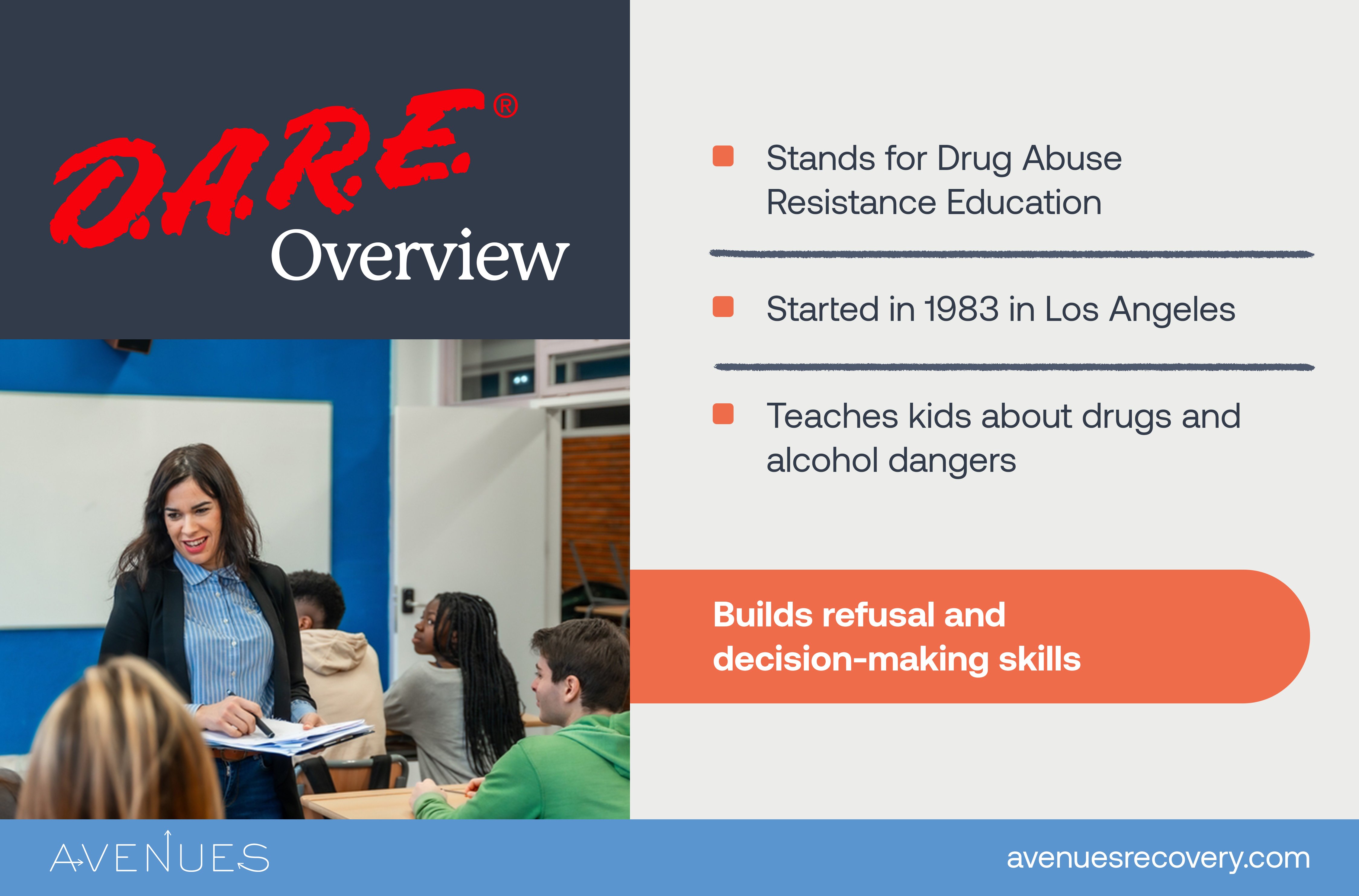
Definition of DARE Program:
Over time, the meaning of the DARE drug program has evolved. While the original approach focused heavily on scare tactics and saying no, the program has since shifted toward evidence-based strategies. Today, DARE’s lessons focus on decision-making skills, building self-confidence, and understanding the real-life consequences of risky behaviors—not just drugs, but also issues like bullying and internet safety. DARE’s purpose has always been to protect young people, but how it delivers that message has changed with the times.
The DARE Program Meaning:
The DARE program began in Los Angeles in 1983, a joint effort between the Los Angeles Police Department and the Los Angeles Unified School District. At the time, the country was in the middle of the “War on Drugs,” and prevention efforts were gaining national attention. The idea was straightforward: if uniformed police officers taught kids about the dangers of drugs early on, they’d be less likely to experiment later in life.
DARE quickly gained momentum. By the late 1980s and 1990s, it was being taught in schools across all 50 states, and even spread internationally. At its peak, millions of students participated each year. For many parents, teachers, and communities, DARE became a symbol of taking a stand against drug use.
Then vs. Now
Then:
- Focused on “Just Say No” messaging and scare tactics.
- Lessons were led almost entirely by police officers.
- Emphasized pledges and slogans over interactive learning.
- Criticized for being more memorable than effective.
Now:
- Uses evidence-based curriculums like “keepin’ it REAL,” developed with input from prevention science.
- Shifts from scare tactics to decision-making, communication, and refusal skills.
- Expands beyond drugs to cover topics like bullying, internet safety, and responsible decision-making.
- Lessons are more interactive, often involving discussions, role play, and real-life scenarios.
DARE Program Mascot:

If you ever saw DARE materials in your school, you might remember Daren the Lion, the official DARE program mascot. With his bold black shirt and bright red logo, Daren was designed to be approachable, friendly, and inspiring for kids—someone they could look up to as a positive role model.
As a lion, Daren represents bravery—standing strong against peer pressure and tough choices.
His friendly cartoon style was meant to connect with children, making serious topics like drugs and violence less intimidating. And just like the bold DARE logo, Daren became a recognizable symbol across schools and communities, reinforcing the program’s core message.
For many students, Daren made the program more memorable. Kids related to him more easily than to a lecture or slogan. His presence also helped to soften the image of police officers in schools, showing law enforcement as allies and mentors rather than just authority figures.
Over time, Daren became not just a mascot, but a cultural icon of the DARE movement—appearing on posters, workbooks, and t-shirts across the country.
Goals and Key Components of the DARE Program
The main goals of the DARE program include:
- Educating students about the risks of drugs, alcohol, and tobacco.
- Building refusal skills so kids can handle peer pressure.
- Encouraging responsible decision-making in everyday situations.
- Promoting positive relationships between youth, schools, and law enforcement.
- Supporting safer communities by reducing drug use and violence.

The program and curriculum have changed over time to meet changing needs and realities. Today, the DARE program looks more like:
- Evidence-Based Curriculum: Lessons like keepin’ it REAL focus on practical life skills rather than scare tactics.
- Interactive Learning: Students practice real-world scenarios through role-playing, group discussions, and problem-solving activities.
- Beyond Drugs: The modern program addresses broader issues like bullying, internet safety, stress management, and self-esteem.
- Officer Involvement: Police officers still play a role, but now they work alongside teachers and focus on building trust rather than lecturing.
- Community Connection: Parents and local organizations are often encouraged to get involved, reinforcing the lessons outside the classroom.
Does the DARE Drug Program Work?
When the DARE program first launched, it quickly spread across the U.S. and even internationally, embraced by schools, parents, and communities who wanted to protect kids from drugs. At its peak in the 1990s, more than 70% of American schools offered DARE. On the surface, it looked like a huge success.
But as researchers began studying the program more closely, a different picture emerged.
Many long-term studies in the 1990s and early 2000s found little to no lasting impact on preventing drug or alcohol use among students who went through DARE, compared to those who did not. Some research suggested that while kids remembered the program’s slogans and mascots, the actual lessons didn’t translate into real-world behavior change.
Critics also argued that the program relied too heavily on scare tactics and slogans like “Just Say No,” which oversimplified complex issues around peer pressure, addiction, and mental health.
In fact, the U.S. Surgeon General listed the original version of DARE as an “ineffective primary prevention program.”
But rather than fading away, DARE began to evolve. By the early 2010s, it replaced its traditional curriculum with evidence-based approaches such as “keepin’ it REAL”, which focuses on practical decision-making, communication, and social skills. Early studies of this updated version show more promise, with actual improvements in students’ ability to resist peer pressure and make healthier choices.
The DARE Program in Schools Today 
The DARE program may not look exactly like it did back in the ’80s, but it’s still alive and well in schools across the country. Instead of relying mostly on “just say no” slogans, today’s DARE lessons focus more on real-life skills—things like making good decisions, handling stress, and finding healthier ways to cope with peer pressure.
A big part of the modern curriculum is called “Keepin’ it REAL” (Refuse, Explain, Avoid, Leave). It gives kids simple, practical tools to use when they’re faced with tough choices around drugs, alcohol, or even just everyday conflicts. Rather than long lectures, the lessons now lean on role-playing, conversations, and interactive activities, so students actually practice how to respond in the moment.
You’ll still find police officers or trained educators leading the sessions, but the tone is more about building trust and connection with kids than scaring them straight. While opinions are still mixed on how much impact DARE truly has, it continues to be part of thousands of schools—especially at the elementary and middle school levels—offering students a supportive space to talk about real challenges they face.
At Avenues Recovery Center, we know that preventing addiction is just as important as treating it. That’s why we actively support programs and initiatives aimed at educating youth, families, and communities about the risks of substance use. By partnering with schools, community groups, and local organizations, we help bring evidence-based prevention strategies into classrooms and neighborhoods. Our approach goes beyond simply warning about the dangers of drugs. We focus on teaching practical skills like decision-making, coping with stress, and resisting peer pressure—tools that align closely with modern prevention programs like DARE. We also provide resources for parents and caregivers, helping them start important conversations with their children and create a supportive home environment. By combining prevention education with professional treatment, Avenues ensures that young people not only understand the risks but also have access to care if they or a loved one struggles with substance use. Supporting prevention today helps reduce the need for treatment tomorrow, creating stronger, healthier communities.
Key Takeaways:
- The DARE program educates kids about drugs while teaching refusal and decision-making skills.
- The modern program focuses on practical tools, not just slogans or scare tactics [Objectives ↓].
- Evidence shows updated curriculum like “Keepin’ it REAL” improve actual coping and social skills.
- Early education and prevention can help reduce long-term risk of substance use.