


Payal Kakaria, BSN, RN, is the Director of Medical Development at Avenues Recovery Center. A registered nurse by training, she brings a strong foundation in patient-centered, evidence-based care and is committed to advancing high-quality clinical practices across treatment settings.
At some rehab facilities like Avenues Recovery, clients are permitted to smoke in designated outdoor areas. Entering rehab takes courage and strength, and it often comes with many unanswered questions. One of the most common concerns people have before starting treatment is whether smoking cigarettes is allowed. Smoking policies can differ from one rehab to another, and understanding those rules ahead of time can help individuals feel more prepared.
Smoking is a reality for many people entering addiction treatment, particularly in early recovery. Drawing on extensive experience in addiction care, Avenues Recovery, acclaimed addiction treatment experts, examine how smoking is addressed in rehab settings and what individuals can expect. Having a clear policy helps clients start treatment feeling informed and confident about what to expect.
Key Takeaways on Smoking Cigarettes in Rehab
- Smoking policies in rehab vary; some facilities allow smoking, while others operate as fully smoke-free.
- Rehabs that allow smoking do so to reduce stress and let clients focus on their primary addiction.
- Mindfulness practices such as meditation, deep breathing, and guided imagery help reduce stress and ease nicotine cravings during rehab.
- Smoking in rehab is usually limited to designated areas and scheduled breaks.
- Quitting smoking while in rehab is supported through counseling, nicotine replacement, mindfulness, and peer support.
Considerations Regarding Smoking in Rehab
Some rehabs believe smoking can make recovery from drug addiction more difficult. These facilities may adopt a no-smoking policy to promote a healthier lifestyle and help clients address all dependencies, including nicotine. These centers often provide support for clients who wish to quit smoking, offering counseling, nicotine replacement therapies, and other resources.
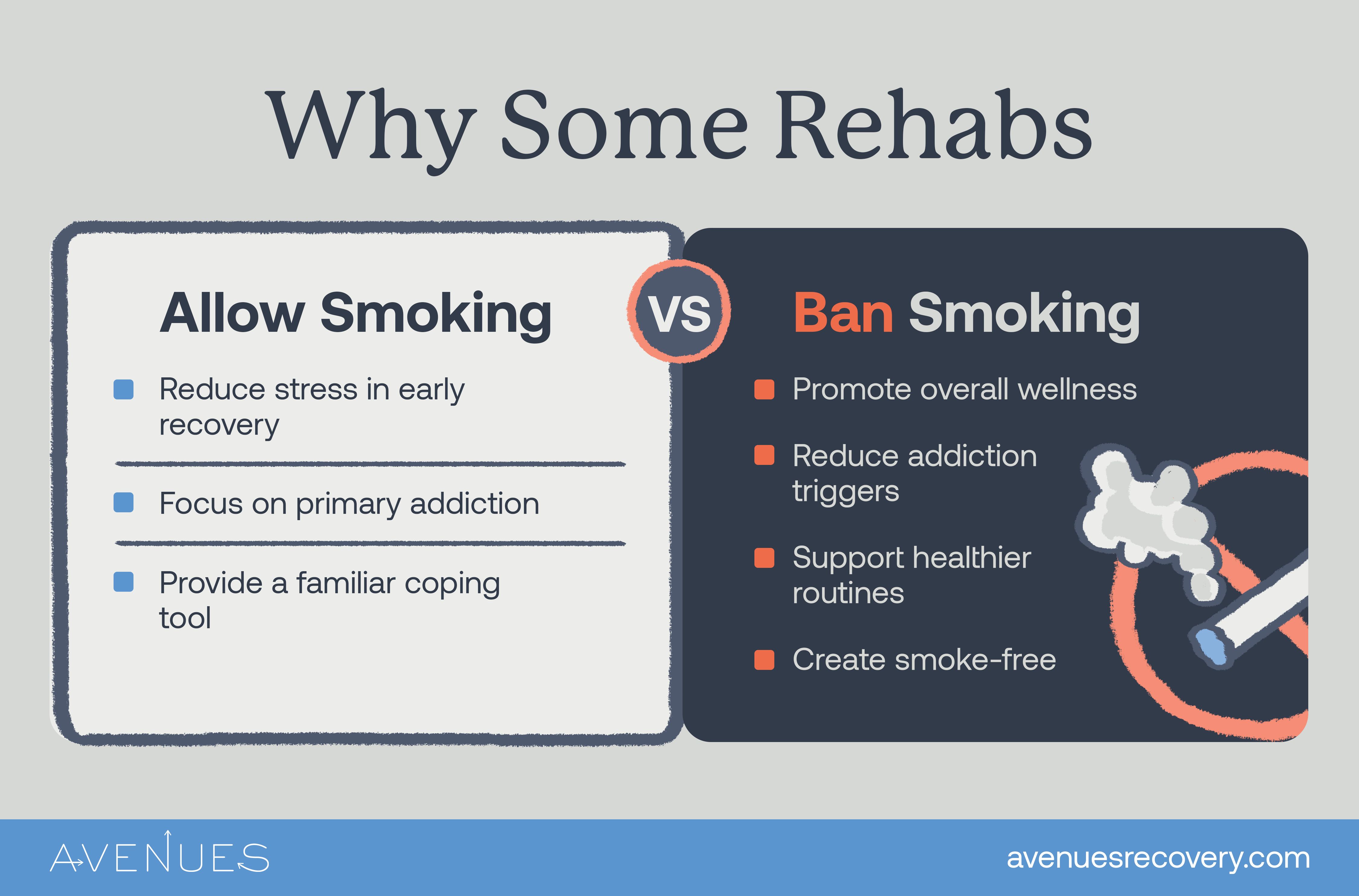
In contrast, facilities like Avenues Recovery permit smoking, believing that allowing this habit can reduce stress and let clients focus on their primary addiction. These rehabs typically provide designated smoking areas and allow supervised smoke breaks, offering flexibility that can make the transition into recovery smoother for some individuals. Ultimately, whether or not you can smoke in rehab depends on the facility’s policies, so it’s important to research and choose a rehab that aligns with your needs and recovery goals.
Why Do Some Rehabs Allow Smoking?
Some rehabs allow smoking to provide a more flexible, supportive approach to recovery. These facilities let individuals continue smoking cigarettes or using other tobacco products during their stay, often offering designated outdoor areas that balance comfort with overall health.
Here’s a breakdown of what to expect in rehabs that allow smoking:
- Designated Smoking Areas: Outdoor spaces specifically for smoking help maintain comfort while meeting health standards.
- Nicotine Replacement Therapy (NRT): Some rehabs encourage using nicotine patches, gum, or other substitutes and offer counseling for those interested in quitting, without making it mandatory.
- Gradual Approach: Individuals not ready to quit can follow programs that reduce tobacco use gradually later in recovery.
- State Regulations: Smoking policies vary by state, so some rehabs may have stricter rules about where and how smoking is allowed.
- Focus on Primary Addiction: Tackling one addiction at a time can prevent the added stress of quitting nicotine while addressing a more serious substance use disorder.
If smoking is important to you, check the facility’s policy ahead of time, as many rehabs emphasize smoke-free environments to support overall wellness.
Why Do Some Rehabs Ban Smoking?
Some rehabs ban smoking as part of their commitment to overall health, both for the clients and the staff. While allowing smoking might seem less restrictive, many rehabilitation centers believe that creating a fully smoke-free environment promotes a healthier, more comprehensive recovery. Here’s why some rehabs enforce no-smoking policies:
- Health and Wellness Focus: Banning smoking promotes a holistic approach to health and aligns with the rehab’s goal of reducing harmful habits.
- Reducing Triggers and Cravings: Tobacco can trigger cravings for other substances, especially if clients previously smoked while using them. Removing smoking helps eliminate cues linked to past addictive behaviors.
- Behavioral Consistency: Recovery involves building routines that don’t rely on addictive substances. A smoke-free environment encourages coping mechanisms that support long-term sobriety.
- Workplace Health and Safety: Smoke-free facilities protect staff and clients who are sensitive to or wish to avoid secondhand smoke.
- Regulatory Standards: Some state or federal regulations require healthcare facilities to maintain smoke-free environments, particularly in government-funded rehabs or facilities associated with hospitals.
- Mental Health and Mood Stability: Nicotine withdrawal can cause mood swings, anxiety, and restlessness. Going smoke-free allows facilities to focus on alternative coping strategies for stress and anxiety.
While quitting smoking during addiction treatment may initially add stress, some rehabs provide nicotine replacement therapy (NRT) and counseling to support clients who want to quit. This approach helps clients address all aspects of their health and addiction simultaneously, creating a fresh start in multiple ways.
Smoking in Rehab: The Pros and Cons
The chart below shows the main pros and cons of smoking in rehab, offering a clear look at how it can affect the recovery process.
|
Pros of Smoking in Rehab |
Cons of Smoking in Rehab |
|
Reduces Stress: Nicotine can help smokers manage stress during early recovery. |
Health Risks: Smoking increases risk of serious health issues. |
|
Supports Focus on Primary Addiction: Avoids added pressure of quitting nicotine while addressing more serious substance use. |
Addiction Transfer: Risk of replacing one addiction with another if nicotine dependence increases, since studies show that nicotine is highly addictive. |
|
Immediate Comfort: Provides a familiar coping mechanism during a challenging recovery period. |
Interference with Recovery Goals: Some professionals argue that quitting all substances supports long-term sobriety. |
How to Get Cigarettes While at Rehab
In facilities that allow smoking, cigarettes are often brought in by the client or provided by family members during approved visitation. Some facilities may have a small store where clients can purchase cigarettes, while others may allow clients to arrange for a tobacco delivery or purchase as part of their personal expenses. It’s best to check the facility’s policies before arriving. If cigarettes are allowed, they typically must be in a closed box to prevent anything illegal from entering the facility.
Quitting Smoking While in Rehab
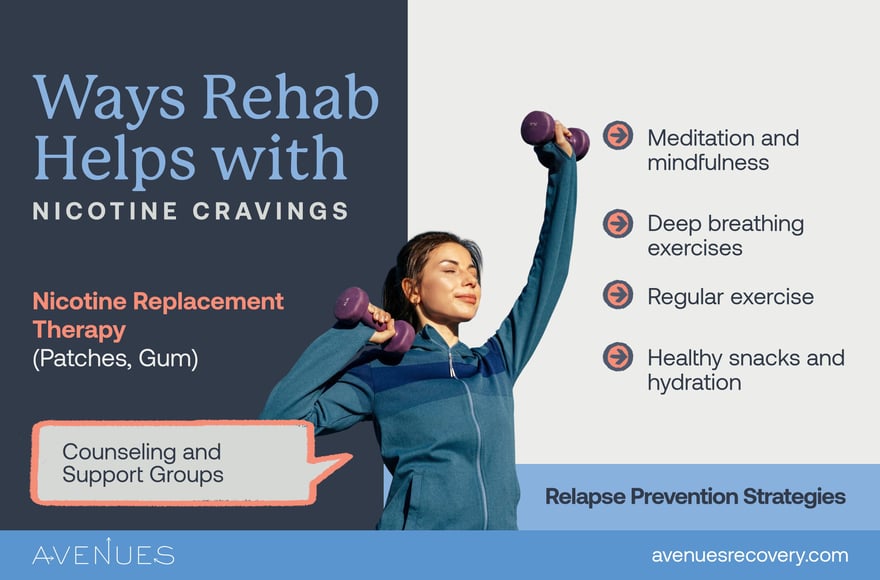
Quitting smoking during rehab can strengthen overall recovery, helping the body heal faster, clearing the mind, and reducing cravings. Many rehab centers offer support groups for smoking cessation, where participants can connect, encourage one another, and stay accountable, making the process less isolating. In addition to support groups, rehabs often incorporate mindfulness practices to help manage stress and ease nicotine cravings, including meditation, deep breathing, and guided imagery.
Regular exercise also supports recovery by releasing endorphins, reducing stress, and providing a healthy distraction from smoking. Keeping healthy snacks on hand and staying hydrated can help curb oral fixation and maintain energy levels.
Can You Smoke Cigarettes in Rehab? The Avenues Policy
At Avenues Recovery, clients are welcome to smoke in designated outdoor areas. This reflects a practical and compassionate approach, recognizing that asking someone to quit smoking immediately could add unnecessary stress or even discourage them from seeking help.
Avenues Recovery provides guidance and personalized treatment plans using a variety of therapy modalities, supporting each individual in the way that works best for them, including allowing smoking if that’s what is necessary. Clients can begin their recovery journey knowing they’re in a professional, understanding, and non-judgmental environment, allowing them to focus on their primary addiction without added stress.
Contact us today to begin your recovery journey with Avenues Recovery’s expert guidance and compassionate support.
FAQ’s on Can You Smoke Cigarettes in Rehab?
Does smoking in rehab affect participation in therapy or group activities?
Smoking policies generally don’t interfere with therapy sessions or group activities. Most facilities schedule designated smoke breaks so clients can participate fully in treatment while still managing their nicotine needs.
Are e-cigarettes or vaping devices allowed in rehab programs that permit smoking?
Policies vary by facility. Some rehabs allow vaping as an alternative to cigarettes, while others restrict all forms of smoking. It’s best to confirm each program’s rules before admission.
Can quitting smoking in rehab improve mental clarity and focus during recovery?
Yes. Reducing or quitting nicotine can help recovering addicts feel more alert, improve concentration, and enhance engagement in therapy. Many programs provide support and counseling to make this process easier.
How do rehabs help clients cope with smoking triggers from their past environment?
Many programs teach coping strategies to handle triggers outside the rehab setting, including avoiding high-risk situations, practicing mindfulness, and creating a relapse-prevention plan for when clients return home.
Are there long-term health programs in rehab for smokers who want to quit after treatment?
Some rehabs offer follow-up programs and support for clients who want to address nicotine dependency after completing their primary addiction treatment, including check-ins, counseling, and resources for gradual smoking cessation.