Key Takeaways:
- Most people think that vaping is harmless, but it’s far from the truth.
- Vapes include many invisible chemicals that can damage sensitive lung tissue.
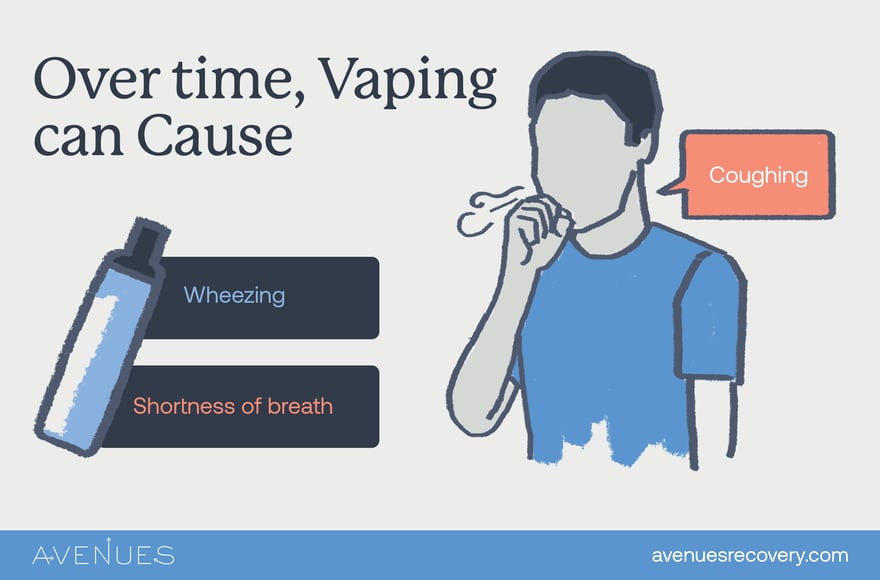
- Vaping can cause coughing, wheezing, chest tightness and lung inflammation.
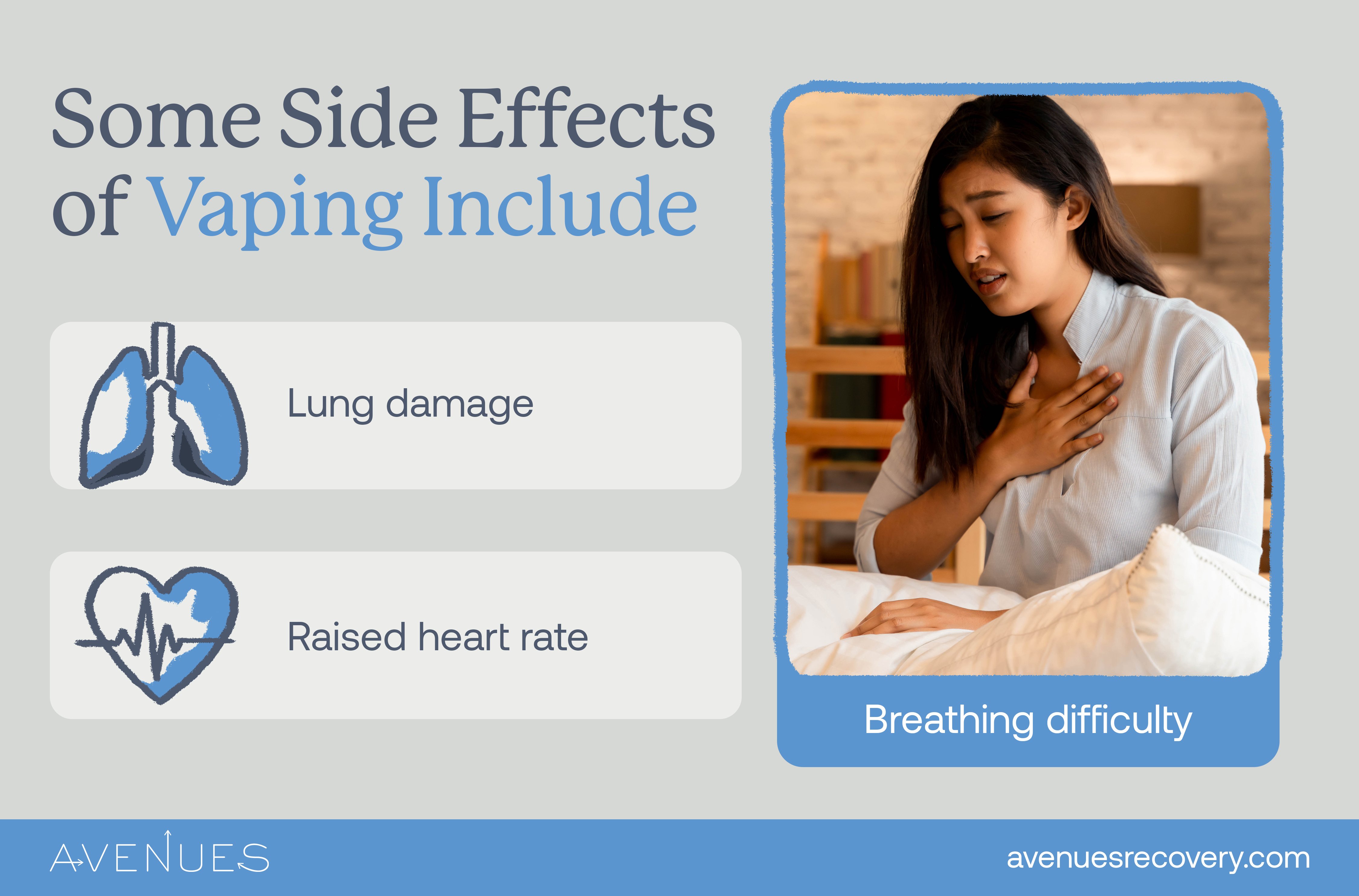
- Side effects of vaping include: lung damage, raised heart rate, and breathing difficulty.
How Bad Is Vaping?
You may wonder, is vaping bad for you? You’re asking this because you might be worried about a loved one, and you don’t want to miss any warning signs. You might feel exhausted, scared, and unsure what to believe – but we’re here to give you a simple, honest answer.
Due to savvy marketing, most people think that vaping is harmless, and a much better choice than smoking, but unfortunately, that’s not true.
Some possible side effects of vaping include:
- Lung damage
- Raised heart rate
- Breathing difficulty
But you probably already know all of this. You just want to know how to get help.
At Avenues, our experts are waiting to listen without judgment. You can explain all of your concerns and be met with compassion.
Reach out to us now, so we can help your family member live a life worth living.
Vaping vs. Smoking: A Quick Comparison
|
Topic |
Vaping |
Smoking |
|
Harm level |
High. Damages lungs, raises heart rate, and exposes the body to chemicals that can cause long-term problems. |
High. Causes cancer, heart disease, and major lung damage. |
|
Addiction Risk |
High. Many vape products have more nicotine than cigarettes, so your loved one can get hooked fast. |
High. Nicotine addiction from cigarettes is strong and well-known. |
|
Breathing |
Can trigger coughing, wheezing, chest tightness and inflammation. |
Known to cause chronic bronchitis, emphysema and lung cancer. |
|
Smell and appearance |
Doesn’t smell like smoke, which makes it easier to hide. |
Strong smell that is hard to hide. |
|
Cost |
Expensive because refills are frequent and easy to use all day. |
Expensive, especially if smoking more than a pack a day. |
|
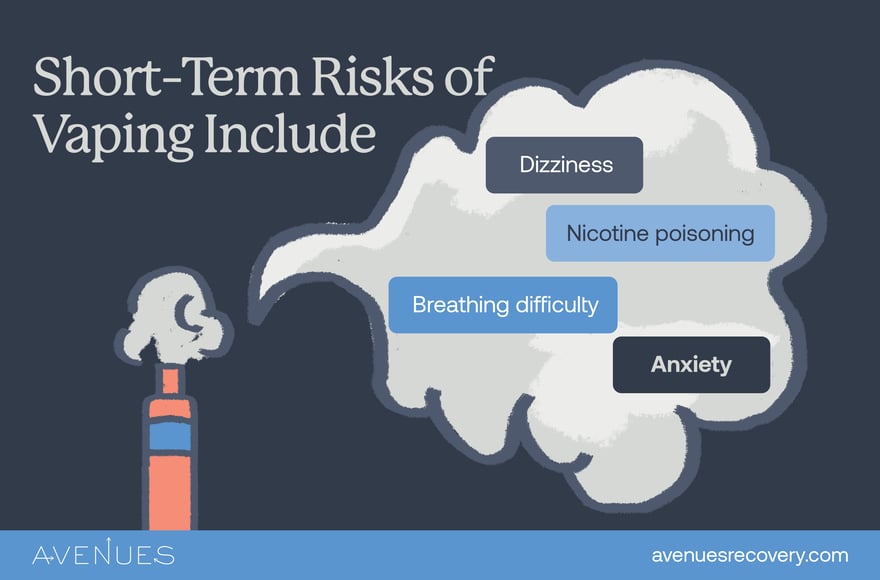
Short-term risks |
Nicotine poisoning, spikes in anxiety, dizziness, and breathing trouble. |
Immediate effects include coughing, shortness of breath, and higher heart strain. |
|
Long-term risks |
Still being studied, but signs point to serious lung and heart issues. |
Fully proven long-term risks: cancer, heart disease, stroke, major lung damage. |
|
Quitting |
Cravings can be strong because people vape constantly without noticing how much. |
Hard to quit, but cravings follow a predictable pattern. |
Are Vapes Worse Than Cigarettes?
You might wonder, Are vapes worse than cigarettes?
Vapes are neither safe or harmless. They usually have higher levels of nicotine than cigarettes, which means your loved one can get hooked faster and stay hooked longer. Many vapes also contain chemicals that can irritate or damage the lungs, especially when they are used often.
Are they worse than cigarettes? In some ways yes, in some ways no. Cigarettes have more proven long-term dangers, like cancer. But vapes make addiction happen quickly, and many teens and adults use them nonstop because they’re easy to hide and don’t smell at all. That constant use can affect breathing, mood, sleep, and overall health.
Side Effects of Electronic Cigarettes
E-cigarettes can cause a range of side effects that are easy to overlook at first but become clearer over time. The chemicals in the vapor can irritate the lungs, leading to:
- Coughing
- Wheezing
- Shortness of breath
The high amount of nicotine in an e-cigarette can make a person’s heart race and cause them to become jittery, or experience headaches and dizziness. You might also notice mood changes, like irritability or anxiety, especially when they can’t vape, because nicotine affects the brain so quickly.
Sleep can suffer too, since frequent nicotine use makes it harder to fall or stay asleep. Some people feel nauseous or lose their appetite. One of the biggest issues is how quickly dependence develops, leaving the person restless or anxious without the device.
Understanding these signs can help you see what your loved one might be struggling with so you can guide them toward the right kind of support.
Why Teens Are More Vulnerable to Vaping Addiction
When you look at teens and young adults specifically, it helps to remember that they’re still growing in every way — their bodies, their minds, and especially the parts of the brain that control judgment, impulse, and long-term decision-making. Vaping can slip in quietly during these years because the nicotine reaches the brain very quickly, creating a sense of relief or calm that feels harmless at first.
Over time, though, vaping trains the brain to expect that feeling of reward again and again, which could lead to dependence and addiction, making it much harder for a young person to walk away. Their lungs are also more sensitive, and the heated chemicals in vapor can irritate and inflame delicate tissue long before symptoms become obvious.
What Are Vaping Lungs?
When you hear people talking about “vaping lungs,” they’re talking about the irritation and damage that can happen inside the lungs from regular vaping. The vapor isn’t just harmless mist — it carries chemicals and tiny particles that settle deep in the airways.
In more serious situations, the lungs can become so inflamed that the person vaping could need medical attention to breathe comfortably again. If you’re seeing signs like this in someone you love, it’s a signal that their body is struggling and needs support.
Our experts at Avenues Recovery can walk you through what help and recovery looks like, and how to get your loved one into safe, steady care right away. We’re here for you!