

Key takeaways
- Goofballs mix opioids and stimulants, creating high overdose risk even for high-functioning adults.
- Physical and mental effects include chest tightness, paranoia, insomnia, and depression.
- Treatment requires medically supervised detox plus mental health support.
What Is A Goofball — And Why Is It So Dangerous?
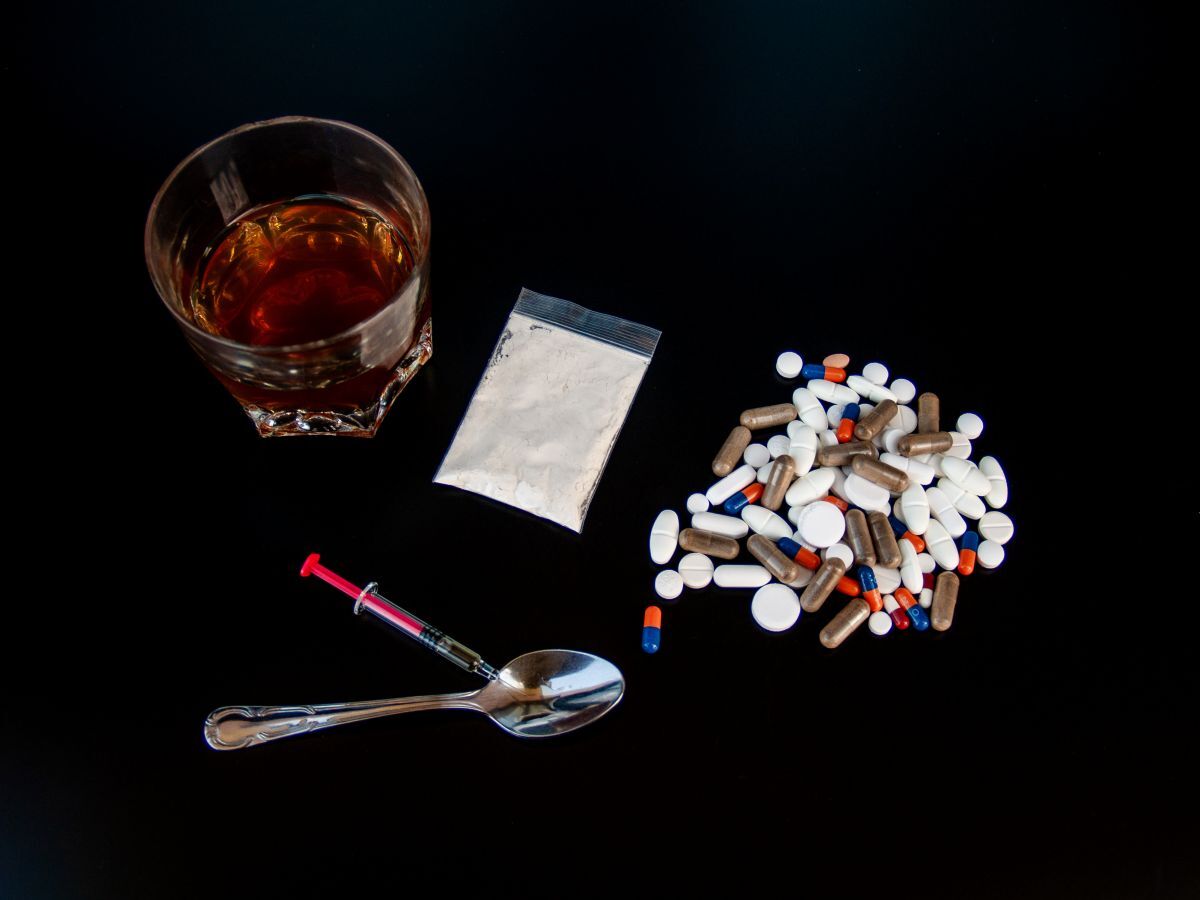
You’re probably already familiar with the term goofball, which refers to the combination of an opioid (such as heroin or fentanyl) and a stimulant (often meth or cocaine).
For many people, a goofball doesn’t start as chasing a high. It starts as a way to get through the day. One drug to stay awake, focused, or productive. Another to take the edge off, sleep, or quiet the crash. Over time, that balance becomes harder to maintain — and far more dangerous than it feels.
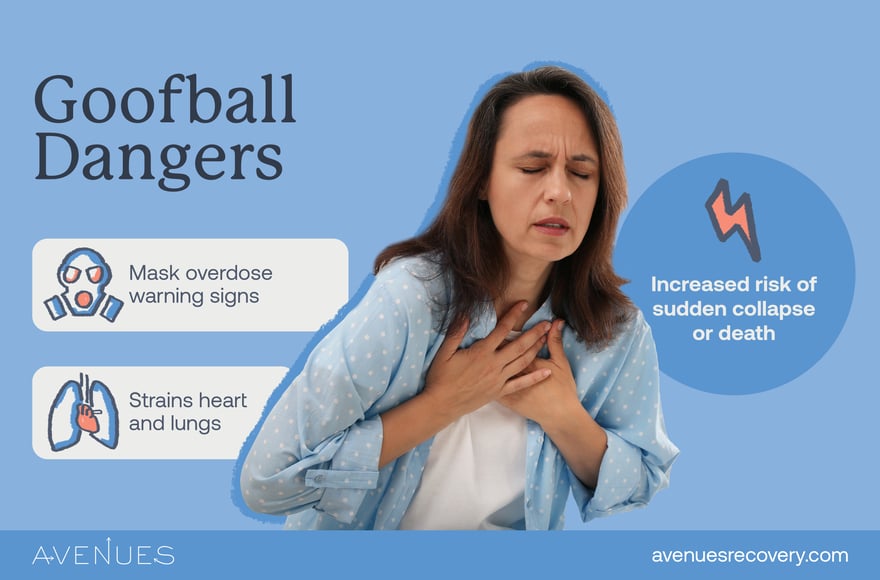
The problem is that the drugs pull the body in opposite directions at the same time. Stimulants increase heart rate, elevate blood pressure, and heighten anxiety. Opioids slow breathing and suppress pain.
Together, these substances can mask warning signs that would normally signal someone to slow down or stop. It’s possible to feel “okay” until breathing becomes dangerously suppressed or the heart is pushed beyond its limits. This is why the overdose risk with goofballs is so high — even among people who don’t see their use as severe. If you’re using goofballs to get through daily life, support is available. At Avenues Recovery, we can help you understand your options and take the next steps toward safer, more stable recovery.
Physical and Psychological Effects of Goofballs
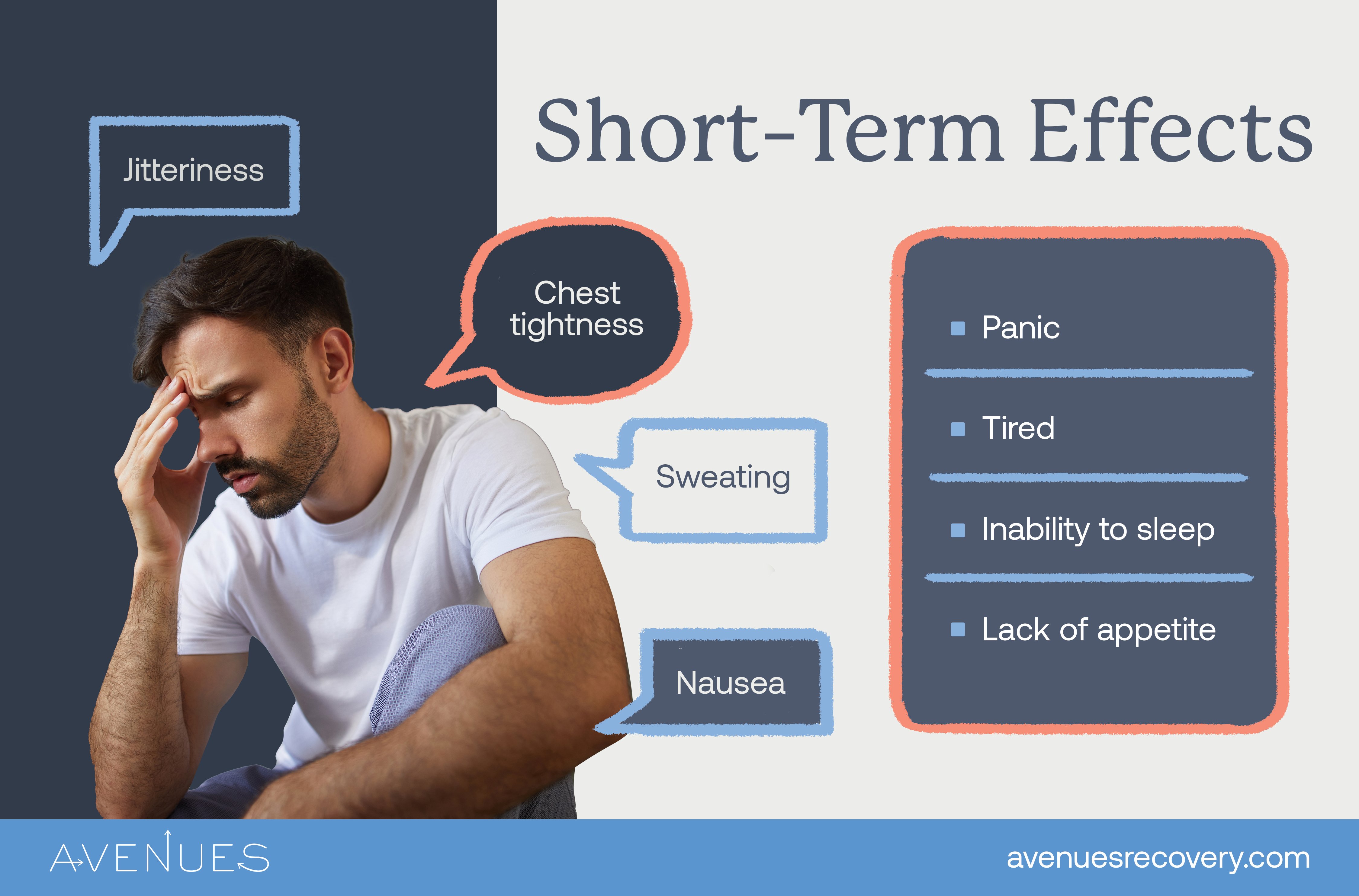
Common short-term effects can include:
- Jitteriness
- Chest tightness
- Nausea
- Sweating
- Panic
- Tired
- Inability to sleep
- Lack of appetite
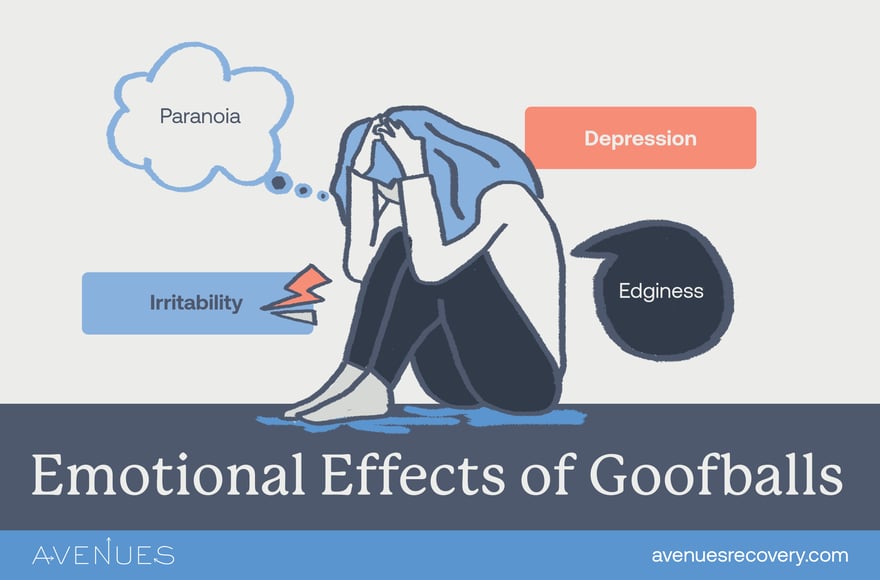
Mentally, this mix often brings:
- Paranoia
- Irritability
- Depression
- Edginess
Over time, the strain on the heart and lungs intensifies, infections become more likely, and mood crashes deepen. What may begin as a sense of control often shifts into polysubstance dependence, where neither drug feels effective on its own.
Why Withdrawal Is More Complicated
Stopping a goofball isn’t the same as stopping one drug. Opioid withdrawal can bring body aches, vomiting, diarrhea, and intense cravings. Stimulant withdrawal often involves profound exhaustion, low mood or depression, agitation, and strong urges to use simply to feel “normal” again. When these overlap, symptoms can come in waves. That’s why many people who tried to quit on their own ended up using again — not from weakness, but because the chemistry is stacked against them.
Goofball Drugs 1950s
In the 1950s, “goofball” didn’t mean an illicit street drug. It often described the common medical pairing of stimulants and depressants, usually amphetamines during the day and barbiturates at night. Doctors prescribed them freely for energy, mood, weight control, anxiety, and sleep. Many adults with jobs, families, and responsibilities relied on this combination to stay productive and steady. On the surface, life looked fine. Underneath, people were fighting anxiety, low mood, emotional exhaustion, and a growing dependence they didn’t know how to name.
What makes this history feel familiar is that most users didn’t see themselves as having a substance problem. They were trying to function, not escape. When cracks appeared — irritability, shame, emotional numbness, fear of stopping — there was little understanding that mental health and substance use were connected. Treatment focused on the drugs, not the stress or pain driving their use. Today, we know better. Effective care recognizes that anxiety, depression, trauma, and substance use often overlap — and that people who look “high-functioning” still deserve thoughtful, integrated support that fits real lives, not just crisis moments.
Treatment Considerations for Polysubstance Use
Effective care plans address both sides of the mix. This includes medically supervised detox to manage opioid withdrawal safely, while also supporting the stimulant crash, sleep disruption, anxiety, and mood changes. It also means watching vitals closely, adjusting medications carefully, and treating mental health concerns alongside substance use — not as an afterthought. This is not something most people can do without outside help.
How Avenues Recovery Approaches Stimulant + Opioid Addiction
At Avenues Recovery, many people arrive still working or trying to hold family life together. Treatment is built around that reality. Detox is medically supervised, explained step by step, and tailored to how your body is responding. It is never a one-size-fits-all plan. After detox, care focuses on stabilizing sleep and mood, reducing cravings, and building a plan that fits work, relationships, and what comes next. You’re treated like an adult who needs clear information and practical support.
If you’re dealing with an up-and-down goofball pattern, or worried it may be heading there, you don’t have to guess your way through it. A short call with Avenues Recovery can walk you through what detox looks like, how long treatment usually lasts, and how people protect their job and family while getting help.