

When someone is battling alcohol addiction, they’ll need more than just willpower to quit. It’s a physical, emotional, and mental process, and for many, the journey to recovery is made safer and more manageable with the help of medication. While the idea of taking medication to stop drinking alcohol might sound surprising at first, it’s actually a well-researched, medically supported approach that can make a big difference. Understanding how these medications work, what they do, and who they’re for can empower addicts and their loved ones to make informed choices and find hope in the recovery process.
At Avenues Recovery, we understand that medication can be an important part of a comprehensive, individualized approach to alcohol addiction treatment and recovery. Read on to learn more about medications to stop drinking alcohol and how they work, along with how they may support the recovery process.
Key Takeaways on Alcoholism Medication
- Medication can't cure alcoholism on its own, but it makes the recovery process a lot more manageable when paired with therapy and support.
- Naltrexone, acamprosate, and disulfiram are the main FDA-approved options, and each one works in a completely different way.
- Some medications reduce cravings, some ease the discomfort of early sobriety, and others create a strong deterrent against drinking.
- Off-label options like topiramate and gabapentin are sometimes used when first-line treatments aren't the right fit.
- Detox medications and long-term recovery medications serve different purposes, so it helps to understand where each one fits into the process.
What is Alcoholism?

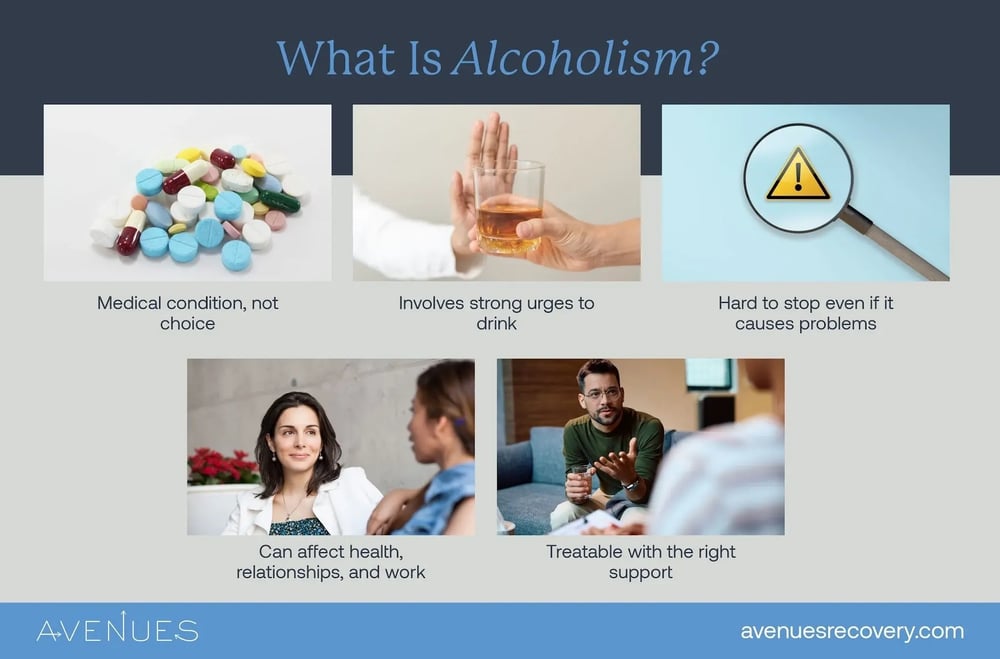
Alcoholism, also known as alcohol use disorder (AUD), goes beyond excessive drinking. It’s a chronic medical condition that can change a person’s thoughts and behavior around alcohol. People struggling with alcoholism often find it difficult to control their drinking, even when it’s causing harm to their health and daily life. It can look different from person to person; some may drink heavily every day, while others binge drink on occasion but still experience serious consequences.
Because alcoholism changes how the brain processes reward, motivation, and self-control, using drugs to treat alcoholism can play a significant role in recovery. Over time, alcohol can hijack the brain’s normal functions, making it harder to stop drinking without help. Depending on a person’s needs, alcoholism medication can help manage these challenges by reducing cravings and mitigating withdrawal symptoms. With the right combination of support, therapy, and sometimes alcoholism medication, many people go on to live full and healthy lives without alcohol.
Alcohol Abuse Medications
For people looking to break free from alcohol addiction, alcoholism medication can be a helpful part of the recovery journey. These anti alcohol medications don’t cure alcoholism, but they can make it easier to stop drinking by reducing cravings, lessening withdrawal symptoms, or blocking the effects of alcohol. There are several types of medications to stop drinking alcohol, and each works a little differently depending on a person’s needs.
Some people benefit from a drug to stop drinking that helps them stay sober by making alcohol less appealing, while others may need alcohol withdrawal medication to help support the early stages of recovery. Medication-assisted treatment can play an essential role in the recovery journey. Used together with therapy and support, these medications can improve the chances of long-term recovery. It’s not a one-size-fits-all solution, but for many, alcoholism medication is an important tool in taking back control of their lives.
Some helpful drugs to stop drinking include:
Naltrexone for Alcohol Use Disorder
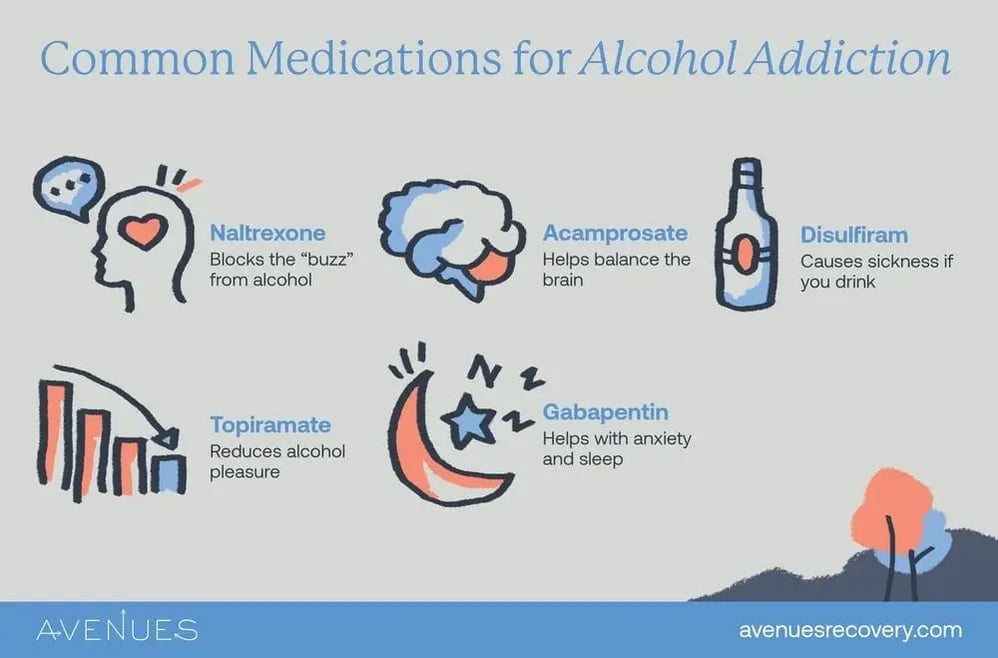
Naltrexone is one of the most commonly prescribed medications for alcohol cravings, and for good reason. It works by blocking the brain’s opioid receptors, which are involved in the feelings of pleasure and reward that alcohol can trigger. In simpler terms, drinking while on naltrexone just doesn’t feel as good. This helps reduce the urge to drink and makes it easier for people to stay in control.
Naltrexone comes in two forms: a daily pill or a once-monthly injection called Vivitrol. Some people prefer the injection because it takes the pressure off remembering to take a pill every day, while others are more comfortable with the oral version. It’s important to note that naltrexone isn’t a sedative or a replacement for alcohol; it’s a non-addictive medication that supports sobriety by changing how the brain responds to alcohol.
Acamprosate
Acamprosate, also known as Campral, helps the brain restore its natural balance after quitting alcohol. Long-term alcohol use can change brain chemistry, and acamprosate works to reduce the emotional and physical discomfort that often comes with early sobriety, such as anxiety, restlessness, and sleep problems. It doesn’t stop cravings directly, but it makes staying sober feel more manageable. Acamprosate is generally taken as a tablet several times a day, which can take some getting used to compared with once-daily options. It is often used for six months to a year while someone builds a foundation for recovery, and may be continued longer if it is effective.
Disulfiram
Disulfiram takes a different approach. Instead of reducing cravings, it causes a very unpleasant reaction if alcohol is consumed, including nausea, flushing, rapid heartbeat, and more. It acts as a strong alcohol deterrent medication, helping people avoid relapse by making drinking something they want to avoid at all costs. It's most effective for people who are already sober and highly motivated to stay that way. Disulfiram is taken once a day as a tablet, and is generally used for shorter, more focused stretches, especially during higher-risk periods like the first few months of sobriety.
Topiramate (Topamax)
Originally developed for seizures and migraines, topiramate is a medication for alcohol cravings that is extremely effective for some people. It may help decrease the pleasurable effects of alcohol and reduce the urge to drink. Though not FDA-approved specifically for alcohol use disorder, some doctors prescribe it off-label for short-term use as part of a personalized treatment plan. Because it can cause dizziness, drowsiness, and other effects on the central nervous system, combining topiramate with alcohol may worsen these effects.
Gabapentin (Neurontin)
Gabapentin is another off-label option used to manage alcohol cravings and withdrawal symptoms, especially in the early stages of recovery. It can help with anxiety, insomnia, and discomfort that may otherwise trigger a relapse. It’s often used short-term while transitioning into longer-term recovery support. Mixing gabapentin with alcohol can increase side effects, so patients should speak with their healthcare provider before drinking while taking it.
|
Drug |
How It Works |
Form |
FDA-Approved for AUD |
Best Suited For |
|
Naltrexone (Vivitrol) |
Blocks opioid receptors involved in alcohol's pleasure/reward response, reducing the urge to drink |
Daily pill or once-monthly injection |
Yes |
People who want to reduce cravings and drink less, without needing to be fully abstinent first |
|
Acamprosate |
Restores the brain's natural chemical balance disrupted by long-term alcohol use; eases post-quitting discomfort (anxiety, restlessness, sleep issues) |
Oral (tablet) |
Yes |
People who have already stopped drinking and need support staying sober |
|
Disulfiram |
Causes an unpleasant reaction (nausea, flushing, rapid heartbeat) if alcohol is consumed, acting as a deterrent |
Oral (tablet) |
Yes |
Highly motivated individuals already sober who want a strong deterrent against relapse |
|
Topiramate (Topamax) |
May decrease the pleasurable effects of alcohol and reduce urge to drink; originally a seizure/migraine drug |
Oral (tablet) |
No (off-label) |
People for whom first-line options haven't worked, under a personalized treatment plan |
|
Gabapentin (Neurontin) |
Helps manage cravings, anxiety, insomnia, and withdrawal discomfort, especially early in recovery |
Oral (tablet) |
No (off-label) |
Short-term use during early recovery/withdrawal transition |
Medications for Alcohol Detoxification
Before starting any of the medications above, many people need to get through withdrawal first, and that's where detox medications come in. Stopping alcohol cold turkey after heavy, long-term use can actually be dangerous, so going through it under medical supervision is usually the safer route.
Benzodiazepines like chlordiazepoxide, diazepam, or lorazepam are the go-to option here. They ease the nervous system back into functioning without alcohol, taking the edge off symptoms like shaking and anxiety, and in more serious cases, they help lower the risk of seizures. Doctors usually start with a higher dose and gradually lower it over a few days, adjusting along the way based on how the person's doing.
Thiamine (vitamin B1) is also routinely given during detox. Heavy drinking can deplete the body's thiamine stores, and replacing it helps protect against serious neurological complications.
Effective Treatment for Alcoholism
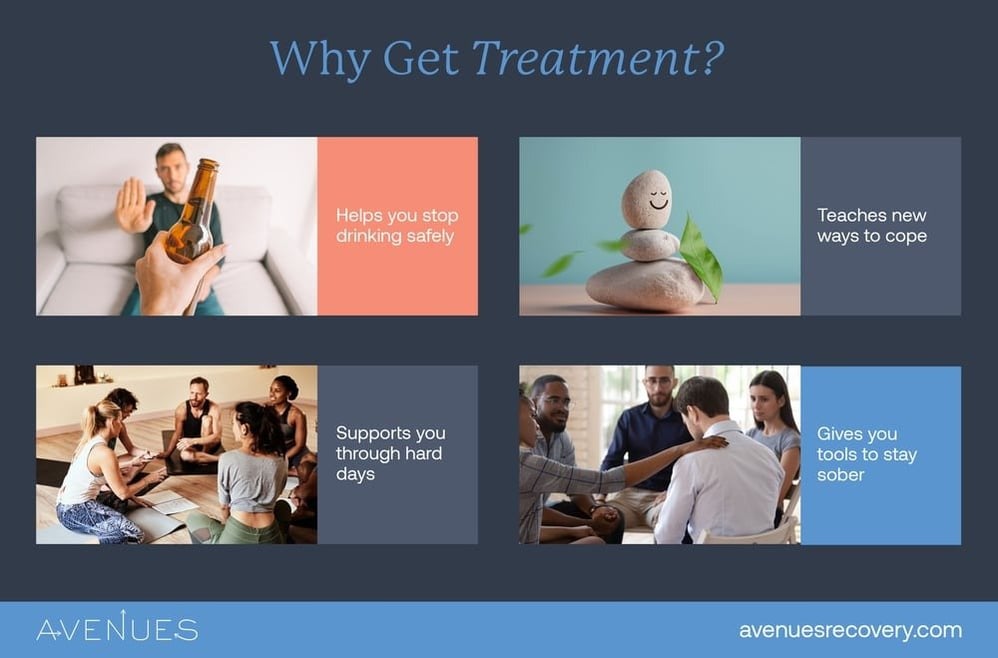
Treating alcoholism goes far beyond just quitting drinking; it’s about healing the whole person. Effective treatment often includes a combination of medical detox, therapy, support groups, and sometimes alcoholism medication to reduce cravings or prevent relapse. Medications like naltrexone, acamprosate, and others can be powerful tools in the fight against alcohol addiction and alcohol abuse, but they work best when combined with professional care and a strong support system.
Find the Right Support for Alcohol Recovery
Whether you're exploring a pill for alcoholics or looking for help navigating the emotional and physical challenges of sobriety, you don’t have to do it alone. At Avenues Recovery, we provide personalized treatment plans that address the whole person - mind, body, and spirit. If you or a loved one is ready to take the next step, reach out today. Recovery is possible, and we’re here to help you every step of the way.
FAQs on Alcoholism Medication
What are the FDA-approved medications for alcohol use disorder?
Naltrexone, acamprosate, and disulfiram are the three medications currently FDA-approved for alcohol use disorder. They don't all work the same way; some ease cravings while others make drinking unpleasant.
What medication is used for alcohol withdrawal?
Doctors typically turn to benzodiazepines like chlordiazepoxide, diazepam, or lorazepam to manage alcohol withdrawal. Taken under medical supervision, these help calm the nervous system, take the edge off symptoms like shaking and anxiety, and reduce the chances of a seizure during detox.
Can medication really help someone stop drinking alcohol?
Drugs can be used to treat alcoholism, especially when used alongside therapy and support rather than alone. Medication won't do all the work, but it can ease cravings enough that early sobriety feels less like an uphill battle.
How long do you need to take alcoholism medication?
How long someone stays on alcoholism medication really depends on the drug and their personal recovery plan. Some people use it for a few months while they build new habits, while others stay on it longer as part of ongoing relapse prevention.
Is there a pill for alcoholics that stops cravings completely?
There is no pill for alcoholics that eliminates cravings completely, but several can take the edge off. Naltrexone and acamprosate are the two most commonly used for this, and both tend to work best when combined with counseling.
Do you need a prescription for anti alcohol medication?
Anti alcohol medication requires a prescription and should always be taken under a doctor's guidance. A provider can help figure out which option fits someone's health history and recovery goals, and keep an eye on side effects along the way.