

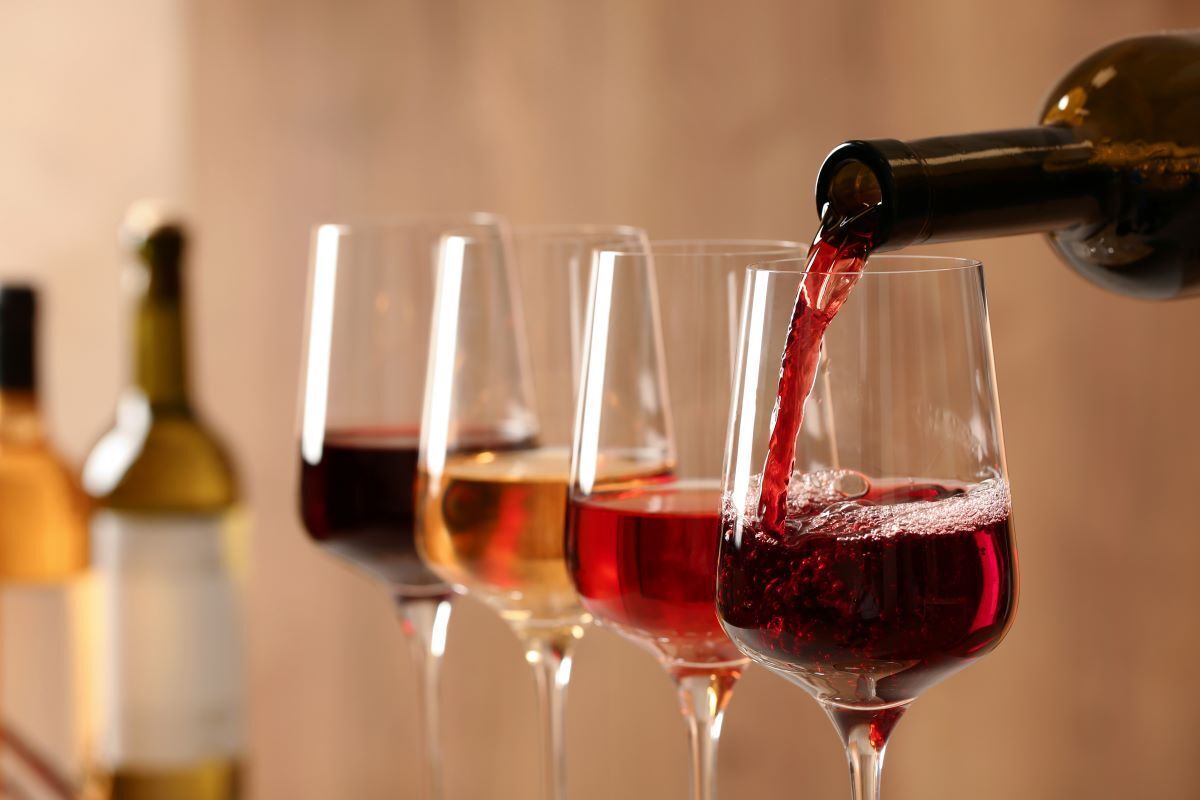
Drinking two glasses of wine within an hour will make you legally drunk.
That’s the short answer. The long answer is that how many cups of wine it takes to get you drunk isn’t the same for everyone. It depends on a range of factors, including your body weight, gender, how much you’ve eaten, and your personal tolerance to alcohol. Wine typically contains between 12% and 15% alcohol by volume (ABV), and a standard 5-ounce glass delivers about 0.6 ounces of pure alcohol. For some people, just one glass can bring on the early signs of intoxication, while others may need several to feel the effects. Drinking on an empty stomach, being tired, or taking certain medications can also intensify alcohol’s impact.
In this article, Avenues Recovery explores the various factors that influence how fast a person gets drunk and offers guidance on how to enjoy an occasional drink while avoiding intoxication or addiction.
How Much Wine Gets You Drunk: Key Takeaways
- How many glasses of wine get you drunk depends on alcohol content and type, the drinker’s weight and gender, consumption rate, and whether you drink on an empty or full stomach.
- Medications and health conditions could also impact how fast you get drunk from wine.
- Most people will get drunk after drinking 2-4 glasses of red wine within an hour.
- Guidelines for responsible drinking state that women should not exceed one glass per day and men should not have more than two.
- Help is available at Avenues Recovery for individuals struggling with frequent intoxication and alcohol addiction.
Understanding Alcohol Content in Wine
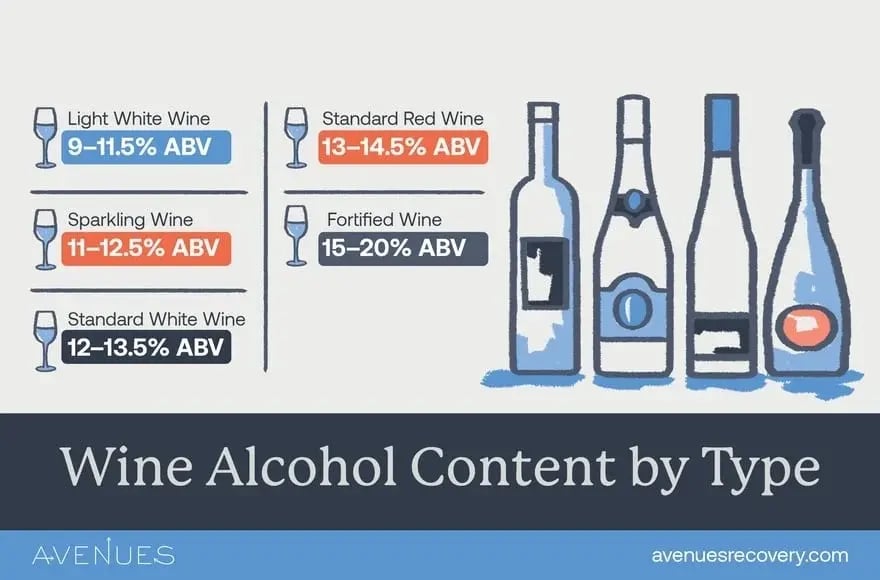
This chart depicts typical alcohol content in wine:
|
Type of Wine |
ABV (Alcohol by Volume) Range |
|
Light White Wines |
9% - 11.5% |
|
Standard White Wines |
12% - 13.5% |
|
Standard Red Wines |
13% - 14.5% |
|
Fortified Wines |
15% - 20% |
|
Sparkling Wines |
11% - 12.5% |
Alcohol affects not just the strength but also the flavor and mouthfeel of wine. Lower-alcohol wines tend to be lighter and more acidic, while higher-alcohol wines feel fuller and may leave a warming sensation. A standard glass of wine is about 5 ounces and typically contains 12–15% alcohol. For health guidelines, the CDC recommends no more than one glass per day for women and two for men. Wine labels always list the ABV, so checking it can help you choose a wine that fits your taste and lifestyle.
Does Red Wine Make You Drunk?
Red wine will make you drunk if you drink the amount of cups as per the intoxication threshold. The amount of red wine it takes to get you drunk depends on several factors like your body weight, tolerance, gender, and whether you've eaten recently. That said, most people will start to feel drunk after about 2 to 4 standard glasses of red wine. Feeling drunk can occur when the Blood Alcohol Concentration (BAC) reaches .08% which is also the legal intoxication marker for driving in most places.
A standard glass is 5 ounces, and red wine typically has an alcohol by volume (ABV) of 13% to 14.5%. Body weight can significantly influence the number of cups needed to reach .08% BAC.
The following table shows approximately how much wine it takes to get drunk, by weight.
|
Weight Range |
Glasses of Wine to Reach ~0.08% BAC* |
|
Under 130 lbs |
2–3 glasses |
|
150–180 lbs (average) |
3–4 glasses |
|
180+ lbs |
4-5 glasses |
Which Factors Affect How Long It Takes to Get Drunk?
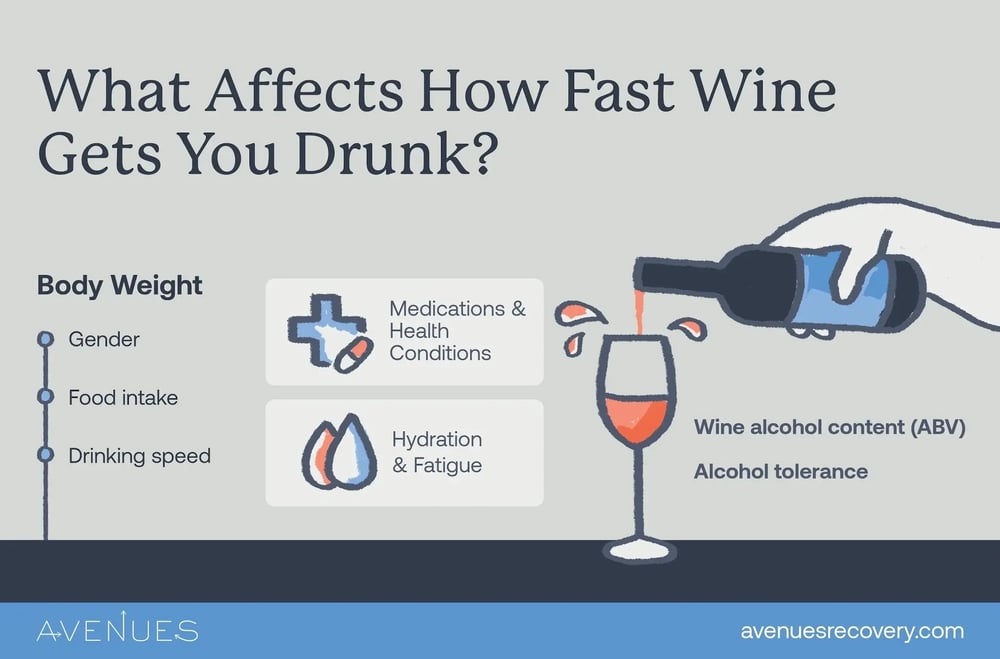
These factors affect how much wine gets you drunk:
Body Weight and Composition
People with lower body weight generally feel the effects of alcohol faster than those with higher body weight. Additionally, body fat doesn’t absorb alcohol, so individuals with higher muscle mass tend to metabolize alcohol more efficiently.
Gender
Women usually get drunk faster than men because they often have less body water and different levels of alcohol-metabolizing enzymes. Hormonal fluctuations can also play a role.
Food Intake
Drinking on an empty stomach allows alcohol to enter the bloodstream more quickly, speeding up intoxication. Eating before or while drinking slows alcohol absorption.
Rate of Consumption
Drinking alcohol quickly or drinking many drinks in a short time overwhelms the body’s ability to metabolize it, leading to quicker intoxication.
Type and Strength of Alcohol
Stronger drinks (higher ABV) or beverages consumed in concentrated forms, like shots, lead to faster intoxication than diluted drinks such as wine spritzers or beer.
Tolerance Levels
People who drink often get drunk less quickly, but this doesn’t mean they will not suffer from alcohol-related diseases or side effects of alcohol.
Medications and Health Conditions
Some medications and health issues (like liver disease) can intensify alcohol’s effects or interfere with its metabolism, increasing intoxication risk.
Hydration and Fatigue
Dehydration and tiredness can make alcohol affect you more quickly and intensely.
How Does the Body Metabolize Wine?
When you drink wine, your body starts processing it almost right away. A small amount of the alcohol is absorbed through your stomach, but most of it is absorbed in your small intestine and then enters your bloodstream. Once the alcohol is in your blood, it travels throughout your body and starts to affect your brain, which is why you may feel relaxed, lightheaded, or less alert.
The main organ responsible for breaking down alcohol is your liver. It uses special enzymes to turn the alcohol into other substances. First, alcohol is changed into a toxic chemical called acetaldehyde. Then another enzyme breaks that down into acetate, which is much less harmful. Your body then gets rid of acetate through your urine, breath, and sweat. On average, your liver can process about one standard drink per hour, like a 5-ounce glass of wine. If you drink more than that, your body can't keep up, and you start to feel more drunk. As mentioned, how fast your body handles alcohol can also depend on things like your weight, age, sex, what you’ve eaten, and your overall health.
How Long Does it Take to Metabolize Alcohol After Drinking Wine?
It usually takes about one hour for the body to metabolize one standard drink, such as a 5-ounce glass of wine with around 12% alcohol. Even if you stop feeling the effects after a couple of hours, alcohol can still be present in your body. It may be detectable in breath, blood, or urine for several hours, and sometimes up to 12 hours, depending on how much you drank. So while one glass of wine typically takes about an hour to metabolize, multiple drinks will extend that time, and feeling sober doesn’t always mean the alcohol has left your system.
What Is Considered Moderate and Responsible Drinking?
Moderate and responsible drinking involves more than just how much alcohol you consume. It also includes how, when, and why you drink. Health experts generally define moderate drinking as up to one drink per day for women and up to two drinks per day for men. These guidelines are based on the average rate at which the body processes alcohol and are meant to reduce the risk of both immediate and long-term health problems, including liver disease, certain cancers, and mental health issues.
Responsible drinking also means making smart decisions that protect your well-being and that of others. This includes eating before or while drinking to slow alcohol absorption, sipping drinks slowly, alternating with water to stay hydrated, and setting limits before you start drinking. It's important to avoid binge drinking, which is defined as consuming four or more drinks in a short period for women, or five or more for men. You should also avoid drinking if you're driving, pregnant, taking medications that interact with alcohol, or managing certain health conditions. Since alcohol affects everyone differently depending on age, weight, health, and tolerance, being self-aware and informed is key to drinking safely.

Signs You May Have an Alcohol Problem
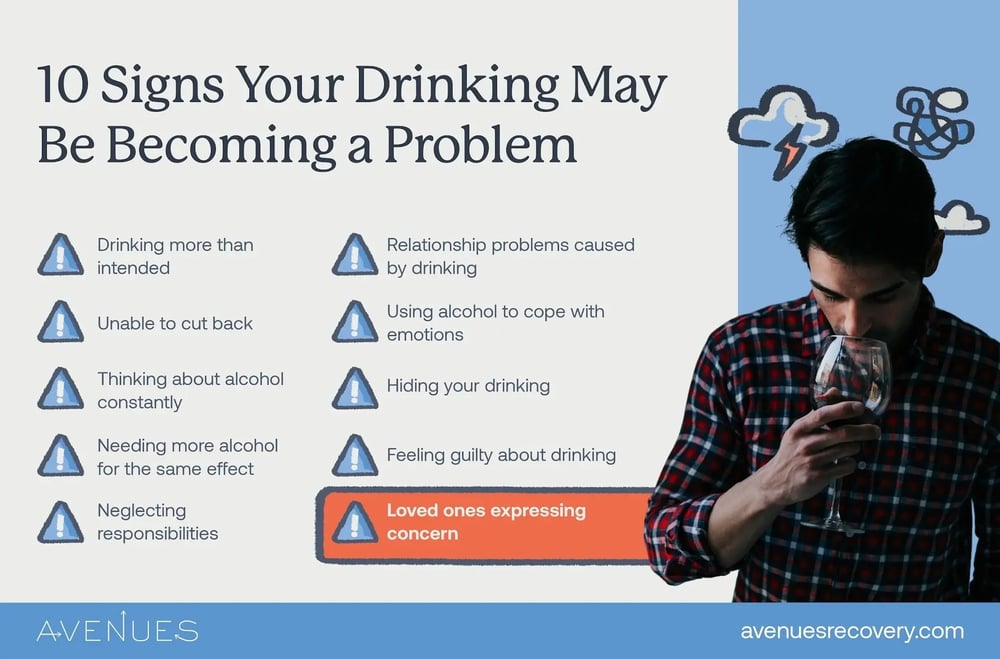
While having a glass of wine a day is fine, as is enjoying an extra glass at an occasional party or dinner, more frequent drinking may indicate a drinking problem. These are some warning signs of alcoholism:
- Drinking more or more often than you intended
- Not able to cut back or stop
- Thinking about alcohol 24/7
- Needing more alcohol to achieve the same buzz as before
- Neglecting work, school, or home responsibilities because of drinking
- Continuing to drink despite it causing relationship problems
- Using alcohol to cope with stress, sadness, or boredom
- Hiding how much you drink
- Feeling guilty about your drinking
- Having others express concern about how much you drink
Alcohol Addiction Treatment
Alcohol addiction treatment often involves a combination of medical support, therapy, and changes in daily habits. The first step is usually detox, after which the focus shifts to long-term recovery through emotional and behavioral support. This may include individual therapy, group counseling, and participation in support groups like Alcoholics Anonymous (AA) or SMART Recovery. Some people benefit from inpatient rehab programs that provide a structured environment, while others do well in outpatient settings that allow them to continue working or caring for family. With the right treatment and support, Avenues has helped thousands of people successfully overcome alcohol addiction and lead meaningful, sober lives.
If you or someone you love is struggling with alcohol addiction, Avenues is here to help. Reach out today and take the first step toward lasting recovery.
FAQs About How Much Wine Gets You Drunk
How much wine does it take to get tipsy?
For many people, one to two glasses of wine, especially on an empty stomach, will lead them into the "tipsy" range. A standard glass of wine (about 5 ounces, 12% alcohol) raises blood alcohol concentration by roughly 0.02–0.03% in an average adult. At this level, most people start to feel mild “tipsy” effects such as lighter mood, slight warmth, and reduced inhibition.
Is 12.5 alcohol strong?
A wine labeled 12.5% ABV falls right in the average range for table wine, which typically runs from about 11.5% to 14.5%. Most standard red and white wines you'd find at a store or restaurant have an ABV of around 12.5%. While 12.5% isn't considered a "strong" wine by wine-industry standards, it still delivers a full drink's worth of alcohol per glass. Drinking more than 2 cups of such wine per hour will likely get you drunk.
Is 5% alcohol going to get me drunk?
Yes, a 5% alcohol drink can get you drunk if you drink enough of it. A standard 12-ounce beer at 5% alcohol by volume (ABV) equals one drink. One bottle alone usually won’t make you drunk, though it may make you slightly tipsy. Drinking more than one bottle within a short amount of time may make you drunk.
How many shots of wine gets you drunk?
If you're using smaller "shot-sized" pours of wine (around 1.5 ounces), it would take roughly 10–12 shots to reach intoxication, since that's the amount of wine equal to three to four glasses. However, wine isn't usually measured in "shots", it’s measured in 5 oz. glasses.
Can you get drunk off cooking wine?
Yes, cooking wine could make you drunk because it usually contains 8–20% alcohol, so drinking it can raise blood alcohol just like any other alcoholic beverage. When used as intended, as a small ingredient in a cooked dish, most of the alcohol evaporates during cooking, and the amount consumed is negligible. But if you drink a cup or two, as if it were a beverage, it could make you drunk.