

Mixing alcohol with any medication is usually a red flag, but when it comes to combining topiramate and alcohol, the risks and potential benefits make the conversation even more important. Topiramate is a medication that was originally developed to treat seizures and migraines, and has also gained attention in recent years for its off-label use in treating alcohol use disorder (AUD). But that doesn’t mean it’s a magic fix, or that it comes without complications.
Understanding how these two substances interact is crucial for your safety, health, and long-term healing. At Avenues Recovery, we specialize in comprehensive alcohol addiction treatment, combining medical guidance and therapy to provide personalized support. We see firsthand how important it is for people to understand their medication, so read on to learn more about how topiramate and alcohol interact and how to stay safe.
Key Takeaways on Combining Topiramate and Alcohol
- Topiramate and alcohol both affect the brain, and combining them can be unpredictable, sometimes reducing alcohol's pleasurable effects but also increasing dizziness, confusion, and impaired motor skills.
- Topiramate is used to prevent seizures and migraines. It is increasingly being used off-label to help reduce alcohol cravings and support long-term abstinence.
- Mixing topiramate and alcohol should be avoided, since alcohol can interfere with how well topiramate works. It is recommended to wait at least 8-12 hours after drinking before taking a dose of topiramate.
- Speak to your doctor for personal guidance before combining topiramate and alcohol.
- Avenues Recovery offers individualized treatment that supports all aspects of alcohol recovery.
Topiramate and Alcohol
Topiramate, also known as Topamax, and alcohol both affect the brain, but in very different ways:
- Alcohol is a central nervous system depressant, which means it slows down brain activity.
- Topiramate works to stabilize overactive neurons and can actually dull some of the effects alcohol has on the brain’s reward system.
When taken together, though, the results can be unpredictable. For some people, topiramate can reduce the pleasurable effects of alcohol, making drinking feel less rewarding. That’s part of why it’s sometimes used in treatment; it may help curb cravings and reduce the urge to drink. At the same time, mixing the two can also increase certain side effects like dizziness, confusion, drowsiness, and difficulty concentrating. It may even impair motor skills more than either substance would on its own, raising the risk of accidents or injuries.
Another important point to remember is that alcohol can interfere with how well Topiramate works, especially if it’s being used for seizure prevention or migraine control. So while topiramate may help with alcohol dependence for some people, it’s not a free pass to drink while on the medication. The combination needs to be carefully monitored by a healthcare provider.
What is Topiramate?
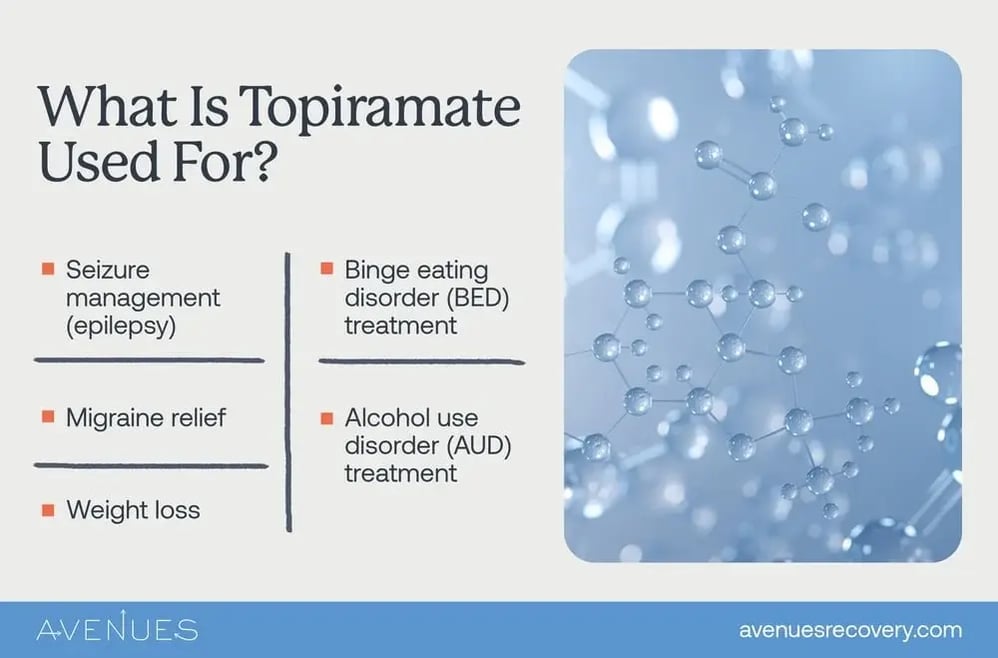
Topiramate is a prescription medication that was originally developed to treat epilepsy. It helps calm excessive nerve activity in the brain, which is why the FDA approved it for preventing seizures. Doctors also found it to be useful for treating migraines and, more recently, for managing binge eating disorders and even aiding in weight loss when combined with other medications.
But where it gets especially interesting is in its off-label use for alcohol use disorder. Some studies have shown that topiramate can help reduce alcohol cravings and even support long-term abstinence. Many people are now using Topamax for alcohol cravings successfully.
Side Effects and Risks of Mixing Topiramate with Alcohol
Like any medication, topiramate comes with a list of potential side effects, which can become even more serious when alcohol is thrown into the mix.
Common side effects of topiramate on its own include things like fatigue, dizziness, trouble concentrating, and tingling in the hands or feet. Some people also report mood changes, memory problems, or difficulty finding words, often described as “brain fog.” These effects can be frustrating, especially when they impact your day-to-day functioning.
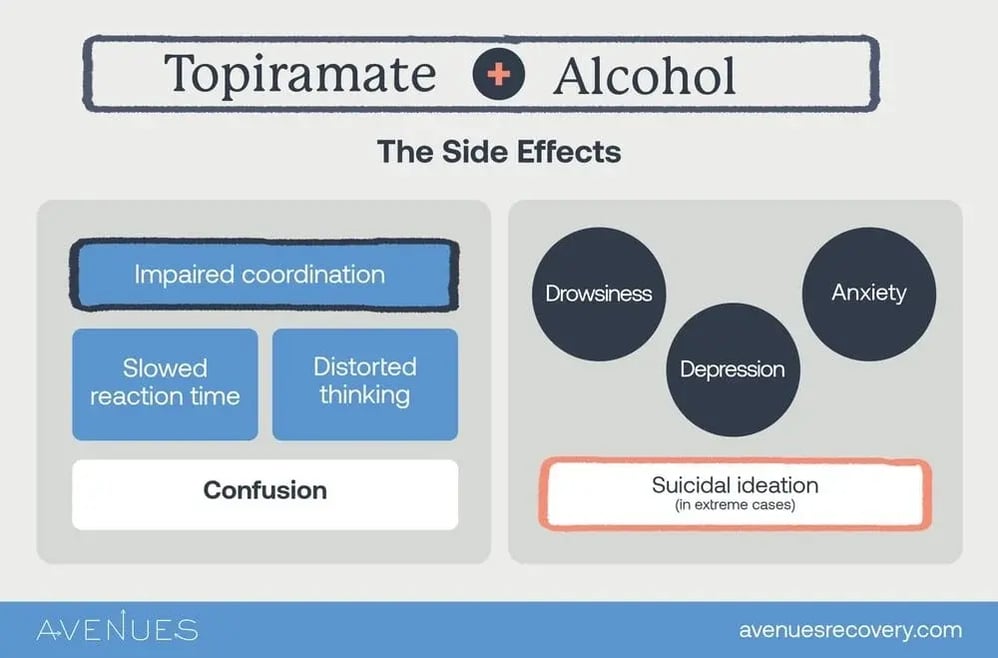
Now add alcohol into the equation, and things can get a lot more complicated. Topiramate‘s interaction with alcohol amplifies distorted thinking, which can impair coordination and slow reaction time. There's also an increased risk of serious side effects like confusion, extreme drowsiness, and even loss of consciousness in some cases. For anyone taking topiramate for seizures or migraines, alcohol can make those conditions worse, potentially triggering what the medication is meant to prevent.
On the mental health side, topiramate can sometimes cause depression or anxiety, and alcohol is known to worsen both. That combo may raise the risk of emotional instability or even suicidal thoughts in vulnerable individuals. That’s why doctors usually recommend avoiding alcohol altogether while on topiramate, especially if it’s being used as part of a treatment plan for alcohol use disorder.
How Long After Taking Topiramate Can I Drink Alcohol (and Vice Versa)?
There’s no official “safe window” that's been universally agreed on, but here’s what we do know: because both alcohol and topiramate affect your brain and nervous system, taking them too close together can increase the risk of negative side effects. If you’ve recently had a drink, it’s best to wait several hours, and ideally, until the alcohol is fully out of your system, before taking topiramate. That usually means waiting at least 8–12 hours, depending on how much you drank, your metabolism, and other personal factors.
On the flip side, if you’ve already taken your daily dose of Topamax and are thinking about drinking, it’s not a good idea to mix the two at all. Alcohol can not only intensify side effects but may also interfere with how well topiramate works, especially if you’re using it to treat alcohol dependence, seizures, or migraines.
Bottom line: It’s always safest to avoid drinking while taking Topamax. If you’ve already had a drink or taken your medication and aren’t sure what to do next, reach out to your doctor or pharmacist for guidance tailored to your situation.
Getting Help for Alcohol Use Disorder
Alcohol use disorder (AUD) is more than just drinking too much; it’s a chronic condition that can impact every aspect of life, from physical health to relationships, employment, and mental health.
Treatment for AUD often includes a combination of medical support, therapy, peer support groups, and sometimes medications like Topamax to help reduce cravings and make sobriety more manageable. But no matter what the approach looks like, the most important step is getting started.
At Avenues Recovery, we understand that every recovery journey is personal. Our programs are designed to meet you where you are, offering individualized care that supports your physical and emotional healing. Whether you’re just beginning to think about treatment or ready to take the next step, we’re here to walk with you every step of the way.
You don’t have to do this alone. Reach out to Avenues Recovery today and take the first step toward a life of freedom and healing.
Frequently Asked Questions About Mixing Topamax and Alcohol
Can you drink on topiramate?
No, drinking on topiramate isn't recommended. Alcohol can intensify side effects like dizziness, drowsiness, and impaired coordination, and it can also make topiramate less effective, whether it's being used for seizures, migraines, or alcohol use disorder. If you do drink, it's best to wait at least 8–12 hours before taking your next dose, and to talk to your doctor about what's safe for your specific situation.
What is the topiramate alcohol interaction?
The topiramate alcohol interaction happens because both substances affect the central nervous system, just in different ways. Alcohol depresses brain activity, while topiramate calms overactive neurons and can dull some of alcohol's rewarding effects. Combined, they can amplify side effects like confusion, impaired motor skills, and extreme drowsiness.
Is there a connection between Topamax and alcohol abuse treatment?
Yes, there's a growing body of research linking Topamax and alcohol abuse treatment. While it's FDA-approved for seizures and migraines, topiramate is increasingly prescribed off-label to help reduce alcohol cravings and support long-term abstinence in people working through alcohol use disorder.
Can Topamax help with alcoholism?
When it comes to Topamax and alcoholism, Topamax may help some people manage alcohol cravings and reduce the rewarding effects of drinking. However, it isn't a cure or standalone treatment and works best as part of a broader recovery plan with medical support and ongoing care.
Is it dangerous to mix Topamax and alcohol?
Mixing Topamax and alcohol can be dangerous, especially in higher amounts or when used over a prolonged period of time. Beyond the immediate risks of impaired coordination and extreme drowsiness, combining the two can worsen depression or anxiety and, in vulnerable individuals, increase the risk of suicidal thoughts. Anyone taking topiramate should speak with their doctor before drinking.