


When people think about the effects of alcohol, they usually picture a hangover, bad headaches, or risky behavior - not inflammation. Yet inflammation is one of alcohol’s most widespread and overlooked effects, quietly affecting the body long before more obvious symptoms appear.
Over time, this chronic alcohol inflammation can lead to serious health problems, even in people who don’t consider themselves heavy drinkers. At Avenues Recovery, we’ve seen how alcohol-related inflammation can contribute to both physical and emotional struggles, and how healing begins when we understand what’s really going on beneath the surface.
Key Takeaways on Alcohol Inflammation
- Alcohol triggers inflammation as your body works to break down and clear out its byproducts.
- Even moderate or occasional drinking can lead to symptoms like fatigue, bloating, and joint pain.
- The type of alcohol matters less than how much and how often you're drinking.
- Left unchecked, alcohol-related inflammation can contribute to more serious health issues.
- Cutting back on alcohol and getting the right support to stop drinking give your body a better chance to reduce inflammation and begin healing.
Does Alcohol Cause Inflammation?
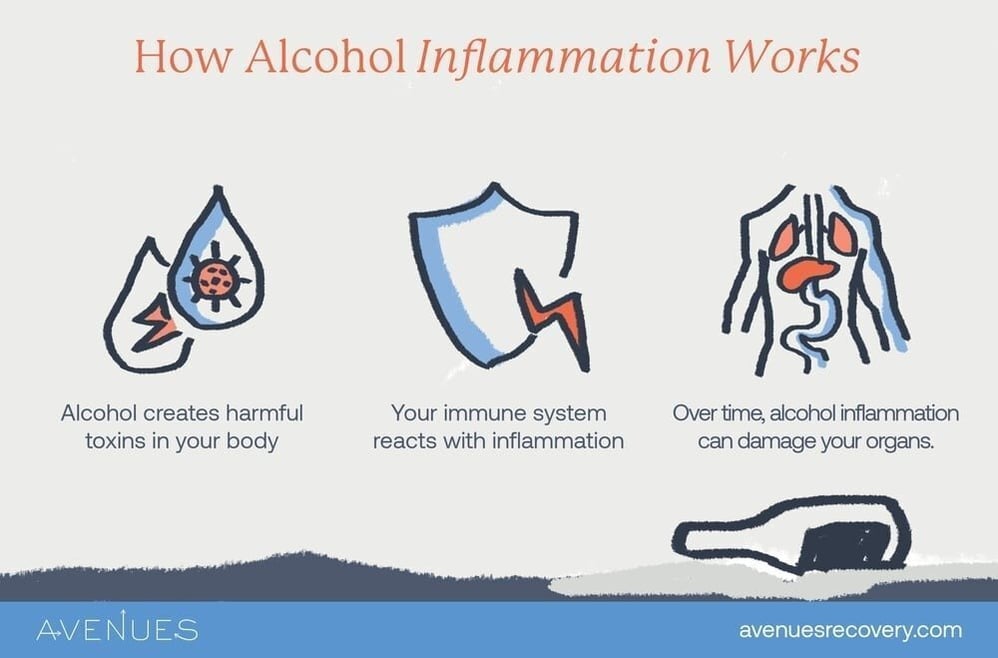
Yes, drinking alcohol can cause inflammation in the body - both in the short and long term. Behind the scenes, alcohol can stir up inflammation throughout the body, affecting everything from your gut to your brain. Alcohol is an irritant, and when it's processed by the body, it produces toxic byproducts such as acetaldehyde, which can damage cells and trigger the immune system. This immune response causes inflammation as the body tries to repair the damage.
While limiting yourself to the one or two drinks a day recommended by the Center for Disease Control (CDC) may not have a dramatic effect, regular or heavy alcohol use can keep the body in a near-constant state of low-grade inflammation. It can also affect major organs like the liver, pancreas, brain, and even the gut, setting the stage for chronic diseases and long-term health issues, such as increased cancer risk. This is one of the main reasons why alcohol does cause inflammation over time.
Symptoms of Alcohol Inflammation
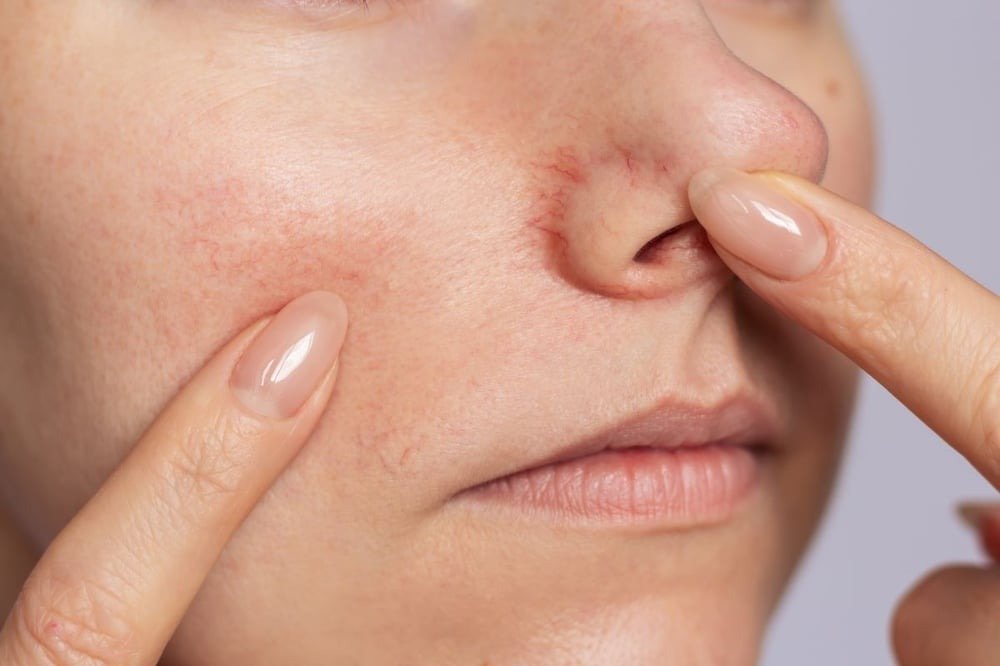
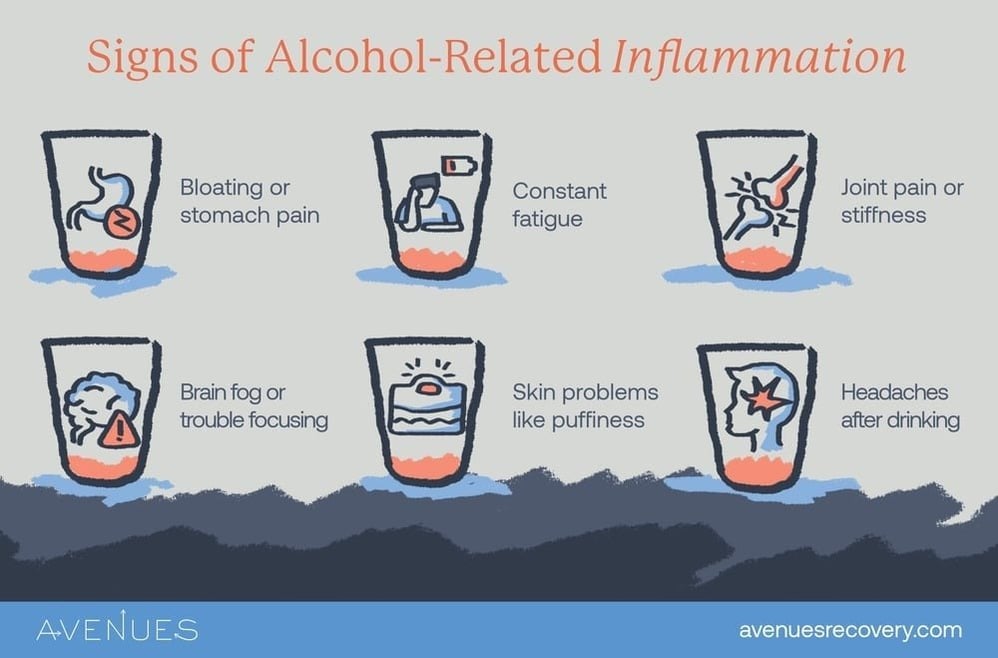
Alcohol inflammation doesn’t always look the way people expect, and that can cause people to question whether alcohol is inflammatory. Because alcohol affects multiple systems in the body, the alcohol inflammation symptoms can be widespread and subtle, making it easy to overlook until bigger health problems arise. The connection between alcohol and inflammation often shows up in ways people don’t immediately link to drinking.
Common alcohol inflammation symptoms include:
- Persistent fatigue
- Bloating
- Joint pain
- Headaches
- Digestive issues (like acid reflux or diarrhea)
Does Alcohol Cause Inflammation in Joints?
Although alcohol is not always the direct cause, it can aggravate existing inflammation and joint pain. Inflammation caused by alcohol can contribute to more serious conditions such as liver disease, pancreatitis, or brain fog. In some people, alcohol inflammation may worsen arthritis symptoms.
How Much Alcohol Causes Inflammation?
There’s no one-size-fits-all answer, but even moderate drinking can trigger inflammation in some people, especially with regular use. For most adults, the body can tolerate small amounts of alcohol occasionally, but consistent drinking, more than one drink a day for women or two for men, can begin to cause low-grade, chronic inflammation. Binge drinking, or having several drinks in a short time, causes a more immediate inflammatory response, stressing the liver, gut, and immune system. Everyone’s body reacts differently, but if you’re drinking regularly and noticing signs like bloating, fatigue, or digestive discomfort, it may be your body’s way of telling you that alcohol inflammation is already affecting your health.
Does the Type of Alcohol Matter?
Beer and wine are often compared for their effects on inflammation, but the type of alcoholic drink makes far less difference than the alcohol itself.
Does Wine Cause Inflammation?
While it’s true that red wine contains antioxidants like resveratrol, drinking wine, especially in larger amounts, can still increase inflammation in the body. Alcohol promotes inflammation regardless of whether it comes from wine, beer, or spirits, particularly when consumed regularly or in excess.
Does Beer Cause Inflammation?
Beer is inflammatory due to its alcohol content, as well as added sugars and grains, which can irritate the gut. No matter the drink, the underlying issue remains the same. Even moderate drinking can trigger immune responses that promote alcohol inflammation, especially when it's a daily habit. Choosing one type of alcohol over another doesn’t eliminate the risk; cutting back overall is what truly makes the difference.
How to Reduce Inflammation from Alcohol
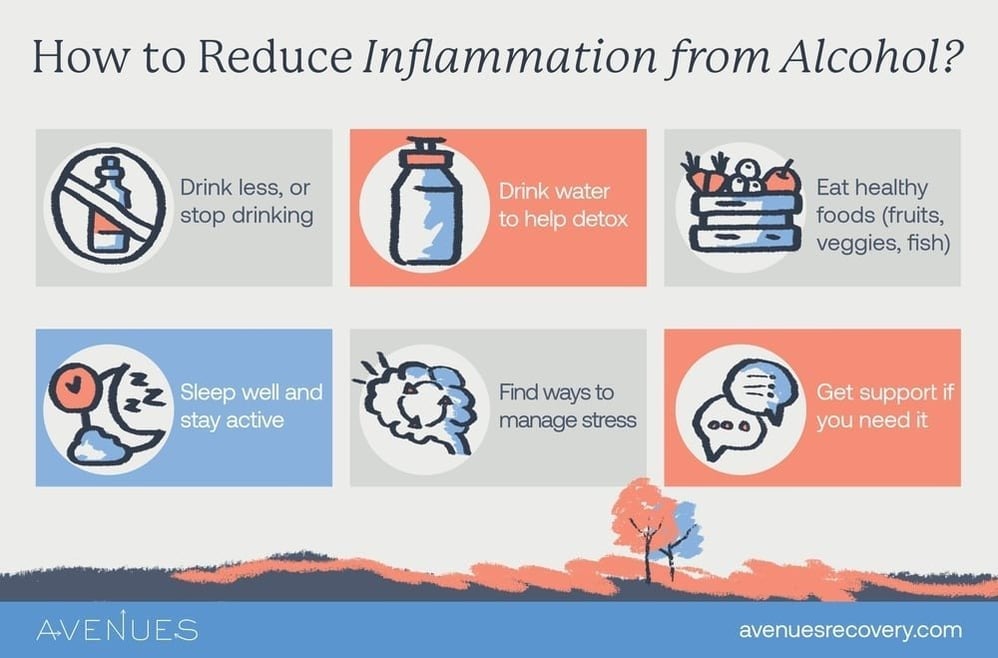
The most effective way to reduce inflammation from alcohol is to cut back or quit drinking altogether. Once alcohol is removed from the equation, the body can begin to repair the damage and calm the inflammatory response. Taking these steps can help support the healing process:
- Staying well-hydrated
- Eating a balanced diet rich in anti-inflammatory foods (like leafy greens, berries, nuts, and fatty fish)
- Getting regular sleep
- Getting regular exercise
Supplements like omega-3s or turmeric may also help, but they can’t undo the effects of ongoing drinking. If alcohol inflammation is taking a toll on your health, stepping away from alcohol, whether temporarily or for good, can bring powerful physical relief and set the stage for long-term wellness.
The Impact of Chronic Inflammation on Health
When inflammation becomes chronic, meaning it lingers long after the initial trigger, it can damage the body. Chronic inflammation is linked to a wide range of serious health issues, including heart disease, liver damage, Type 2 diabetes, autoimmune disorders, and even certain cancers. Mentally, inflammation can contribute to anxiety, depression, and cognitive decline. Because alcohol and inflammation often go hand in hand, ongoing drinking can keep the body in a state of stress, increasing the risk of these long-term conditions. The effects may not show up overnight, but over months or years, alcohol causes chronic inflammation that can seriously compromise your overall health and quality of life.
Treatment for Alcohol Addiction
If alcohol is affecting your health, whether through inflammation or other physical or emotional symptoms, it may be time to consider treatment. Alcohol addiction doesn’t always look like hitting “rock bottom.” It can start subtly, with habits that gradually take a toll on your body, relationships, and sense of control. At Avenues Recovery, we understand that healing starts with support, not judgment. Our comprehensive treatment programs combine medical detox, individualized therapy, group support, and life skills coaching to help clients build lasting recovery. We also address the physical impact of alcohol, including inflammation, helping the body recover alongside the mind. Whether you’re just starting to question your drinking or ready to take the next step, reach out to Avenues Recovery. Help is here when you’re ready.
FAQs on Alcohol Inflammation
Does drinking alcohol cause inflammation?
Yes, alcohol triggers inflammation as soon as your body starts breaking it down. The byproducts created during that process are treated as harmful, so your immune system responds the way it would to any other irritant. It doesn't take heavy drinking for this to happen, though the effect is usually stronger and longer-lasting with regular use.
How long does inflammation from alcohol last?
Mild inflammation may begin improving within a few days of avoiding alcohol, while chronic inflammation caused by long-term heavy drinking can take weeks, months, or longer to heal as the body recovers. It depends on how much and how often a person drinks.
Does alcohol make inflammation worse?
Yes, if you already have an inflammatory condition, alcohol tends to add fuel to it. If you're dealing with something like arthritis or a sensitive gut, drinking regularly can push those flare-ups further than they'd go on their own. Even a run of heavy nights, not just daily drinking, can be enough to set things off.
Can inflammation from alcohol be reversed?
In a lot of cases, inflammation from alcohol can be reversed, especially if you cut back before it becomes chronic. The body is fairly resilient once alcohol is out of the picture regularly. Years of heavy drinking are harder to undo, though, and that kind of damage often needs more time and support to heal.
Does alcohol cause inflammation in joints even for moderate drinkers?
It's possible for alcohol to cause inflammation in joints even for moderate drinkers, especially if joint pain or arthritis is already something you deal with. Alcohol can raise uric acid and interfere with how your body keeps existing inflammation in check, so it doesn't always take heavy drinking to notice a flare.