

If you’ve ever experienced a hangover, you’ve surely felt the need for a hangover cure at home. Hangover refers to the unpleasant symptoms that people experience after drinking too much alcohol.
At Avenues Recovery, we understand that a hangover can sometimes be more than a rough morning after drinking. For some people, it becomes a recurring experience that signals a deeper relationship with alcohol. This article delves into what hangovers are and remedies that can ease the discomfort. It also looks at when hangovers may be worth paying closer attention to.
Key Takeaways on Hangover Cures
- A hangover is the body's response to alcohol consumption and typically resolves on its own within 24 hours.
- There is no instant cure. The most effective approach is hydration and giving your body time to recover.
- Drinking water and replenishing electrolytes are the most evidence-backed ways to ease hangover symptoms. Eating foods rich in carbohydrates and B vitamins can also help the body recover nutrients that alcohol depletes.
- Popular "cures" like coffee, drinking more alcohol, or taking medication before bed are largely ineffective, and some carry risks.
- Frequent or severe hangovers may be a sign that alcohol is affecting your life in ways worth paying attention to. Help is available.
What Causes Hangovers?
A hangover is caused by drinking too much alcohol at once. Since every person reacts differently to alcohol, it’s impossible to predict how much alcohol will cause a hangover.
According to the CDC (Centers for Disease Control and Prevention), the guidelines for safe drinking are two drinks per day (or less) for men, and one drink per day (or less) for women. These parameters, however, are merely presented as ‘moderate drinking’ amounts that safeguard your body from harm. Drinking less can still cause a hangover for some, and drinking more won’t necessarily cause a hangover for others. Every person’s level of alcohol tolerance is unique.
Hangover Self-Care
Once the hangover hits and you’re feeling awful, it’s important to practice good self-care. Do whatever sensible things you can to alleviate your physical symptoms. This includes resting up until you feel better as well as staying hydrated and eating balanced meals. Don’t push yourself because doing so will only cause the symptoms to last longer.
How to Cure a Hangover
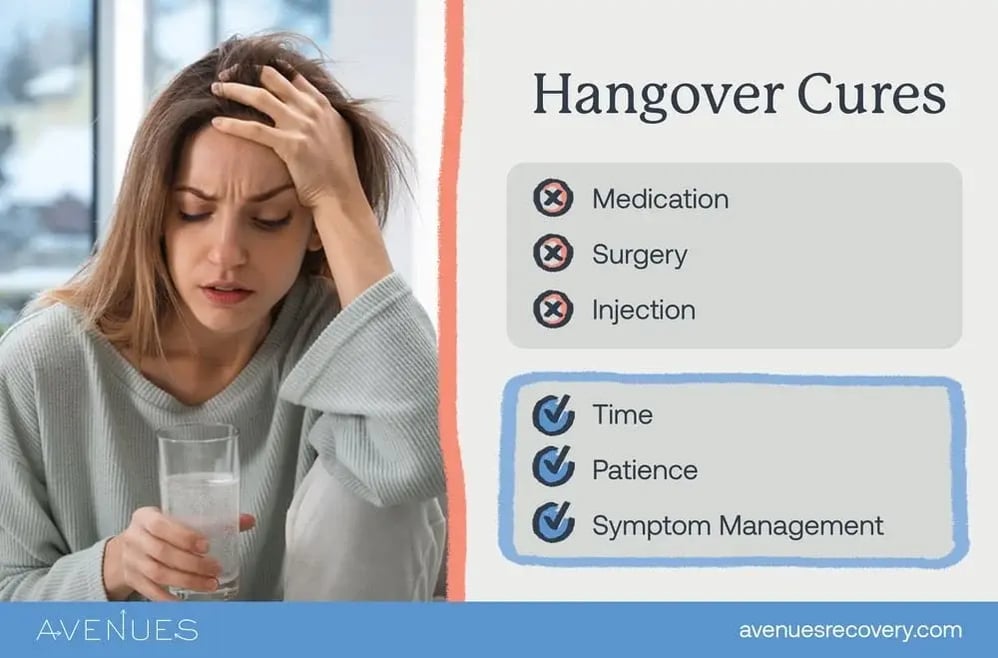
The reality is that there are no magic pills or hangover cure remedies that can cure a hangover completely. You can try to alleviate the symptoms as much as possible, and rest to help it pass, but you can’t make it disappear immediately.
Many illnesses today have medical procedures that can cure or correct them. There are countless surgeries, medications, and the like that can help people suffering from physical pain find relief. However, hangovers are unique in that there are no instant cures and you just have to wait it out.
Hangover Symptoms
Here are the main symptoms people experience during a hangover:
- Depression, anxiety, or irritability
- Disturbed sleep
- Dizziness or vertigo
- Fatigue
- Weakness
- Headache and sensitivity to light and sound
- Red eyes
- Elevated blood pressure
- Increased heartbeat
- Muscle weakness and aches
- Vomiting, nausea, and stomach pain
- Heavy sweating
- Dehydration and extreme thirst
- Tremors and shaking
How to Relieve a Hangover Fast
Since hangover symptoms cannot be made to disappear with the help of medication, the question really is: What can be done to help the hangover pass as quickly as possible?
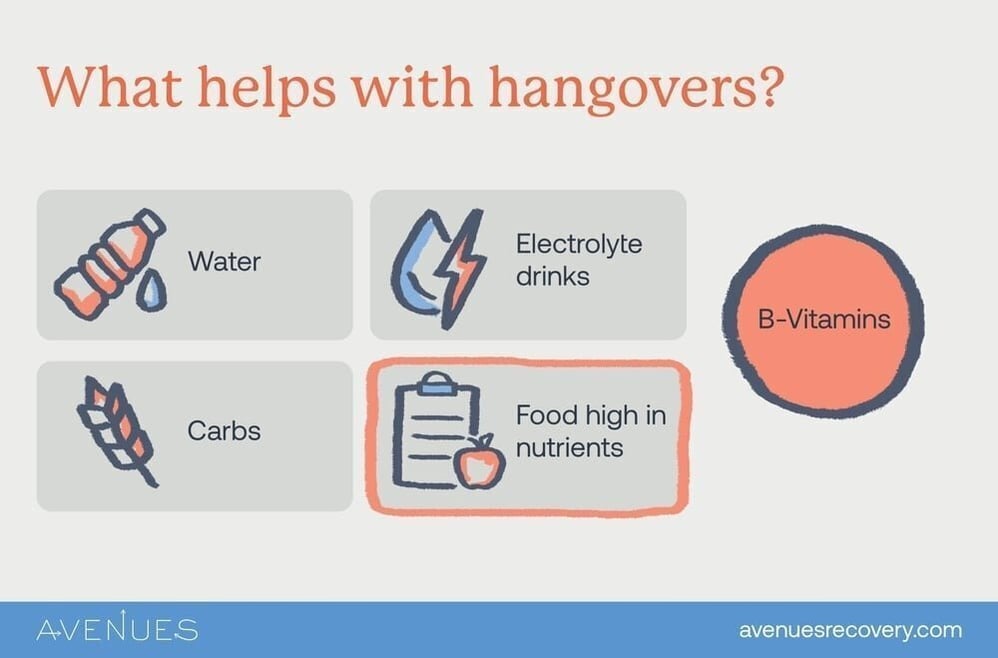
- Water: The best hangover cure is staying hydrated. Alcohol dehydrates the body by causing people to urinate more often than usual. Drinking plenty of fluids allows the body to replenish its water supply, helping the hangover to pass.
- Carbs: Alcohol lowers the system’s blood sugar levels, which could cause tiredness, headaches, and dizziness. The best hangover headache cure would be to raise your blood sugar level by eating foods rich in carbs and natural sugars.
- Sports Drinks: If you’re wondering how to cure hangover nausea and sickness, drinking Gatorade or Pedialyte can help since they are rich in electrolytes like sodium, potassium, magnesium, and calcium. Electrolytes can help to restore the deficit of nutrients and fluids in your body.
- Foods high in electrolytes: There are different foods you can eat that naturally contain electrolytes. For example, bananas, avocados, potatoes, and milk are high in potassium; pumpkin seeds, spinach, tuna, and almonds contain natural magnesium; cheese, table salt, clams, and dill pickles are high in sodium; and yogurt, acorn squash, and tofu are rich in calcium.
- B Vitamins: Alcohol diminishes the supply of B vitamins in the body, specifically B6 and B12. Salmon is a good example of a food that contains both B6 and B12, and it also has natural anti-inflammatory capabilities that can counteract the inflammation in the body due to an overconsumption of alcohol.
Commonly Searched Hangover Remedies
Many people turn to specific remedies when a hangover hits. Here is what the evidence says about the most commonly searched options:
- Pickle juice, coconut water, and orange juice: Help replenish electrolytes and fluids. Contains high sodium content and natural sugars that restore depleted blood sugar levels.
- Sprite: The carbonation can help settle nausea, although the effect is mild.
- Milk: Provides the body with protein, calcium, and vitamin B.
- Greasy Foods: Eating a substantial meal before drinking alcohol slows its absorption.
- Showers: Can temporarily increase alertness and provide relief, although it will not cure the hangover.
- Exercise: Releases endorphins and can improve mood. However, it can worsen dehydration if water intake is not kept up.
- Saunas: Should be avoided during a hangover, as the additional fluid loss can worsen dehydration.
Hangover Cure Myths
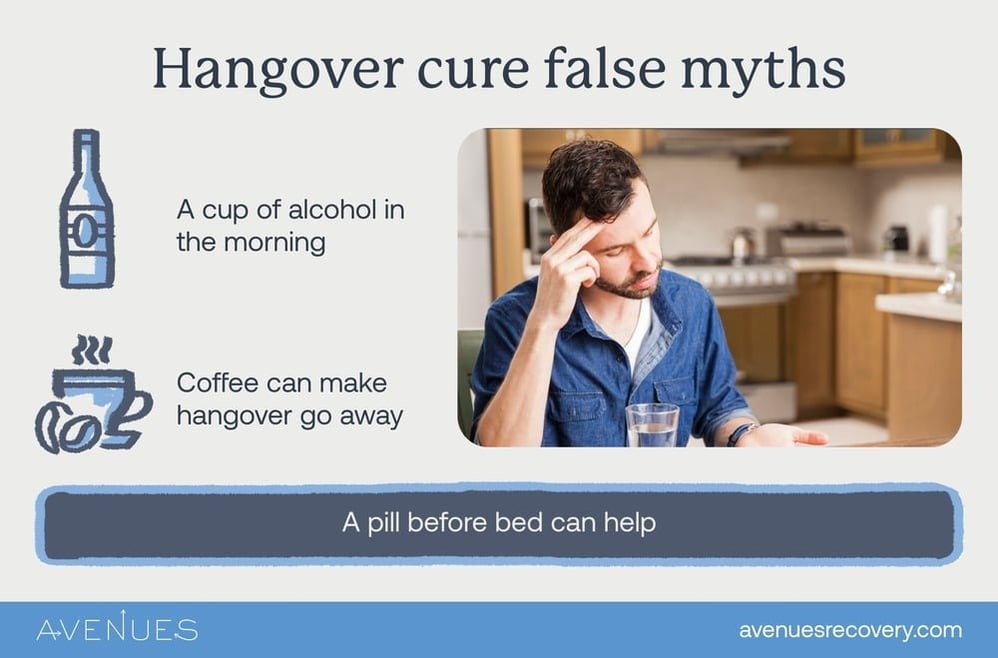
There are some myths about how to cure hangovers that have been debunked. The first is that drinking a cup of alcohol the next morning is the best way to alleviate the symptoms. This concept is known as ‘taking the hair of the dog that bit you.’ Although it may curb the unpleasant side effects, drinking the next morning perpetuates a cycle of more drinking, and can lead to an even worse hangover later on.
Another widely believed myth is that drinking coffee will make you feel better. Although it does help lessen fatigue, it doesn’t cure it at all.
Hangover Medication
Some people believe in popping some medication before going to sleep, thinking that it will help them feel better in the morning. This also isn’t true, as most medications last for just 4-6 hours. Additionally, some medications, such as Tylenol, can interact negatively with alcohol and cause harm.
Over-the-counter medications can help manage specific hangover symptoms, though none will shorten the overall recovery time. Pain relievers like ibuprofen or aspirin, such as Alka-Seltzer, may reduce headache and muscle aches, but should be used with caution on an empty stomach, as they can irritate the stomach lining. Additionally, Pepto-Bismol and Tums work as antacids for nausea and stomach irritation.
As for "hangover pills," a growing market of supplements claims to prevent or cure hangovers. However, there is currently little clinical evidence to support these products. Most simply contain a mix of vitamins and herbal extracts that replicate what a balanced meal and adequate hydration would already provide.
How to Prevent Being Hungover
Here are some ideas to help you prevent hangovers:
- Be aware of how much alcohol your body can handle, and be careful not to exceed that amount in one sitting.
- Eat well before you drink, so the food can help absorb the alcohol and prevent a hangover.
- Drink water between drinks of alcohol to stay well-hydrated.
- Pace yourself and your drinking.
Alcohol Addiction Treatment
At Avenues Recovery, we offer a range of care options, from medical detox to one-on-one and group therapies, and a variety of holistic healing modalities.
If you are struggling with alcohol addiction, we invite you to join us at one of our inpatient rehab centers, where our professional staff will support you with empathy and experience, helping you find your path to recovery. It starts with one phone call, and you can reclaim your life. Reach out today to start your journey to a life of sobriety.
Frequently Asked Questions about Hangover Cures
Does coffee help hangovers?
Coffee is one of the most common hangover remedies people reach for, but its benefits are limited. Caffeine can temporarily reduce headache pain and combat fatigue, which is why it may feel helpful in the moment. However, coffee is a diuretic, meaning it can worsen the dehydration that a hangover has already caused.
What is the best treatment for a hangover headache?
Rehydrating with water or an electrolyte drink is the most effective first step. Hangover headaches are primarily caused by dehydration and the expansion of blood vessels that alcohol triggers. Over-the-counter anti-inflammatories like ibuprofen or aspirin can provide additional relief, though they should be taken with food to avoid stomach irritation.
Does Liquid IV help with hangovers?
Liquid IV and similar hydration products can be useful during hangover recovery because they deliver electrolytes and fluids more efficiently than water alone. They are not a cure, but for people dealing with significant dehydration, they may help ease symptoms faster.
Is there a natural hangover cure?
There is no natural remedy that eliminates a hangover entirely, but several approaches can support recovery. Staying hydrated, eating foods rich in electrolytes and B vitamins, and getting adequate rest are the most well-supported options. These remedies address individual symptoms rather than the hangover as a whole, and time remains the only true cure.
What should you not do while hungover?
Several common impulses can make a hangover worse rather than better and should be avoided. Drinking more alcohol only delays symptoms and can reinforce a cycle of dependence. Coffee, intense exercise, and saunas all add to dehydration. Acetaminophen (Tylenol) should be avoided while alcohol is still in the system, as it puts serious strain on the liver.