


The summer months bring so many great opportunities to enjoy the outdoors and bask in the beauty of the season. At the same time, summer poses a real challenge for people who are newly sober or looking to explore a sober lifestyle. People who enjoy alcohol may be used to drinking in the summer in various settings, such as at the pool, the beach, the park, or during any simple summer activity.
Although people who drink always have to be mindful of how much they are drinking, it is especially critical to be careful during the summer months. In this article, Avenues Recovery, a leading provider of alcohol addiction treatment, will explore why drinking in the summer could be problematic and what you can do to avoid alcohol heat stroke, drowning, and other dangerous outcomes.
Key Takeaways on Alcohol in the Sun
- Summer heat changes how alcohol affects the body, increasing the likelihood of dehydration, sunburn, and heat stroke
- Heat stroke and intoxication share many of the same symptoms, which can make it harder to identify in an emergency
- Drinking before swimming or boating raises the risk of drowning or accidents
- Staying hydrated and limiting alcohol intake are simple ways to enjoy the summer safely
The Dangers of Drinking in the Summer
Warm weather can change the way alcohol affects the body and increase the likelihood of certain health and safety risks. Summer is also a highly social season, with outdoor events often centered around drinking, which can increase alcohol consumption and trigger relapse for people in recovery. Being aware of these dangers is an important part of staying safe.
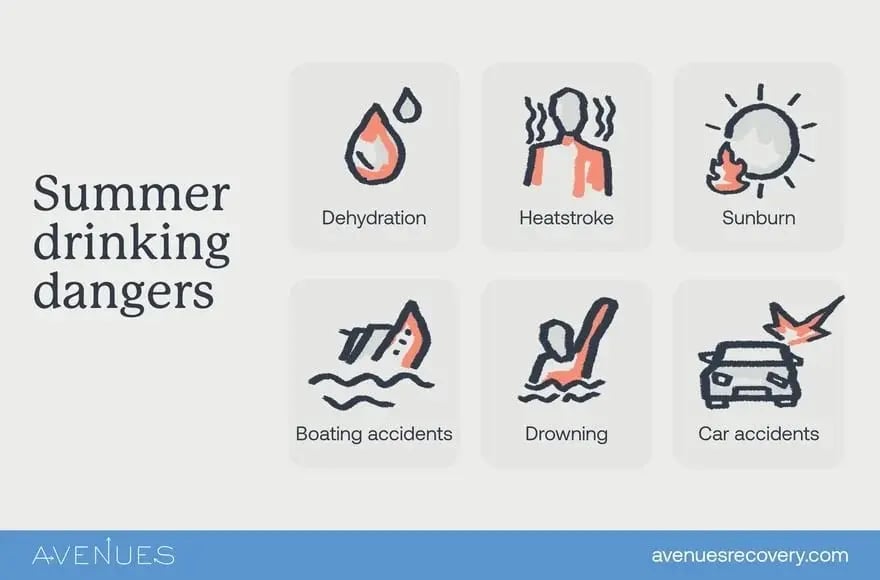
The risks of drinking in summer can include:
Dehydration
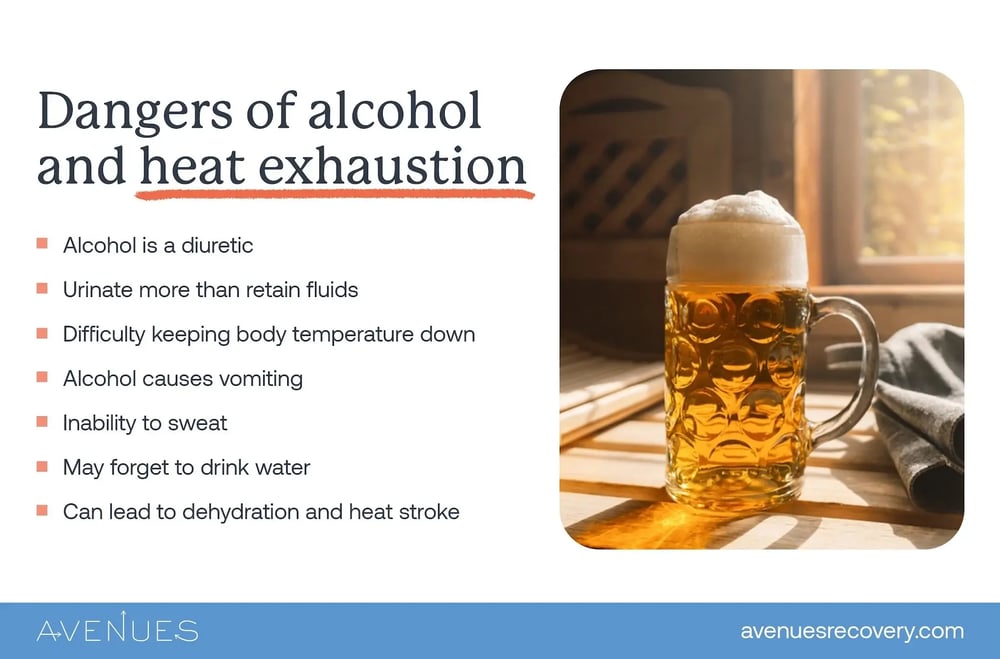
Alcohol is a natural diuretic. This means that it causes the drinker to urinate often and lose bodily fluids (more than it provides fluid). Water, on the other hand, hydrates the body more than it causes the person to urinate, helping the body stay hydrated.
Because alcohol is a diuretic, it quickly dehydrates the body. This can be very dangerous when drinking in summer, when the body needs extra fluids to regulate its temperature. Staying hydrated becomes harder when drinking alcohol, since alcohol effectively and quickly dehydrates the body.
People who overdrink alcohol also vomit more easily, since alcohol can cause nausea. Vomiting causes the drinker to lose even more fluids, leaving them at a greater risk of dehydration. It’s best not to drink any alcohol in the sun at all, but if you do, be sure to counteract the alcohol with lots of water.

Heat Stroke
When you’re in the sun and your body temperature rises, you begin to sweat. Sweating is essential since it helps the body cool down internally. Of course, perspiration is created through the fluids that you drink, so if you’re drinking a lot of alcohol in the sun, you may not have enough fluids to let your body sweat and cool down.
This inability to regulate body temperature in the heat can make drinking in the summer very dangerous. When the body cannot perspire and cool down, it can overheat and experience heat stroke. Untreated heat stroke can quickly become dangerous, ultimately damaging the heart, brain, kidneys, and muscles.
The Risks of Heat Stroke and Alcohol
It’s important to note that heat stroke can cause symptoms that mimic intoxication. For example, both conditions can cause slurred speech, delirium, nausea and vomiting, increased heart rate, confusion, and agitation.
Because the symptoms of the two conditions are so similar, the effects of alcohol on the body in the summer heat can make it harder to recognize the warning signs of overheating until the situation becomes dangerous.
Sunburn
If you’re out suntanning and enjoying the warmth on your face and body while drinking alcohol, you may be unable to realize whether or not you need to move out of the sun to protect your skin. You may forget to apply suntan lotion, fall asleep for a long while in direct sunlight (if heavily intoxicated), and be unaware that your skin is slowly roasting.
Sunburn isn’t simply an annoying and painful burn on the skin. It can lead to skin cancer and other dangerous diseases, leaving an irreversible mark on the skin and body. It’s always advised to apply suntan lotion regularly and monitor the amount of time that you’re in direct sunlight, both of which may be difficult to do if you’re drunk.
Boating Accidents
According to the Centers for Disease Control and Prevention (CDC), approximately one in five of all deaths caused by a boating collision involved alcohol use. Alcohol impairs your judgment, coordination, mobility, reaction time, and other imperative executive functioning skills that allow you to safely navigate a boat at sea.
This can cause boat collisions, people to fall overboard and drown, and other boat-related accidents. If you want to have a party on a boat or simply have some booze as you chill, ensure that the person driving the boat won’t drink at all.
Drowning
Summer drinking has proven to have another tragic outcome: drowning. When under the effects of alcohol, drinkers struggle with coordination, clarity, and judging distances.
They may be disoriented and unable to assess which part of the water is safe, or how far a certain spot in the distance actually is. Additionally, alcohol can inhibit your natural gag reflex, which normally allows you to expel water from your mouth, ensuring it doesn’t enter your lungs.
A person who is intoxicated and enters the water under those conditions may find themselves in trouble quickly. Alcohol is detected in the blood of many people who drown while engaging in recreational aquatic activity, highlighting the danger of entering the water while drinking.
Car Accidents
Another obvious danger of drinking is getting behind the wheel while under the influence. The data shows that car accidents involving drunk drivers are more common during the summer months. This is thanks to the longer summer weekends and increased travel volume to different summer vacation destinations.
In the summer, many people find themselves driving more on trips and on vacations, which means that they’re traveling down unfamiliar roads, and doing so while intoxicated is infinitely more dangerous and can lead to irreversible fatal repercussions.
Tips for Staying Safe With Summer Drinking
Alcohol and summer safety start with making responsible decisions even before you begin drinking. Some tips that can help you stay safe while responsibly enjoying the sun and alcohol include:
- Limit the amount of alcohol you drink while out in the sun.
- Always drink lots of water to counteract the damage the alcohol causes.
- Never drink and drive, either a boat or a car. Have someone responsible who will take away your keys if you attempt to drink while under the influence.
- Plan a ride home if you know you’ll be drinking. Know the public transportation schedules, keep the number of a taxi service, or have a designated driver.
- Never attempt to swim or enter the water if you’ve consumed any amount of alcohol.
- Regularly apply suntan lotion, sit in the shade as much as possible, and wear a hat when sitting outdoors.
- Enjoy some sober summer activities and avoid drinking in the heat altogether.
The Dangerous Combination of Alcohol and Heat
The interaction between heat and drinking alcohol involves several physical and behavioral factors. Alcohol and heat reaction chemistry can enhance the substance’s ability to impair decision-making, slow reaction times, and reduce awareness of changing physical conditions, increasing the likelihood of accidents and other summer-related dangers.
Summertime brings so many wonderful opportunities for outdoor fun and socializing. With the proper care, awareness, and advance planning, you can have a great time while avoiding the dangers that come with summer drinking.
At Avenues Recovery Center, we can help you reclaim your freedom and serenity by helping you get sober for the long term. If you or a loved one is struggling with alcohol addiction, reach out today to find your way home!
FAQs on Drinking in the Summer
Does drinking in the sun make you drunker?
Heat doesn’t raise your blood alcohol level, but it can make the effects feel stronger. Sun exposure speeds up dehydration, and that causes your body to process alcohol differently, often making intoxication symptoms feel more intense than they would on a cooler day.
Do alcoholics drink more in the summer?
Many people in recovery do find summer harder to navigate. Warmer weather leads to more social gatherings, vacations, and outdoor events where drinking is the norm, which can increase temptation and the risk of relapse for those already struggling with alcohol use.
Is it safe to drink alcohol at the pool or beach?
It’s safer to drink in moderation, if at all, near water. Alcohol affects coordination and judgement which makes swimming, activities in water, and even supervising others riskier than usual, even for confident swimmers.
How can I tell if someone has heat stroke or is just drunk?
This can be tricky since the two conditions can look alike on the surface. If someone shows confusion, has a rapid heartbeat, or has hot and dry skin along with disorientation, it’s safest to treat it as a medical emergency rather than assuming they’ve simply had too much to drink.
What is the best way to stay hydrated while drinking in the heat?
One of the best ways to stay hydrated while drinking in summer is by alternating alcoholic drinks with water throughout the day. Eating beforehand and taking breaks in the shade can also help your body keep up with fluid loss caused by sweat and alcohol’s diuretic effects.